
Rat Infestation Hits Rice Fields in Kuningan, Food Production at Risk
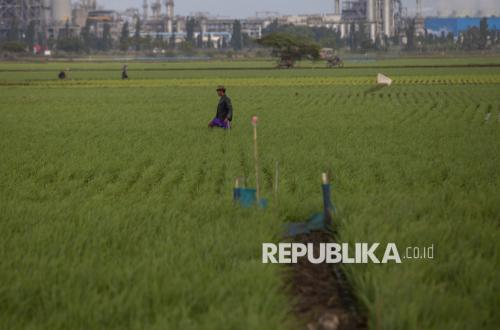
Rat pests have been reported attacking rice plants in Kuningan Regency. The Regency Food Security and Agriculture Office (Diskatan) has responded quickly to the threat of the pest attack, which has the potential to suppress rice production.
The swift response was carried out through the Plant Disturbing Organism Control Movement (Gerdal OPT) in the Tunas Mandiri 1 Farmers Group area, Bakom Village, Darma Subdistrict. A total of 15 hectares of rice fields in the area were successfully treated to prevent wider damage.
The activity was directly led by the Head of Diskatan Kuningan Regency, Wahyu Hidayah, M.Si., along with the Crop Protection Brigade team, Plant Disturbing Organism Control Officers (POPT), and local farmers. “Rat attacks pose a real threat to food production. Control cannot be done individually, but must be simultaneous across an area to effectively suppress the population,” said Wahyu on Thursday (16/4/2026).
She emphasised that the swift action is a direct response from the local government to reports from farmers in the field. Moreover, rats are one of the main threats to rice crops due to their high reproductive capacity and adaptability to the environment.
In addition, rats attack crops systematically, from the seedling phase to near harvest. In conditions of high population, rat attacks can cause significant yield losses or even crop failure.
“Every complaint that comes in is immediately followed up. The team goes down for identification and control action. This is part of the effort to keep production safe,” Wahyu stressed.
In addition to carrying out technical control actions, Diskatan also provides education to farmers on the characteristics of rat pests, attack patterns, and effective integrated control strategies that are environmentally friendly. Farmers are encouraged to carry out control collectively, starting from land sanitation, nest fumigation, to the proper use of control tools.
Diskatan also distributes rodenticide aid to support simultaneous control in affected fields. This support is expected to significantly suppress the rat population and prevent the spread of attacks.
Wahyu emphasised that the success of control is highly determined by the unity of farmers in one area. “If done simultaneously, the rat life cycle can be broken. This is the main key to successful control,” she said.