
Rare Total Solar Eclipse to Plunge Makkah into Darkness
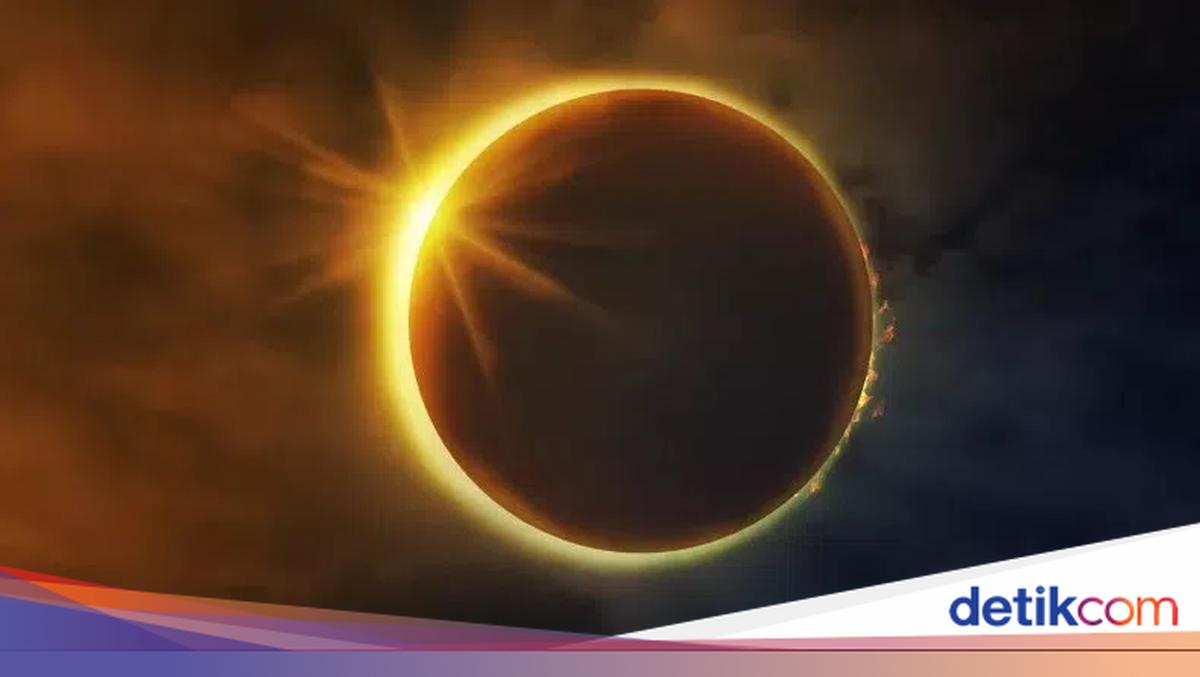
Saudi Arabia will witness a rare and spectacular astronomical event at the beginning of August 2027. Specifically, on 2 August 2027, a total solar eclipse, considered a rare occurrence, will be directly visible in the regions of Makkah and Jeddah.
The total solar eclipse, as reported by Arabia Weather on Monday (13 July 2026), is regarded as one of the most remarkable astronomical phenomena in recent decades.
According to astronomical calculations, the eclipse will be visible across a wide area of the Arabian Peninsula, with the total effect occurring in western Saudi Arabia, particularly in the holy city of Makkah.
During the total solar eclipse, according to the Arabia Weather report, sunlight in the holy city of Makkah is expected to disappear entirely — 100 per cent — for approximately five minutes during daytime on 2 August 2027.
This situation will create an extraordinary spectacle, turning day into momentary darkness.
The holy city of Makkah will be one of the main cities to witness this rare astronomical event.
The Moon’s shadow will completely cover the disc of the Sun, presenting the unique phenomenon of darkness in the middle of the day and allowing stars and planets to become visible in the sky at the peak of the eclipse.
Besides Makkah and Jeddah, the total solar eclipse will also be visible in Taif, Abha, Jazan and Al-Bahar. In other parts of Saudi Arabia, only a partial solar eclipse will be observable.
Eastern Saudi Arabia is expected to witness a partial eclipse with coverage potentially exceeding 60 per cent, meaning most of the country will be treated to a special astronomical spectacle of varying intensity.
The event is expected to attract widespread attention from astronomy enthusiasts and global media alike, owing to its rarity and unique characteristics.
Total Solar Eclipse with the Longest Duration of the 21st Century
The total solar eclipse of 2 August 2027, according to reports by Forbes and Egypt Independent, will be exceptional because of its extraordinary duration. Next year’s eclipse will be the longest total solar eclipse of the 21st century.
The city of Luxor in Egypt will be the centre of this historic event, where observers will be able to witness the longest phase of totality, lasting six minutes and 23 seconds.
This makes it the longest total solar eclipse observable from land until the year 2114. Most total solar eclipses usually last only two or three minutes.
Eclipse chasers have dubbed it “the eclipse of the century”.
The path of the 2027 total solar eclipse will begin over the Atlantic Ocean, before crossing southern Spain, Gibraltar, Morocco, Algeria, Tunisia, Libya, Egypt, Saudi Arabia, Yemen and Somalia.