
Rare Event: Microalgae Cripple Nearly All of Israel's Drinking Water Facilities
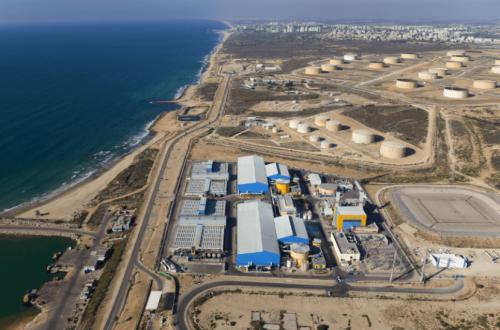
A microalgae population explosion stretching for kilometres across the Mediterranean Sea has caused the temporary halt of operations at several of Israel’s major desalination plants this week. This threatens the country’s main source of drinking water.
Five of the country’s six coastal desalination plants—which convert seawater into potable water—ceased operations on Sunday, according to Mekorot, Israel’s national water company. Since then, some of the privately owned and operated facilities have partially resumed operations, but only one was operating at full capacity by Thursday.
“An event of this kind has never happened before in Israel… this is a very rare occurrence,” said Lior Gutman, a spokesman for Mekorot.
Nevertheless, the situation is worrying given the country’s heavy reliance on desalination for its drinking water needs. Israel is an arid region with no major rivers or abundant rainfall, yet mastery of this technology has made it a water superpower.
Despite possessing such water supply technology, it should be noted that Israel’s occupation has caused the Palestinian territories, especially Gaza, to suffer severe water shortages. The destruction of water facilities in Gaza is a deliberate act that was announced by the perpetrators of crimes against humanity in Israel since the start of the genocide in 2023.
Currently, desalination provides at least 65 percent of Israel’s drinking water needs, with most plants located along the Mediterranean coast. The problem began at the weekend, when there was “a widespread and sporadic contamination event along Israel’s coastline,” said Edo Bar-Zeev, an associate professor of water research at Ben-Gurion University in Israel.
When he and other scientists conducted further examinations, they found that the cause was microalgae—microscopic organisms that use sunlight, carbon dioxide and nutrients in the water to survive, and have the ability to multiply rapidly.
The microalgae bloom—which stretched at least more than a dozen miles according to Bar-Zeev—is believed to have originated in the Nile Delta and moved northwards with ocean currents to Israel’s coast. This is “the first time I have seen a phenomenon of this magnitude,” said Bar-Zeev, who has been testing coastal waters for 20 years.
The country’s desalination facilities mostly use a technology called reverse osmosis, in which water undergoes pre-treatment to remove larger contaminants before being pumped through membranes that filter out salt, bacteria and other molecules, producing clean drinking water.
Algae and the substances they produce can foul and damage these membranes, said Michael Christopher Low, director of the Middle East Center at the University of Utah. If there is too much suspended matter in the water, the treatment process will not be able to keep up.
In Israel, the government water supply system has “stepped in to cover the shortfall” caused by the plant closures, said Gutman of Mekorot. This includes pumping water from the Sea of Galilee, activating groundwater wells, and using national water reserves.
Some cities briefly faced short-term local restrictions, including bans on garden watering and swimming pool filling; however, the main restrictions have had a greater impact on farmers who use drinking-quality water for irrigation, as opposed to those who use recycled water, Gutman explained.
The timing of the event has exacerbated the problem. It occurred in summer, “when water demand in Israel is at its highest level,” he said, adding that “the situation is very challenging.”
Algal blooms occur when there is the right combination of environmental factors in the water that allow algae to grow rapidly, said Tamar Guy-Haim, a marine ecologist at the Israel Oceanographic and Limnological Research Institute.
These factors include nutrient availability, temperature, light, currents and water mixing. Mekorot stated that this algal bloom was part of “a very unusual combination of factors,” including a sea storm that increased turbidity—the amount of suspended matter in the water—and raised sea water temperatures to 30 degrees Celsius or more. The scale of the disruption is extraordinary.
Desalination facilities have indeed been forced to close previously due to algae or jellyfish problems, “but the closure of multiple facilities across most of our coastline is clearly abnormal,” said Bar-Zeev. “It is reasonable to expect that this is not a once-in-a-lifetime event… you can assume that such events will become more frequent due to climate change.”