
Rantau Bakula Residents in South Kalimantan Demand Environmental Justice
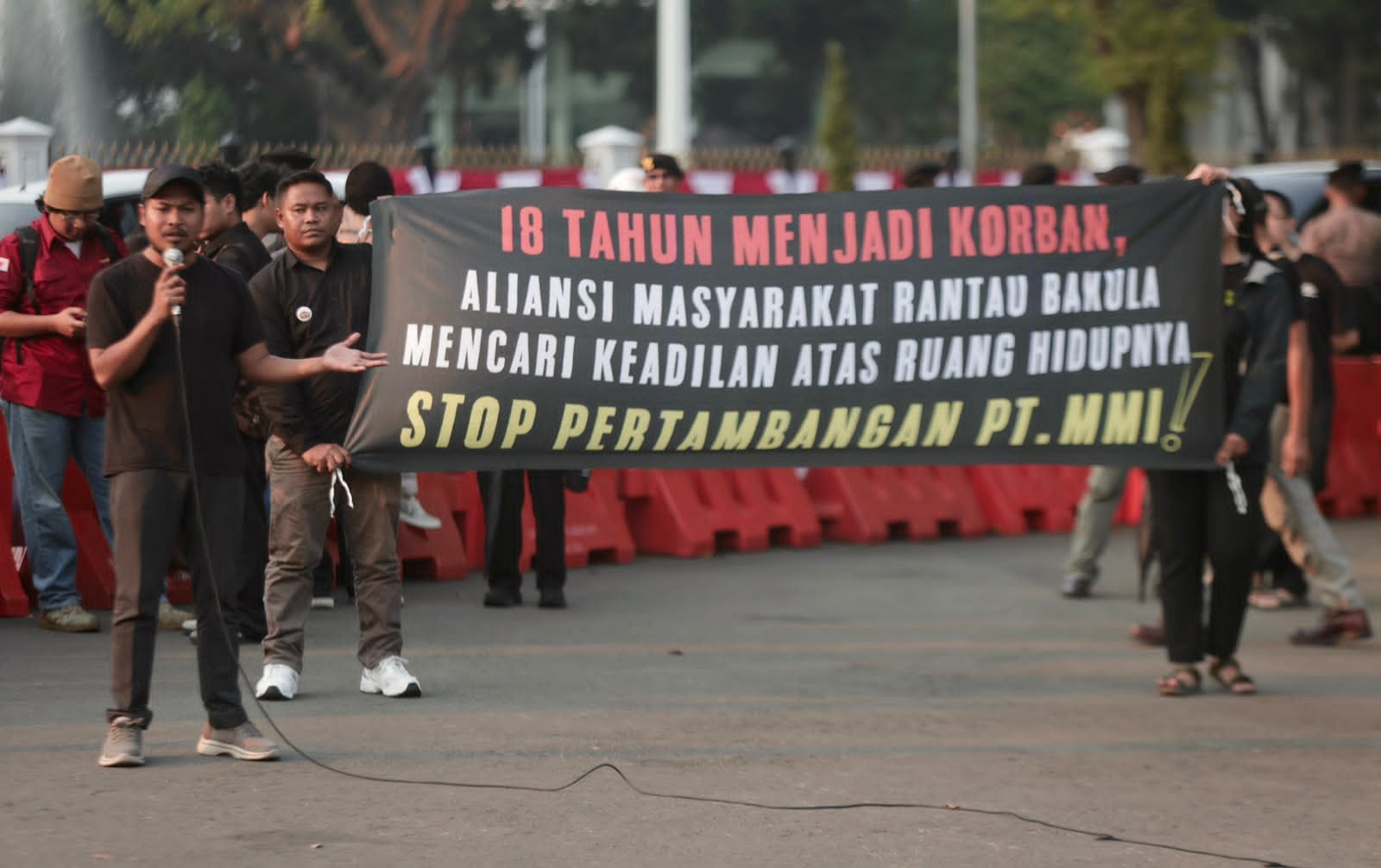
After nearly two decades living in a damaged and polluted environment due to underground coal mining activities by PT Merge Mining Industri (MMI), residents of Rantau Bakula Village, Sungai Pinang District, Banjar Regency, South Kalimantan, have come to Jakarta to demand environmental justice. Residents, united under the Rantau Bakula Community Alliance (AMRB) together with WALHI South Kalimantan, submitted complaints to the Indonesian House of Representatives (DPR RI) at Commission XIII and Commission XII, the National Commission on Human Rights (Komnas HAM), and the National Commission on Violence Against Women (Komnas Perempuan) regarding various environmental, social, and human rights issues they have experienced since the company began operations in 2007. “Since then, we have felt the impact of the MMI company. We have tried to fight for our rights locally, but there has been no follow-up,” said Mariadi, a resident representative. Over the past 18 years, they have faced various disruptions to their lives. Clean water sources have dried up, and coal dust and noise from mining activities have increased daily. Many residents’ homes have also cracked or subsided. He suspects these incidents are closely linked to the underground mining activities carried out by the company. “They (PT MMI) operate almost 24 hours a day. The dust goes everywhere, including into residential areas, greatly disturbing our comfort.” The transmigrant residents also explained that MMI’s waste has affected the productivity of crops such as secondary crops and oil palm plantations, causing yields to decline. The situation worsened after a washing plant facility began operating near the settlement. Residents complain of dust entering their homes every day, vibrations exacerbating building damage, and increasing health problems such as coughs (acute respiratory infections) and skin rashes, especially among children and the elderly. In addition to facing environmental pollution, residents have also had to deal with various social issues. In recent years, several residents have reportedly faced legal proceedings after defending their land or staging peaceful protests. Another concern is the repeated breaching of the washing plant waste containment embankment in 2024 and again in June and July 2026. Mining sludge reportedly polluted residents’ gardens and flowed into the river that has long been the community’s source of life. Executive Director of WALHI South Kalimantan, Raden Rafiq, stated that these issues demonstrate the need for a comprehensive evaluation of PT Merge Mining Industri’s operations. The state cannot allow communities to continue bearing the ecological, social, and economic burden of mining activities without a just resolution and environmental restoration. “We see the issue in Rantau Bakula not merely as the seizure of citizens’ living space, but more than that. It concerns the state’s obligation to guarantee the right to a good and healthy environment. For 18 years, the community has lived in uncertainty, while the alleged environmental impacts and violations of residents’ rights have not been adequately addressed,” Raden said on Friday (10/7). Through a series of complaints in Jakarta, residents are urging the DPR RI, the Ministry of Energy and Mineral Resources, the Ministry of Environment, the Ministry of Human Rights, Komnas HAM, and Komnas Perempuan to take concrete steps. They are demanding a comprehensive audit of PT MMI’s operations and permits, regular health checks for affected residents, restoration of the damaged environment, protection of the community from intimidation or criminalisation, and a thorough resolution of residents’ rights that have yet to be fulfilled. National Executive Campaign Coordinator of WALHI, Uli Arta Siagian, views the situation in South Kalimantan, where residents must inhale coal dust, as only a small part of the visible adverse impacts of mining activities.