
RANS IPO: Don't FOMO, Understand the Difference Between Buying a Business and Buying a Brand
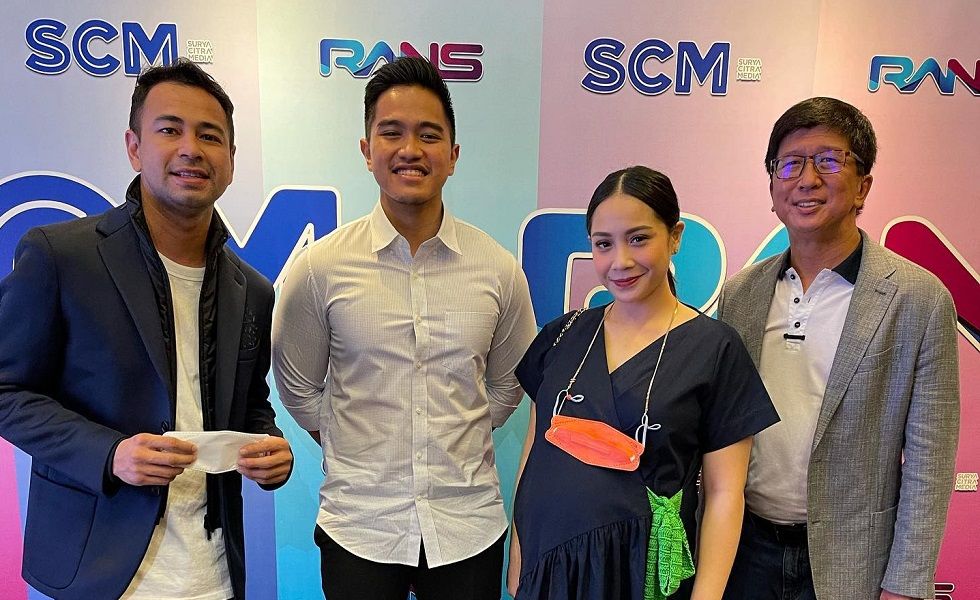
When the names Raffi Ahmad and Nagita Slavina appear in the capital market, public attention is almost instantly captured. That is precisely what is happening with the planned IPO of RANS. The business group owned by the celebrity couple is preparing to list on the Indonesia Stock Exchange, targeting to raise around Rp429 billion. With an offering price in the range of Rp135–Rp170 per share, the post-IPO valuation is expected to reach Rp1.70–2.14 trillion. That figure is relatively large, especially for a media entertainment company that does not yet have a long track record as a public issuer. However, beyond the public enthusiasm, there is a far more important question for retail investors. Are investors buying a business with solid fundamentals, or merely an exceptionally strong brand awareness? This question is crucial because, in the capital market, popularity does not always equate to profitability.
RANS is not just a YouTube channel. It is difficult to deny the strength of the RANS brand. Its business ecosystem has developed far beyond digital content. The group now has exposure to various sectors: digital media, music, talent management, animation, F&B, events and carnivals, and sports, including football. On digital platforms, RANS is one of the largest content brands in Indonesia. Its YouTube channel has more than 24 million subscribers, placing it among the top national creators. In the creator economy, an audience of that scale is an asset. According to research by Goldman Sachs, the global creator economy is projected to reach US$480 billion by 2027, nearly double the figure from 2022. This means that audience-based businesses do have significant opportunities. But big opportunities do not automatically translate into consistent profits.
A strong brand does not always mean strong cash flow. The most common mistake retail investors make is assuming that a big brand automatically generates a big business. That is not always the case. A brand is top-of-mind awareness. A business is revenue, margins, profit, and cash flow. Marketing professor Aswath Damodaran, often called the ‘Dean of Valuation’, has repeatedly stressed that the valuation of a brand-driven company must ultimately return to its ability to monetise. ‘An extraordinary brand without decent cash flow is not a good investment,’ he stated.
There is a significant risk in businesses based on a personal brand. The RANS business is closely tied to its central figures, Raffi Ahmad and Nagita Slavina. They are not just the founders; they are the brand itself. This creates a concentration risk, known in investment terms as key person risk. It means the business performance is heavily dependent on one or two individuals. If their popularity declines, their reputation is damaged, or audience attention shifts, the business could be significantly impacted. Creative economy expert Rhenald Kasali from the University of Indonesia has often noted in business forums that the biggest challenge for a personal brand-based business is institutionalisation. ‘The key question is whether the business can continue to grow when the main figure is no longer the centre of attention,’ he said.
MD Entertainment could serve as a mirror. For investors seeking a comparison, the case of MD Entertainment is interesting. This major production house went public in 2022 with an optimistic narrative: a large IP catalogue, extensive experience, and a strong brand in the entertainment industry. However, the market taught a harsh lesson. Within two years of the IPO, its shares experienced significant pressure. This occurred because investors began to question whether the IPO valuation was too expensive compared to the fluctuating business fundamentals. The entertainment industry is unique. Revenues can be huge, but profit predictability is often low. One film can be a blockbuster, the next a failure. One event can be sold out, the next can result in a loss. RANS shares similar characteristics. The majority of its revenue comes from content, sponsorship, events, IP, and entertainment activation.
Is a valuation of Rp2 trillion expensive or reasonable? When evaluating a media entertainment IPO, investors typically look at revenue growth, gross margin, EBITDA, recurring income, and scalability. In RANS’s prospectus, investors should seek answers to several questions. How much of the revenue is recurring? Does the majority come from long-term contracts or seasonal projects? What are the core business margins? Large revenue without healthy margins is less attractive. How large is the dependency on Raffi? This is a very important question. If 70–80% of monetisation relies on the personal exposure of the founder, a premium valuation becomes riskier.
An IPO of a celebrity is an IPO of a narrative. In many global cases, narrative-based IPOs often attract retail investors. Examples include media companies, creator economy firms, and community platforms. The narrative usually goes: large audience, high engagement, and monetisation will follow. The problem is that the public market is far more ruthless than the private market. In the private market, investors can buy a vision. In the public market, investors eventually demand profit. Market analysts from Samuel Sekuritas, in various IPO education sessions, often remind retail investors not to look solely at the issuer’s popularity. Investors must understand the business model and its profitability. That way, retail investors can make rational decisions, not just out of fear of missing out.
IPO Schedule:
Bookbuilding Period: 23 – 25 June 2026
Estimated Effective Date: 30 June 2026
Estimated Public Offering Period: 2 – 8 July 2026
Estimated Allotment Date: 8 July 2026
Estimated Electronic Distribution Date: 9 July 2026
Estimated Listing Date on the Indonesia Stock Exchange: 10 July 2026
Source: jawawa.id (https://jawawa.id/newsitem/rans-ipo-dont-fomo-understand-the-difference-between-buying-a-business-and-buying-a-brand-1782233414)
Originally published by trenasia.id (https://www.trenasia.id/tren-pasar/jangan-fomo-ipo-rans-pahami-beda-beli-bisnis-dan-beli-brand), translated from Indonesian