
RANS Carnival Boycott: UMY Lecturer Says Cancel Culture Can Serve as a Social Sanction
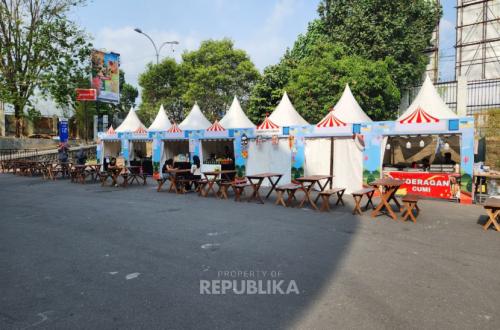
Fajar Junaedi, a communications lecturer at Universitas Muhammadiyah Yogyakarta (UMY) and media observer, says the phenomenon is not merely about rejecting an event. More broadly, it illustrates how dominant opinion, community norms and social pressure can shape the positions taken by individuals and groups.
According to Fajar, opinions circulating in public, particularly on social media, can influence how people express their views, show support and decide whether to take part in an event. He cited research by Pippa Norris, ‘Cancel Culture: Myth or Reality?’, published in the journal Political Studies in 2023. The study examines the relationship between how closely an individual’s values align with a group’s dominant culture and perceptions of the suppression of opinion.
Fajar also linked the boycott of RANS Carnival to the spiral of silence theory introduced by Elisabeth Noelle-Neumann. The theory explains people’s tendency to withhold their opinions when they feel their views differ from those considered dominant. Fear of rejection or pressure from those around them can lead people to remain silent. As a result, voices seen as representing the majority come to dominate public debate.
“When someone feels their opinion differs from the majority, they tend to remain silent for fear of facing social pressure. As a result, the majority voice appears increasingly dominant, while groups with different views find it harder to express their position,” he said in a statement on Monday (2 November 2026).
Fajar said the rejection of RANS Carnival in Yogyakarta must also be understood in the context of the social climate following a series of student demonstrations. Issues of power, solidarity and public aspirations form part of the social context shaping public perceptions of particular figures.
“When a figure or group is perceived as not aligning with values that are gaining strength in a community, they may be cast as differing from local social norms. In Norris’s study, this kind of situation can be understood through the concept of ‘fish out of water’: a situation in which someone feels they are not in an environment whose values align with their own,” Fajar said.
He explained that social pressure in cancel culture does not arise only through negative comments or calls for a boycott on social media. Relationships between communities can also amplify the spread of opinions and encourage individuals or groups to take a particular position. In such circumstances, the decision not to take part in an event may be shaped by social considerations, including community ties and public perceptions of the organisers.
However, Fajar stressed that each musician’s decision to withdraw should be understood in light of their own statements. Not every withdrawal can automatically be categorised as a consequence of cancel culture pressure.
The effects of the boycott were evident in the controversy surrounding RANS Carnival, scheduled to take place from 31 October to 1 November 2026.
Ahead of the event, several musicians, including Tipe-X, Guyon Waton, Masdddho and OM Wawes, announced their withdrawal, citing various considerations ranging from safety and comfort to the situation in the community.
Calls for a boycott intensified after Raffi Ahmad’s appearance at the Youth Pledge Declaration at the Hotel Indonesia Roundabout in Jakarta on Thursday (29 October 2026) drew criticism. The management of Guyon Waton, which had been scheduled to perform on Saturday (31 October), decided to withdraw in order to safeguard everyone’s comfort and safety.
“We have seen extensive discussion on social media about Guyon Waton’s appearance at Maguwoharjo Stadium in Sleman on 31 October 2026, which coincides with a particular moment. On behalf of Guyon Waton’s management, we apologise that we are unable to proceed with the event,” the group’s management said in an official statement.
OM Wawes took a similar position. The Yogyakarta-based group, scheduled to perform on Sunday (1 November), chose to withdraw in view of developments and the feelings of the local community.
Gaseng, OM Wawes’ vocalist and founder, said the decision was made together with the management. As a band from Yogyakarta, they felt they needed to take a position guided by their conscience.
“As a band from Yogyakarta, we have to take a firm position guided by our conscience. We do not want to hurt people’s feelings, especially those of the people here in Jogja,” Gaseng said.
Source: jawawa.id (https://jawawa.id/newsitem/rans-carnival-boycott-umy-lecturer-says-cancel-culture-can-serve-as-a-social-sanction-1793623895)
Originally published by Republika (https://rejogja.republika.co.id/berita/tnviqw291/rans-carnival-diboikot-dosen-umy-cancel-culture-bisa-menjadi-sanksi-sosial), translated from Indonesian