
Rano Reveals Collaboration as Key to Jakarta's Sustainable Development
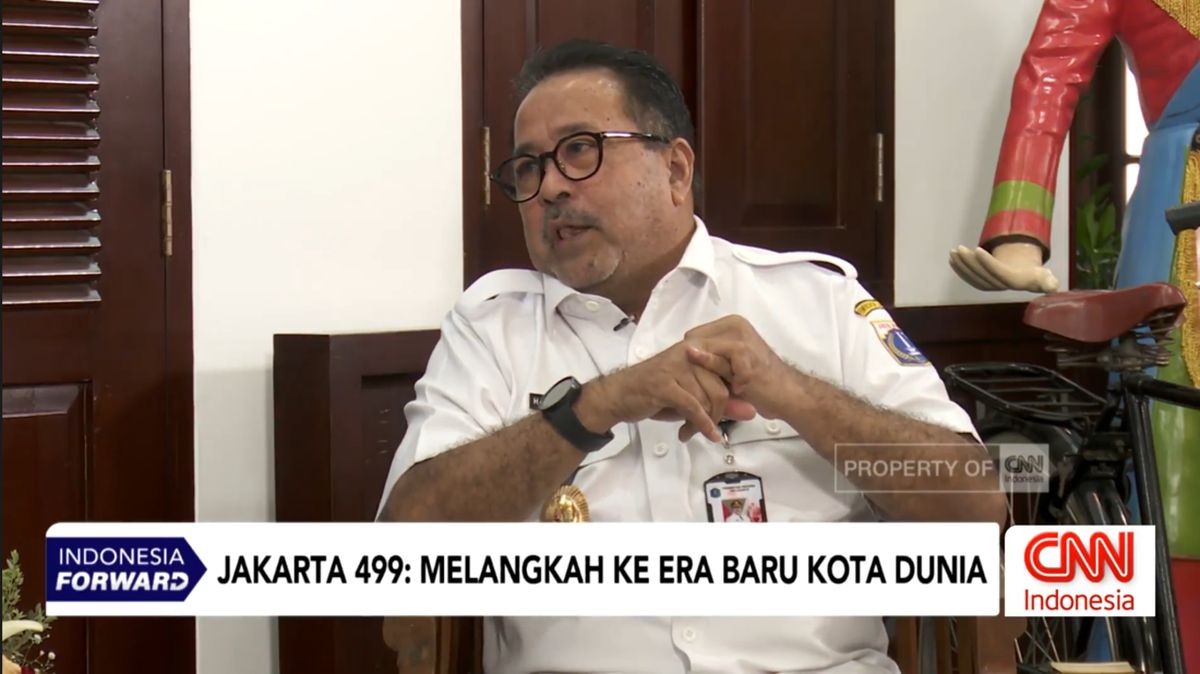
The Jakarta Provincial Government has asserted that sustainable urban development can only be achieved through collaboration between the government, the community, the business world, academia, and the central government. This cross-sector synergy serves as Jakarta’s primary strategy to realise its target of becoming a competitive global city while simultaneously improving public welfare.
Jakarta Deputy Governor Rano Karno stated that one indicator of Jakarta’s successful transformation into a global city is the improvement in its Global City Index ranking. According to him, following the start of the leadership of Governor Pramono Anung and himself in February 2025, Jakarta’s position has risen in less than a year.
“Jakarta must enter the top 50. This is our target. We were inaugurated on 20 February 2025. Within eight months of working, Jakarta’s city index has increased from rank 74 to 71. I am very confident that within this year, perhaps around October, Jakarta could approach rank 65,” Rano said during the ‘Indonesia Forward’ talk show themed ‘Jakarta 499: Stepping into the New Era of a World City’ on Friday (26/6).
According to Rano, the improvement in ranking is not merely about chasing international recognition, but is part of an effort to enhance the quality of life for Jakarta’s residents. “What is our target if we enter the global stage? Certainly, we will increase the welfare of the people. There is no point in building skyscrapers if the people fail,” he remarked.
He cited one of the developmental achievements as the reduction in the number of slum neighbourhoods (RW) in Jakarta. Based on data presented by Rano, the number of slum areas has been successfully reduced by approximately 50 per cent within one year. “Previously, there were more than 400 slum RWs in Jakarta. In one year, we managed to reduce them by about 50 per cent to 211 slum RWs. That is not an easy task. It was not just the great work of the Governor and Deputy Governor, but because the citizens of Jakarta were willing to follow regulations and collaborate,” he said.
This aligns with the direction of Jakarta’s development as outlined in the Regional Long-Term Development Plan (RPJPD) 2025-2045. The Jakarta Provincial Government places collaboration as the foundation of development through the involvement of the government, business world, academia, communities, and the public in resolving various urban issues, ranging from climate change and environmental management to transportation and digital transformation.
Rano added that sustainable urban development is also realised through the provision of integrated infrastructure, rather than mere physical construction without considering community needs. “It is not just ceremonial, but about improvements. Starting from transportation, public spaces, the environment, and digital services,” he said.
He cited the improvement of access to the Jakarta International Stadium (JIS) as a result of collaboration between the Jakarta Provincial Government and the central government. According to him, access to the area had previously been hindered by a lack of supporting facilities such as train stations and parking areas.
“We are working with the Ministry of Transportation so that train stations can be built. Ancol can also be utilised as a parking area for JIS, and connecting bridges are being constructed. This will assist during football matches and concerts,” said R_ano.
This inter-governmental collaboration is seen as an example of how urban development cannot proceed in isolation. Synergy between local government, ministries, business actors, and the community is a vital factor in creating more connected, environmentally friendly infrastructure that also supports economic activity.
In addition to physical development, the Jakarta Provincial Government continues to encourage the strengthening of governance, the digitalisation of public services, and the achievement of Sustainable Development Goals (SDGs). These steps are expected to strengthen Jakarta’s competitiveness as a global city while ensuring that the benefits of development are felt equally by all citizens.