
Rano Karno pushes for Jakarta to become a global creative city
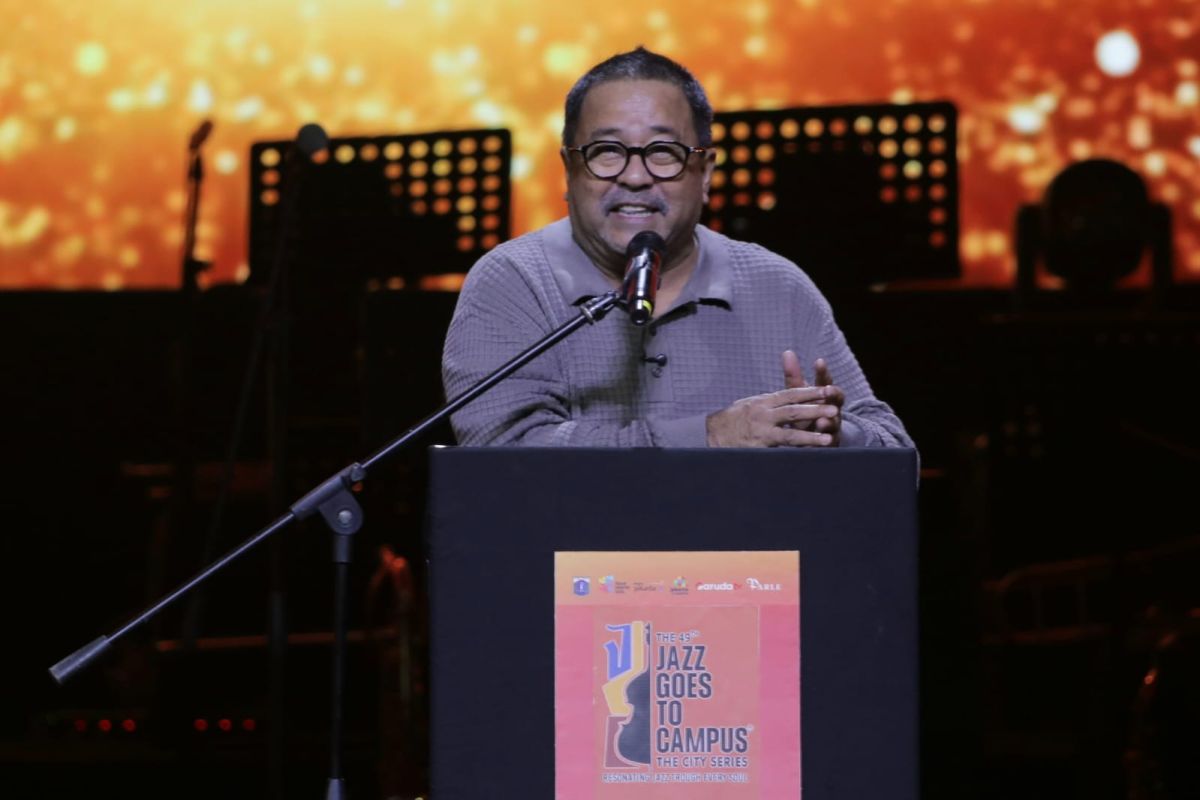
The arts are not merely about aesthetics but can also serve as an economic driver. Jakarta (ANTARA) - Deputy Governor of DKI Jakarta, Rano Karno, stated that the DKI Jakarta Provincial Government is committed to reviving various creative spaces in Jakarta to drive the local economy through the creative economy sector, arts, and culture. “We want the creative spaces in Jakarta to be utilised optimally to build a creative and empowered society,” said Rano Karno when opening Jazz Goes to Campus (JGTC) titled The City Series (TCS) 2026 at Teater Jakarta, Taman Ismail Marzuki (TIM), Jakarta, on Saturday night. According to him, efforts to open creative spaces are being pursued through the revitalisation and activation of Taman Ismail Marzuki (TIM) as a centre for arts and culture. The area is considered capable of providing space for creators to collaborate, experiment, and produce impactful works. “This is an effort to realise the vision of becoming a global city with a cultural perspective, and Jakarta continues to develop by integrating local cultural richness with innovation,” he said. The Deputy Governor hopes that Jakarta’s creative economy will not only grow rapidly but also possess a strong character rooted in cultural heritage, particularly Betawi culture as Jakarta’s identity. “We encourage the younger generation to boldly create for the development of arts and culture in Jakarta,” he said. Rano assessed that JGTC can continue to develop as a shared space that encourages creativity, drives the economy, and strengthens local culture. “We hope this event can open up collaboration opportunities in creating an inclusive and sustainable creative economy ecosystem,” he said. Rano viewed the organisation of Jazz Goes to Campus (JGTC) in Jakarta as not only celebrating the beauty of jazz music but also serving as a stage for ideas, expression, and collaboration that strengthens Jakarta’s identity as a cultured global city. According to him, JGTC, which developed in the University of Indonesia (UI) environment, also enlivens the pulse of arts performances in Jakarta. “The arts are not only related to aesthetics but can also become an economic driver,” he said. According to him, various creative spaces play a significant role in creating a sustainable creative economy ecosystem while providing broader access for creative actors to continue creating and innovating.