
Ranking Drops, Momentum Rises: Reorganising Indonesia's Islamic Economic Acceleration
The State of the Global Islamic Economy (SGIE) 2025/2026 report places Indonesia fourth in the world in the Global Islamic Economy Indicator (GIEI), dropping one rank from the third position it had maintained for the past three years. Indonesia now sits below Malaysia, the United Arab Emirates, and Saudi Arabia.
While this change in ranking may cause concern for some, those involved in the development of national Islamic economy and finance should interpret the results more substantively. While rankings are important indicators of global competitiveness, it is far more crucial to understand the shifting landscape of the global Islamic economy and how Indonesia is responding. The SGIE does not merely measure Muslim population size or halal product consumption; it assesses the strength of the entire ecosystem, including policy, innovation, investment, trade, and the ability to build integrated halal value chains.
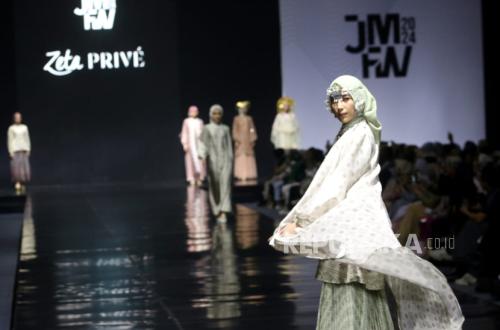
Indonesia’s Islamic economic foundation remains very strong. The nation remains a world leader in the modest fashion sector and has shown excellent performance in the halal food sector, rising from fourth place last year to third this year, as well as in media and recreation, which moved into the top five.
These facts indicate that Indonesia’s challenge is not a lack of potential or competitiveness, but rather how to convert these advantages into stronger leadership within the global Islamic economic value chain. To address this, three major agendas require acceleration:
First, strengthening Indonesia’s transformation from a halal market into a global halal producer. The downstreaming of the halal industry must be a shared priority. Indonesian halal products must be increasingly capable of penetrating international markets with higher added value, spanning food and beverage, Muslim fashion, pharmaceuticals, cosmetics, and other potential sectors. Halal industrial zones, halal supply chains, and export ecosystems must be strengthened so that Indonesia becomes a key player rather than just a major consumer.
Second, tightening the connection between Islamic finance and the real sector. The Islamic economy cannot develop optimally if the halal industry and Islamic finance operate in isolation. Islamic financing must better address the needs of businesses, particularly MSMEs, which serve as the backbone of the national economy. Integration between commercial Islamic finance, social Islamic finance, and halal industry development must be encouraged.
Third, strengthening innovation and global competitiveness. Leading Islamic economies do not rely solely on regulation but invest heavily in technology, digitalisation, research, and product development. Indonesia needs to strengthen its halal innovation ecosystem to create more domestic global players.
Furthermore, this drop in ranking provides an important lesson: the success of the Islamic economy cannot be sustained by the government alone. The business world, financial institutions, academia, Islamic boarding schools (pesantren), industry associations, and the wider community must be part of this collective movement.
Optimism should remain the foundation. Indonesia possesses capital that many other nations lack: the world’s largest Muslim population, a strong domestic market, abundant natural resources, and an increasingly tangible government commitment to making the Islamic economy a national growth engine. The decline in the SGIE 2025/2026 should not be viewed as a failure, but as a healthy alarm. It serves as a reminder that in global competition, ceasing to innovate is equivalent to falling behind. The ultimate goal is to build an economic ecosystem that is productive, inclusive, globally competitive, and capable of delivering broader prosperity to all Indonesian people.
Source: jawawa.id (https://jawawa.id/newsitem/ranking-drops-momentum-rises-reorganising-indonesias-islamic-economic-acceleration-1780818496)
Originally published by Republika (https://analisis.republika.co.id/berita/tg5acf472/peringkat-turun-momentum-bangkit-menata-ulang-akselerasi-ekonomi-syariah-indonesia), translated from Indonesian