
Rangkasbitung Line Prepares for Capacity Increase: KAI Accelerates Power Reinforcement and Signalling Modernisation
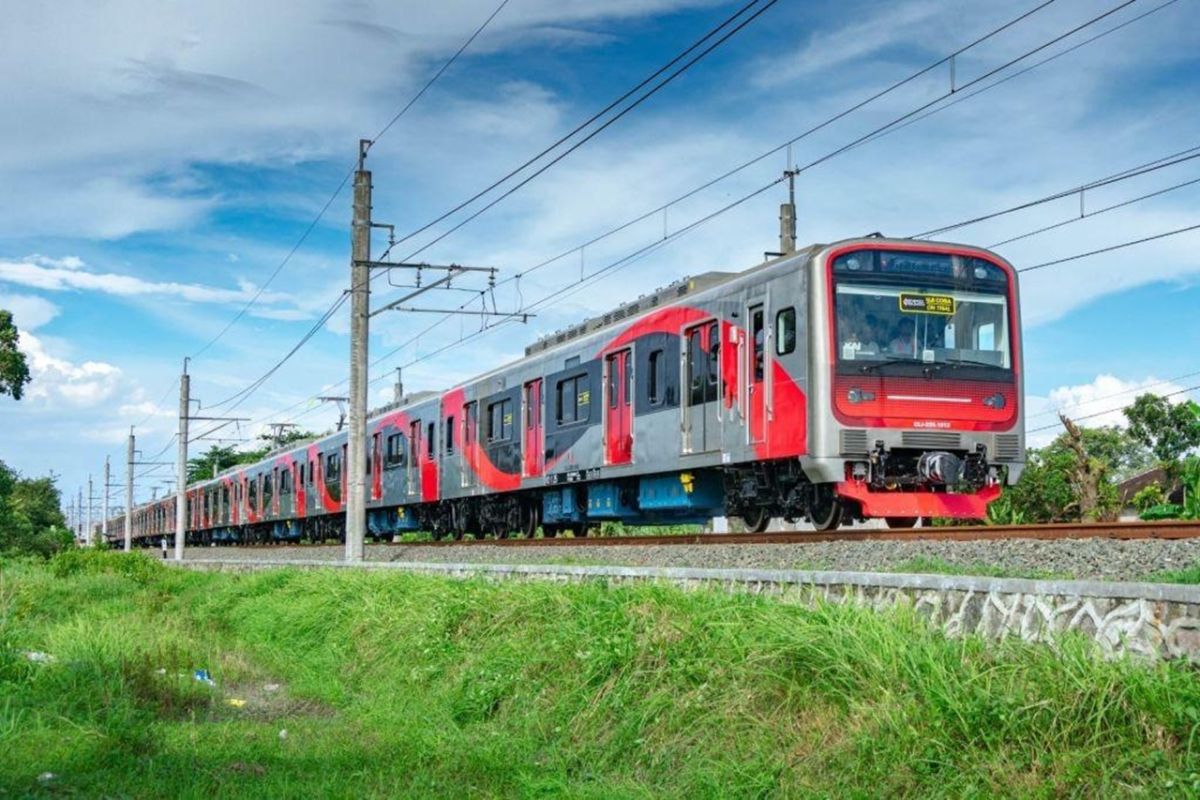
Passenger mobility on the Tanah Abang–Rangkasbitung line continues to show significant growth. To anticipate the increasing demand for service capacity, PT Kereta Api Indonesia (Persero), in collaboration with the Directorate General of Railways (DJKA) of the Ministry of Transport, is preparing to strengthen the electrical system and modernise signalling on this route.
This line serves as a primary artery connecting residential areas in western Greater Jakarta (Jabodetabek) with economic, educational, and governmental hubs in Jakarta. KAI has recorded a steady increase in Commuter Line passengers on the Rangkasbitung route, with figures rising from approximately 43 million in 2022 to an estimated 77.5 million in 2025. Between January and May 2026, passenger numbers had already reached 33.3 million.
As passenger numbers grow, peak-hour occupancy has also risen, currently reaching approximately 161 per cent on the Rangkasbitung Line—the highest among all Commuter Line routes, surpassing the Bogor line (130 per cent) and the Bekasi/Cikarang line (140 per cent). The President Director of PT Kereta Api Indonesia, Bobby Rasyidin, explained that this density is driven by limitations in current rolling stock and infrastructure capacity.
To address this, the first step involves strengthening the Overhead Catenary System (OCS). Currently, the voltage on this line is at 3,000 volts, whereas the Bogor and Bekasi lines are supported by 4,000 volts. This disparity prevents the operation of 12-car train sets, forcing reliance on 8 and 10-car formations. To support the upgrade, KAI will construct 11 new traction substations to provide the necessary power for 12-car operations, which will increase passenger capacity per trip and improve comfort during peak hours.
In addition to electrical upgrades, KAI and the DJKA will modernise the signalling system. Currently, parts of the Rangkasbitung line utilise a closed block pattern, which limits the number of trains that can operate on a single track segment. This results in a headway of approximately 10 minutes, compared to the 3 to 4-minute headway achievable on the Bekasi and Bogor lines. Modernising the signalling will increase line capacity, allowing for higher train frequencies and shorter waiting times for passengers.
Bobby Rasyidin emphasised that capacity enhancement must be comprehensive, spanning rolling stock, electrical power, and signalling systems. KAI views the expansion of the Rangkasbitung Line as a long-term investment to support regional mobility and economic growth as residential and social activities continue to develop along the corridor.