
Rampah Station: Witness to 120 Years of Mobility Change in Serdang Bedagai
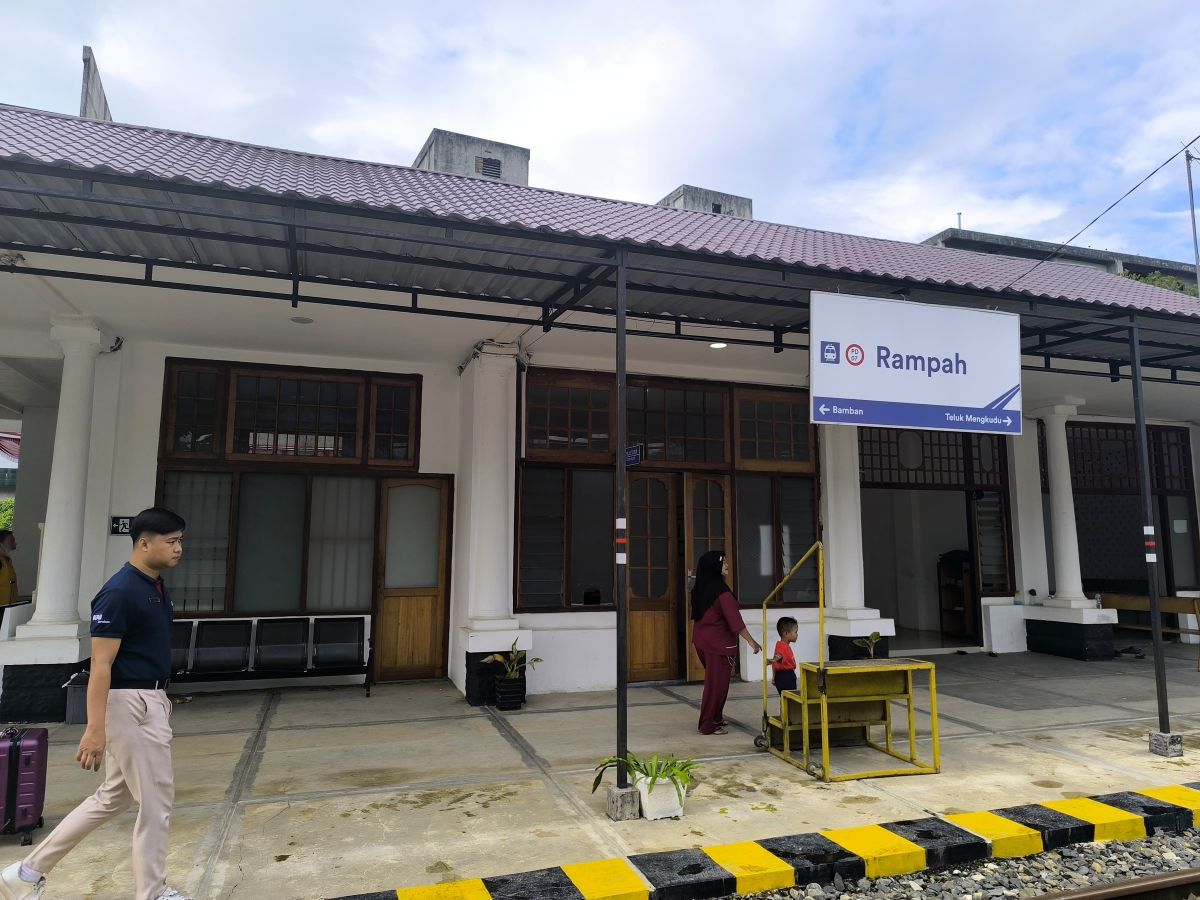
Rampah Station, located in the administrative centre of Serdang Bedagai Regency, has proven its role as a historical witness to the development of railways in North Sumatra since it first began operations in 1903. Having suspended passenger services during the COVID-19 pandemic, the historic station has now revived and grown into a primary hub for local community movement.
Anwar Yuli Prastyo, Public Relations Manager of PT Kereta Api Indonesia Regional Division I North Sumatra, stated that customer movement at Rampah Station has shown a consistently positive upward trend over the past three years. ‘Throughout the January to July period over the last three years (2024–2026), the volume of people using services at Rampah Station has continued to increase. From January to July 2024, it served 16,668 customers, then jumped 68 percent to 28,041 customers in the same period of 2025, and grew again by 24 percent to reach 34,632 customers from January to July 2026,’ said Anwar on Sunday (23/8).
Anwar explained that this growth indicates that the railway is increasingly trusted by the public as a mass transportation mode that is safe, comfortable, secure, and punctual in supporting daily mobility. ‘Currently, Rampah Station not only serves passenger boarding and alighting for the Putri Deli and Siantar Ekspres trains, but also handles operations for the optional Sribilah train (Medan–Rantauprapat round trip) whenever that train is operated,’ he added.
Rampah Station began operations in 1903 alongside the expansion of the rail network by the private railway company of the Dutch East Indies era, Deli Spoorweg Maatschappij (DSM). In the early 20th century colonial period, the railway line in the Sei Rampah area was used to support the distribution of plantation produce to Belawan Port.
As the region developed and administrative boundaries were reorganised, the function of Rampah Station transformed from a plantation commodity distribution route into a pillar of public mobility and a supporter of tourism accessibility and regional economic potential in Serdang Bedagai Regency. ‘Since it first began operating in 1903, the railway has had a close connection with regional growth in North Sumatra. If in the past this line largely supported the distribution of plantation produce, today its role has evolved into a primary means of public mobility,’ Anwar stated.
Given the continued growth in public trust, KAI Divre I North Sumatra is committed to sustainably strengthening service quality at Rampah Station to align with the needs of service users. ‘Public trust is the main motivation for KAI to continue innovating and improving service standards based on direct customer experience. We ensure that Rampah Station is present not only as a place for passengers to board and alight, but also as a travel hub that provides a pleasant experience and supports the growth of tourism, cultural, and economic potential in Serdang Bedagai Regency,’ said Anwar.