
Rajiv Supports Quota Restrictions in Komodo National Park to Prevent Damage
The policy restricting the number of tourists in Komodo National Park, East Nusa Tenggara (NTT), has been implemented with a maximum quota of 1,000 visitors per day. This step is taken as an effort to preserve the conservation area.
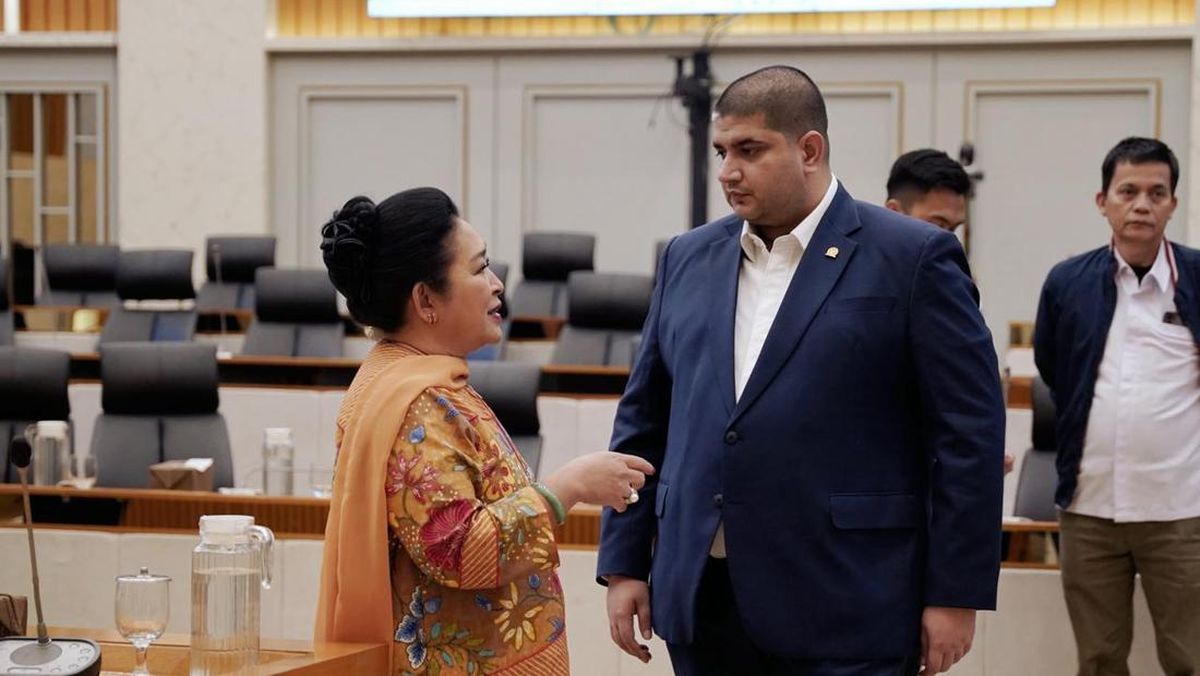
Member of Commission IV of the Indonesian House of Representatives, Rajiv, expressed his support for the policy. He assessed the quota restriction not merely as a technical policy, but as a strategic step that will determine the future direction of Komodo’s management.
“This is not just about quota numbers, but how we choose between short-term exploitation or long-term sustainability. We know that Komodo is not an ordinary destination, but a conservation area with limited carrying capacity,” said Rajiv in his statement in Jakarta on Monday (13/4).
Based on data from the Ministry of Forestry of the Republic of Indonesia, the number of tourist visits to Komodo National Park has continued to increase throughout 2024, reaching around 300,000 visits.
This surge is considered potentially disruptive to the ecosystem, from changes in animal behaviour, disruption to the food chain, to damage to vegetation in the area.
“We must be bold in taking steps to save the ecosystem. Wildlife is sensitive. We must not wait until damage occurs before acting. The principle of conservation is prevention, not reactive,” he stated.
Furthermore, this member of the NasDem Party faction in the House of Representatives emphasised that the concept of carrying capacity must be the primary basis in determining the maximum number of visits.
In addition, reforming the tourism management system in Komodo by adopting practices like world-class national parks, including the implementation of a technology-based visitor management system.
“There must be a clear booking system, daily quotas up to visit time slots. This is a common practice in many national parks around the world,” Rajiv stressed.
Rajiv acknowledged that the policy could raise concerns among local communities, particularly small business actors such as tour guides, MSME players, and boat operators.
He said that the narrative of quota restrictions is often perceived negatively by business actors. However, if managed well, quota restrictions can actually increase the exclusivity of the destination and boost economic value.
For this reason, he urged the government to prepare a fair and inclusive transition scheme, including training programmes, service quality improvements, and access to financing for local business actors.
“Don’t let them become victims. There must be assistance programmes so they can level up and enjoy the benefits of quality tourism. If managed properly, Komodo can become a world-class exclusive destination,” explained the legislator from the Jawa Barat II electoral district.
In addition, Rajiv highlighted the importance of data transparency in area management, where the public must have access to information regarding environmental carrying capacity, daily visit numbers, and ecosystem health indicators.
Furthermore, he proposed that a portion of tourism sector revenue be reallocated for conservation and community empowerment around the area.
“This data is important so that all parties understand why the restrictions are implemented. It should not create perceptions as if this is a unilateral policy. In addition, there must be reinvestment in the environment and community so that the ecosystem and local economy are both strong,” he said.
Therefore, Rajiv emphasised that cross-ministerial and institutional coordination is key in implementing the 1,000 visitor quota restriction policy in Komodo. Because Komodo’s management involves not only the forestry sector, but also tourism, transportation, and local government.
“All stakeholders must sit together from central to regional levels so that the direction of Komodo’s management is clear and does not conflict. Hence, solid cross-sector coordination is needed, as it concerns aspects of conservation, tourism, to local community welfare,” said Rajiv.
Meanwhile, Rajiv added that Commission IV of the House of Representatives will continue to monitor this quota restriction policy, including ensuring transparency in quota determination and periodic evaluations of its impacts in the field.
“If it’s already restricted but monitoring is weak, it’s the same. So it must be a package between policy and implementation. We want this policy not only good on paper, but truly effectively implemented. Komodo is our pride, even the world’s. If we don’t protect it now, we will lose something irreplaceable,” he concluded.