
Rajiv Distributes Food Aid in Bandung, Ensuring Programs Reach Target Recipients
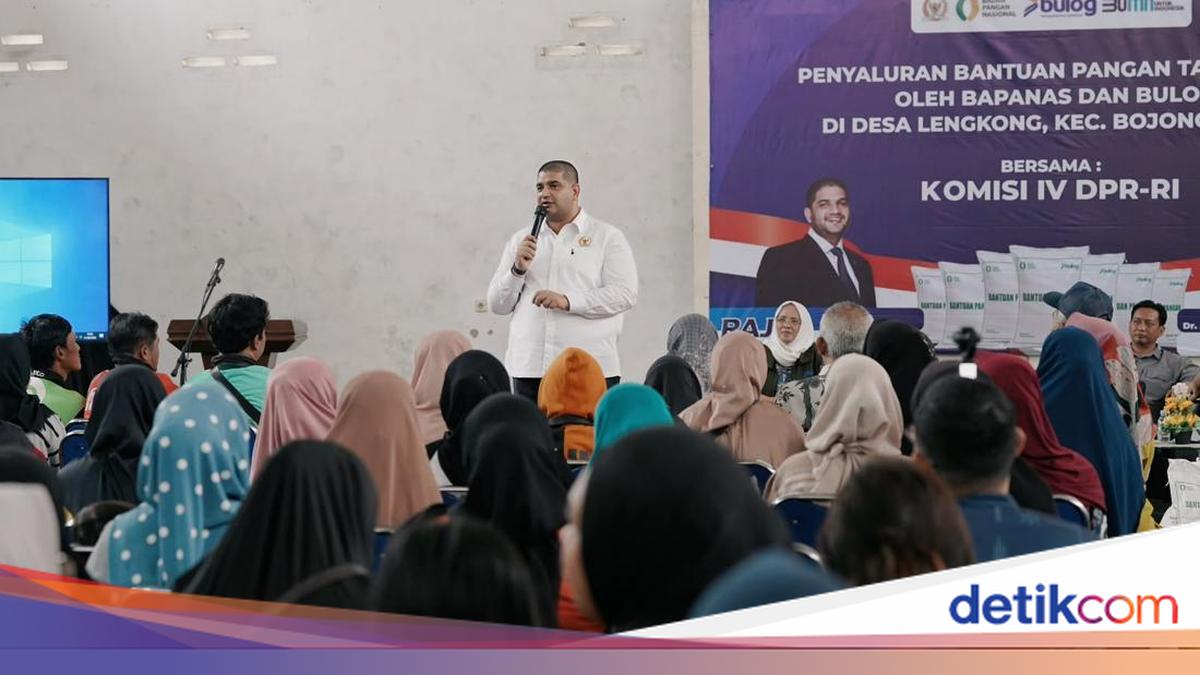
Rajiv, a member of Commission IV of the Indonesian House of Representatives (DPR RI), has distributed government food aid in the form of rice commodities to communities in Bandung Regency and West Bandung Regency, West Java. The distribution is part of a government programme implemented through the National Food Agency (Bapanas) and Perum Bulog.
According to Rajiv, the government’s food aid is intended to help the public meet their nutritional needs while easing the financial burden on beneficiary families.
“I am present for the distribution of rice commodities from Bapanas and Bulog. This is from the government. This is your right,” Rajiv stated in a written release on Friday (1<0xE2><0x80><0x89> May<0xE2><0x80><0x89> 2026).
As a member of the DPR RI representing the West Java II constituency, which includes the Bandung area, Rajiv is performing his oversight function to ensure that the government programme is distributed accurately to the intended targets.
“I am here as a member of the DPR representing the citizens of Bandung, exercising my oversight function to ensure this programme is on target,” Rajiv said.
In addition to ensuring accurate distribution, Rajiv also monitored the quality of the rice received by the community. He noted that the food aid provided by the government must provide genuine benefits to the recipient families.
“We are checking the quality of the rice so that it can be beneficial to the people,” he added.
To that end, Rajiv hopes the food aid will help alleviate the community’s burden. Notably, the government has extended the food aid distribution programme until December 2026, whereas it was previously only planned to run until September.
Rajiv revealed that this extension was implemented by the government following a request from Commission IV of the DPR RI. With this extension, he continued, beneficiaries will be able to receive food aid until the end of 2026.
“The latest update is that the government has continued this food aid distribution until December following the request from Commission IV of the DPR RI. It was originally supposed to end in September, but it has been extended to December. Therefore, it will last longer, and people can receive aid again,” Rajiv explained.
Behind the continuity of this aid, Rajiv hopes that the community will eventually become more economically independent. In his view, while food aid is necessary to assist the public, economic self-sufficiency must remain the ultimate goal.
Consequently, Rajiv, alongside local village heads, will consider other programmes capable of boosting the local economy at the village level within the Bandung and West Bandung Regency areas.
“I, along with the Village Head, will consider other programmes that can supplement—while they may not make people wealthy, they can boost the economy in this village,” he said.
Furthermore, Rajiv highlighted the issue of ‘deciles’, which serve as one of the bases for determining recipients of government aid programmes. The DPR is paying serious attention to the problems surrounding these decile classifications.
He stated that improving decile data is crucial so that government aid programmes can reach those in need and align with actual conditions on the ground.
“These deciles are in disarray and must all be repaired. It is not just the community that is struggling with the deciles; I am also struggling with them. Many of the applications I submit are cut off due to decile classifications. As a result, people who are entitled to aid do not receive it because of the deciles,” he concluded.