
Rainforest Alliance promotes transition to regenerative agriculture
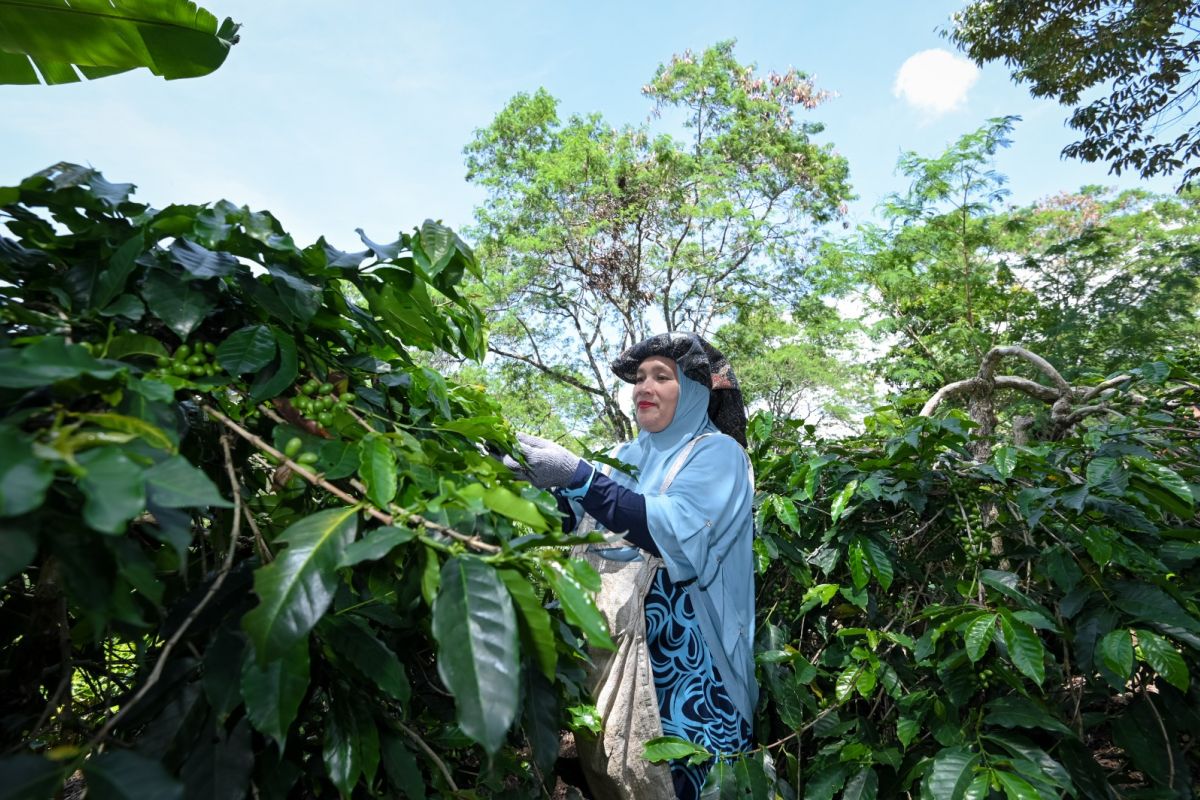
The Rainforest Alliance’s 2025 Annual Report, titled ‘Regeneration Takes Root’, documents how sustainable investments in farmer livelihoods, ecosystem restoration, and market transformation have yielded results at scale in Indonesia, spanning Sumatra, Java, Sulawesi, and West Kalimantan. The impact of the Rainforest Alliance’s work is visible across markets and communities through certification covering cocoa, coffee, tea, coconut, black pepper, fruit, and other commodities, according to Kriti Gupta, Corporate Communication Manager for Rainforest Alliance Asia Pacific.
Indonesia remains the largest producer of Rainforest Alliance certified cocoa in the Asia Pacific region, with production reaching 41,400 metric tonnes (MT) on 63,300 hectares of certified land. An estimated 56,000 farmers and 60,000 farms in the country are now certified under the cocoa programme as of 2025. In the coffee segment, certified volumes in Indonesia rose by 29 percent, climbing from 20,200 MT in 2024 to 25,900 MT last year. The country also saw a 43 percent surge in certified coffee sales by producers, increasing from 6,900 MT to 9,900 MT. The Rainforest Alliance continues to observe global demand for certified cocoa and coffee amid increasingly complex uncertainties, including climate shocks, harvest fluctuations, and evolving trade policies and regulatory frameworks, underscoring the need to strengthen support for farmers facing these pressures.
The most prominent development in 2025 was the publication of the Rainforest Alliance’s Regenerative Agriculture Standard, a science-based, field-tested framework built on 119 requirements covering soil health, water, biodiversity, crop resilience, and social impact. This standard charts a pathway for farmers and companies to deepen their commitment to regenerative practices and actively restore the land that sustains their livelihoods. CEO Santiago Gowland stated that the past year demonstrated what can be achieved when farmers are supported and companies move beyond mere compliance to regenerative investment. He emphasised that accelerating regenerative agriculture fundamentally depends on trust, which is earned through credible, verifiable evidence. The new standard ensures that impacts on soil, biodiversity, and livelihoods are measured and verified, not just claimed. The organisation’s 2030 strategy focuses not only on reducing negative impacts but on restoring, repairing, and regenerating the soil and tropical forest ecosystems upon which communities and food economies depend.
Chandra Panjiwibowo, Senior Director for Rainforest Alliance Asia Pacific, noted that climate change and widespread deforestation pose real threats to people and the planet. He stressed that Indonesia, home to some of the largest tropical rainforests with rich and diverse ecosystems, underscores the importance of the organisation’s field work. It is therefore crucial for companies, communities, and governments to accelerate the transition from merely protecting the environment to proactively restoring it. Through 80 landscape and community programmes and certification activities in 64 countries, the Rainforest Alliance’s 2025 results span five interconnected impact areas: ecosystems, biodiversity, livelihoods, climate resilience, and human rights. In 2025, the organisation helped prevent or absorb 5.5 million metric tonnes of greenhouse gas emissions, equivalent to removing 1.2 million private vehicles from roads for a year, supported the protection and restoration of 11.9 million hectares of ecosystems, an area roughly the size of Iceland, and provided knowledge and information to over 10.8 million farmers and workers about their rights and responsibilities.
Through sustainability premiums and higher yields, the organisation contributed to a 2.22 billion US dollar increase in farm income, including 100 million US dollars in direct sustainability premiums paid to farmers. The impact of the organisation’s work in improving livelihoods is felt through its certification programmes. For example, Amir Pataraka from Morowali Regency, Central Sulawesi, a cocoa farmer who joined the Rainforest Alliance certification programme three years ago, has been able to send three of his four children to university thanks to the higher income he now earns through sustainable farming practices. In Central Sulawesi, the Rainforest Alliance supports 1,000 smallholder farmers in adopting climate-friendly practices through capacity building and field training. The organisation has also been working in Sintang Regency, West Kalimantan, to promote an Integrated Landscape Management approach that brings together various land users and stakeholders to address ecological, social, economic, and governance issues related to palm oil and natural rubber production. For more than a decade, the organisation has collaborated with small-scale coffee farmers in Indonesia.