
Railways Move 752,852 Tonnes of Cement as Construction Distribution Runs More Smoothly
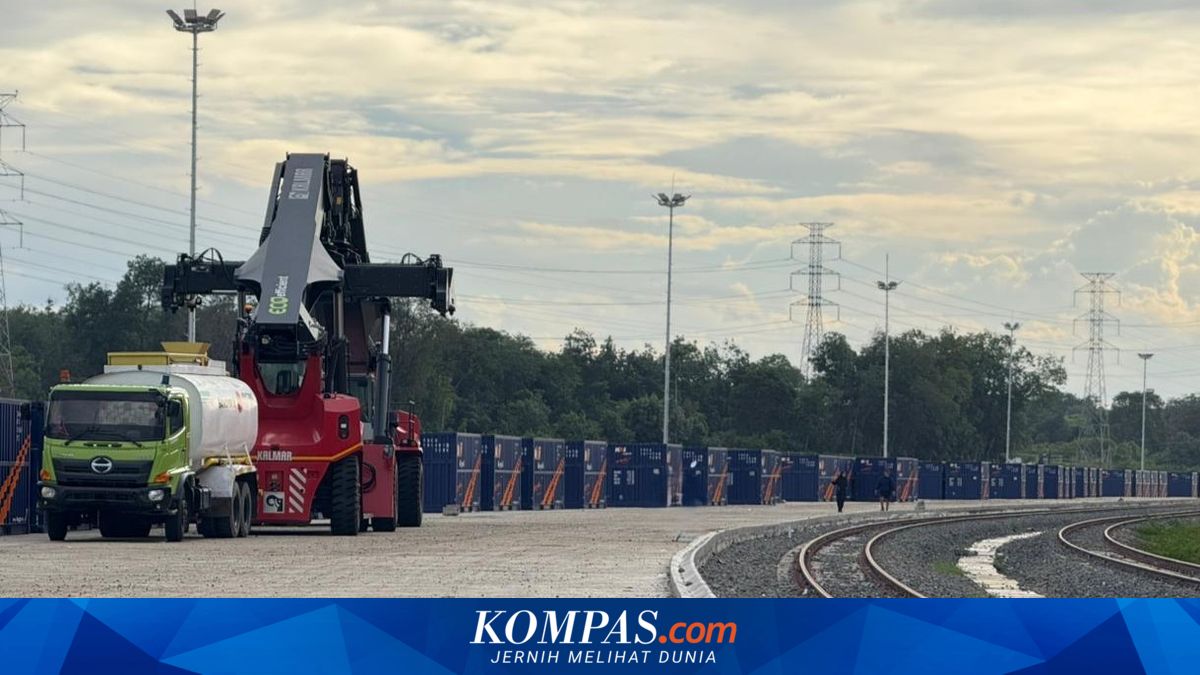
JAKARTA, KOMPAS.com — PT Kereta Api Indonesia (Persero) or KAI has recorded cement and clinker transportation totalling 752,852 tonnes from January to April 2026. The high level of building-material distribution is seen as a signal that housing construction activity, industrial estates, and infrastructure development are still moving across various regions.
Vice President of Corporate Communications at KAI, Anne Purba, said that the volume of cement and clinker transported in April 2026 reached 185,258 tonnes. Previously, KAI shipped 205,794 tonnes in January 2026, increasing to 357,120 tonnes in February 2026.
‘In April 2026, the volume of cement and clinker transport reached 185,258 tonnes. Previously, KAI carried 205,794 tonnes in January 2026 and significantly increased in February to 357,120 tonnes,’ Anne said in a official statement on Wednesday (20/5/2026).
According to Anne, distributing cement and clinker via rail is an important part of maintaining the national construction materials supply chain. The smoothness of distribution is directly linked to the development of industrial estates, public facilities, and housing needs.
‘The movement of cement and clinker is closely connected to construction activity. When distribution runs smoothly, the processes of developing industrial estates, housing, public facilities, and regional connectivity can also proceed better,’ Anne said.
‘This condition shows that the demand for distribution of construction materials continues to move in step with growth in development across various regions,’ she added.
KAI regards rail-based logistics distribution as also helping to reduce road congestion from heavy vehicles. In addition, rail-based modes are considered more efficient for transporting goods in large volumes and over inter-regional distances.
Anne said that national logistics needs currently require a transport mode capable of moving consistently and on time.
‘Rail-based logistics transport will continue to be an important part of supporting national economic growth,’ she explained.
‘We are committed to maintaining reliable, safe, and capable of meeting the needs of industry and the public as they continue to develop,’ she asserted.
Coal remains the mainstay of KAI’s cargo transport. Meanwhile, cement and clinker remain among the strategic loads supporting national logistics distribution.
In the operational area of Daop 5 Purwokerto, KAI transported 336,760 tonnes of cement during the first half of 2025 via the Karangtalun route to various destinations. That volume accounted for more than 34 percent of KAI’s total cement transport nationwide.
Additionally, KAI Logistik, as a subsidiary of KAI, recorded cargo transport management of 22.9 million tonnes. In addition to cement and clinker, rail-based logistics services also handle the distribution of fuel oil (BBM) and coal.