
Railway Station Activity Grows by Double Digits from Bogor to Padang
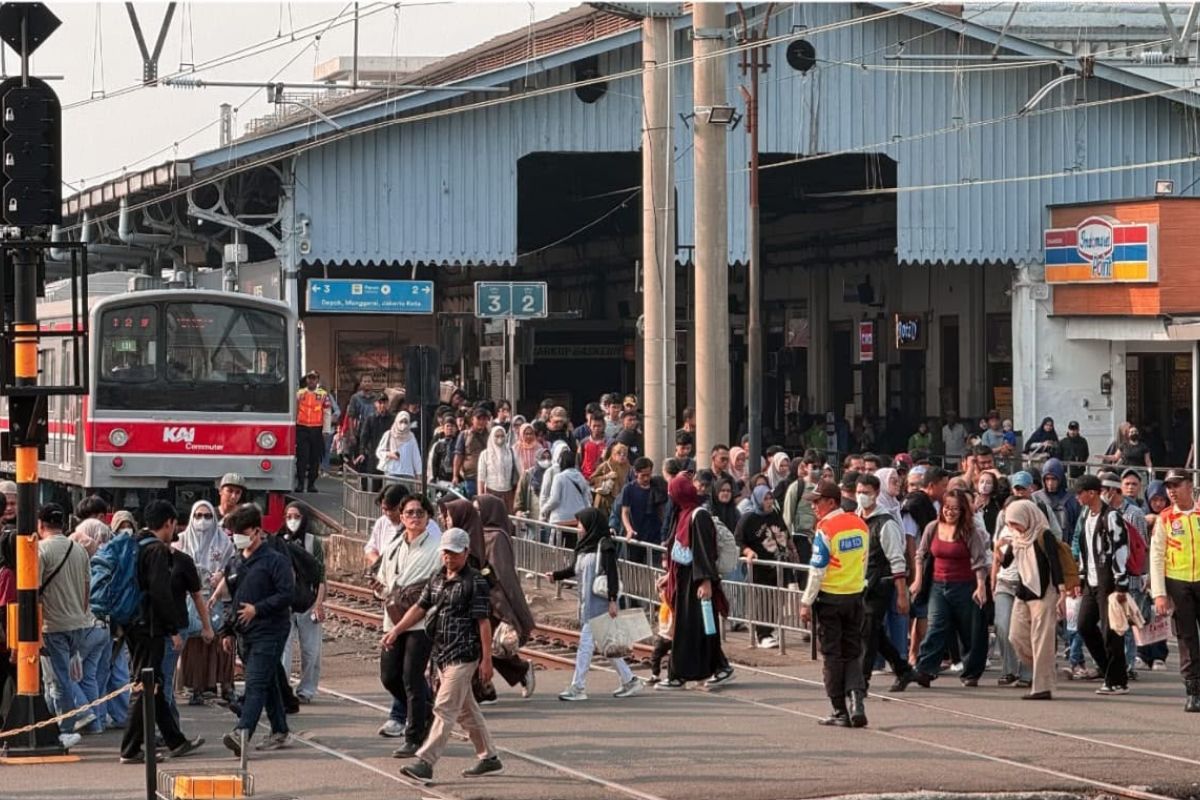
Jakarta (ANTARA) — Rail travel increased across several regions in 2026. Data from state-owned railway operator PT Kereta Api Indonesia (Persero) show passenger activity rising at stations across Java and Sumatra, from major cities and commuter towns to regional centres.
Based on passengers boarding and alighting between January and September 2026, activity at Bogor Paledang station rose from 395,471 in 2025 to 825,011 in 2026, an increase of 108.61 per cent.
The next-largest increase was at Purwakarta station, where activity climbed 59.14 per cent, from 201,953 to 321,384. In West Sumatra, activity at Air Tawar station rose 27.66 per cent, from 258,929 to 330,554.
Purwosari station in Solo recorded 494,319 passenger movements, up 22.17 per cent, while Karawang reached 306,533, an increase of 21.98 per cent compared with the same period last year.
KAI Vice-President of Corporate Communications Anne Purba said the figures show that growth in rail travel is not concentrated in one area.
“What is interesting about these figures is that growth is occurring in regions with different characteristics. These include metropolitan commuter towns, regional activity centres, education hubs, industrial cities and destinations for people travelling. Rail is being used for an increasingly diverse range of needs,” Anne said.
A similar pattern was evident at several other stations. Semarang Tawang recorded 3,329,748 passenger movements, up 16.68 per cent. Cilacap increased 17.51 per cent to 358,605, while Baturaja in South Sumatra grew 16.57 per cent to 293,252.
In Sumatra, activity at Tanjungkarang station reached 562,993, up 13.99 per cent; Kertapati recorded 862,450, up 13.78 per cent; and Padang saw 921,282 passenger movements, an increase of 13.74 per cent.
Growth was also recorded at stations with higher passenger volumes. Purwokerto saw 2,770,189 passenger movements, up 12.41 per cent, while Surabaya Pasarturi reached 2,789,112, an increase of 12.32 per cent.
Anne explained that station activity is calculated by adding together the number of passengers boarding and alighting. The figures therefore show how intensively a station is used as a starting point or destination for journeys.
“Every station has a different pattern of movement. Purwokerto and Surabaya Pasarturi have high volumes, while Bogor Paledang and Purwakarta are growing rapidly. Figures like these help us see how travel needs are developing from one region to another,” Anne said.
The trend coincides with high levels of domestic travel nationwide. Statistics Indonesia recorded 104.30 million domestic tourist trips in August 2026, an increase of 11.47 per cent compared with August 2025.
Anne said domestic tourist trip data and station passenger activity are different indicators. However, both point to substantial movement between regions in 2026.
Rising activity is also helping KAI assess service needs, passenger-space capacity, travel patterns, train timetables and access to and from stations.
“Passenger growth needs to be examined at station level because each region has different needs. Some stations are developing alongside tourism, education, industry, government centres or the everyday economic activity of local communities,” Anne said.
KAI will continue to use travel data to monitor how customer needs are developing across its operating regions.
“When activity at a station increases, it means more people’s journeys are connecting with the railway network. We want that growth to be matched by services suited to the character of each region,” Anne concluded.