
Rail-Based SRG Warehouse Ready to Operate, Logistics Costs Expected to Fall
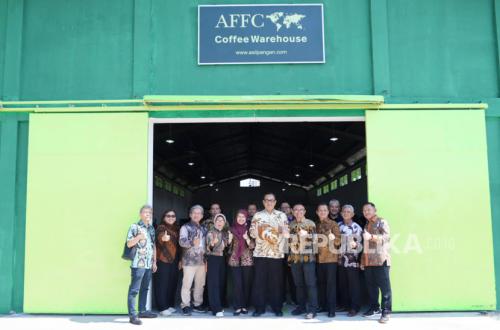
The integration of commodity warehouses with railway transport has commenced in Bandung. The rail-based Warehouse Receipt System (SRG) warehouse in Gedebage is expected to make commodity distribution more efficient and measurable.
PT Kliring Berjangka Indonesia (KBI) accompanied the Head of the Commodity Futures Trading Regulatory Agency (Bappebti) during an inspection and the handover of approval for the coffee commodity SRG Warehouse in the Gedebage Station area, Bandung. The activity served as a soft launch for the rail-based SRG implementation aimed at strengthening national commodity logistics connectivity.
The Gedebage SRG Warehouse is an asset of PT Kereta Api Indonesia (Persero) utilised through a partnership with PT ASLI Logistik Indonesia. Warehouse management is carried out by PT Sucofindo (Persero).
The presence of this warehouse is expected to connect the commodity storage system with railway transport modes, making the distribution process more efficient. Going forward, the Gedebage SRG Warehouse is also being prepared as a logistics hub linking production centres with both domestic and international markets.
The integration of the SRG with the rail transport network is considered capable of strengthening supply chains, reducing logistics costs, and enhancing the competitiveness of Indonesia’s leading commodities.
In the initial operational phase, the warehouse will be used for storing Java Preanger coffee. This West Java commodity is known to have a fairly strong market, including for export needs.
PT KBI President Director Budi Susanto stated that the rail-based SRG implementation represents a form of collaboration to strengthen the national commodity trading ecosystem.
“PT KBI, as the Warehouse Receipt Registration Centre, is committed to continuously encouraging the integration of the SRG into the national logistics supply chain. We hope West Java can become a pioneering region for rail-based SRG implementation through strong synergy between PT KBI and Bappebti, the West Java Provincial Government, PT KAI (Persero), PT Sucofindo (Persero), Bank BJB, PT ASLI Logistik Indonesia, and all relevant stakeholders,” Budi said in a press release on Wednesday (17/6/2026).
The potential of coffee commodities is also reflected in the registration activity recorded in PT KBI’s system. As of May 2026, coffee was the commodity with the largest registration share in PT KBI’s IsWare Next Gen system, reaching 47 percent of total registered commodities.
According to Budi, this high figure indicates that the utilisation of the SRG by coffee businesses continues to increase, both as a stock management instrument and for financing access.
To support registration services, PT KBI continues to develop the IsWare Next Gen digital system. This system is used to improve registration effectiveness, facilitate quality and quantity verification of commodities, and strengthen transparency within the SRG ecosystem.
The commitment to developing the SRG was also introduced by PT KBI at the West Java Investment, Trade and Tourism Expo (WIITEX) 2026 held jointly with the West Java Provincial Government. During the event, PT KBI met with business players and international buyers from Malaysia, Thailand, the Philippines, Saudi Arabia, the United States, and Germany.
Budi said this momentum was utilised to introduce the SRG as an instrument that can support increasing the competitiveness of Indonesian commodities in the global market.
“The achievements made throughout 2025 serve as an important foundation for PT KBI to continue building a commodity ecosystem that is transparent, integrated, and globally competitive. Going forward, we will continue to strengthen strategic collaborations with various stakeholders to expand our contribution to the development of the commodity industry and the national economy,” Budi said.