
Rahayu Saraswati Urges Strengthened Protection System for Vulnerable Groups to Prevent Human Trafficking
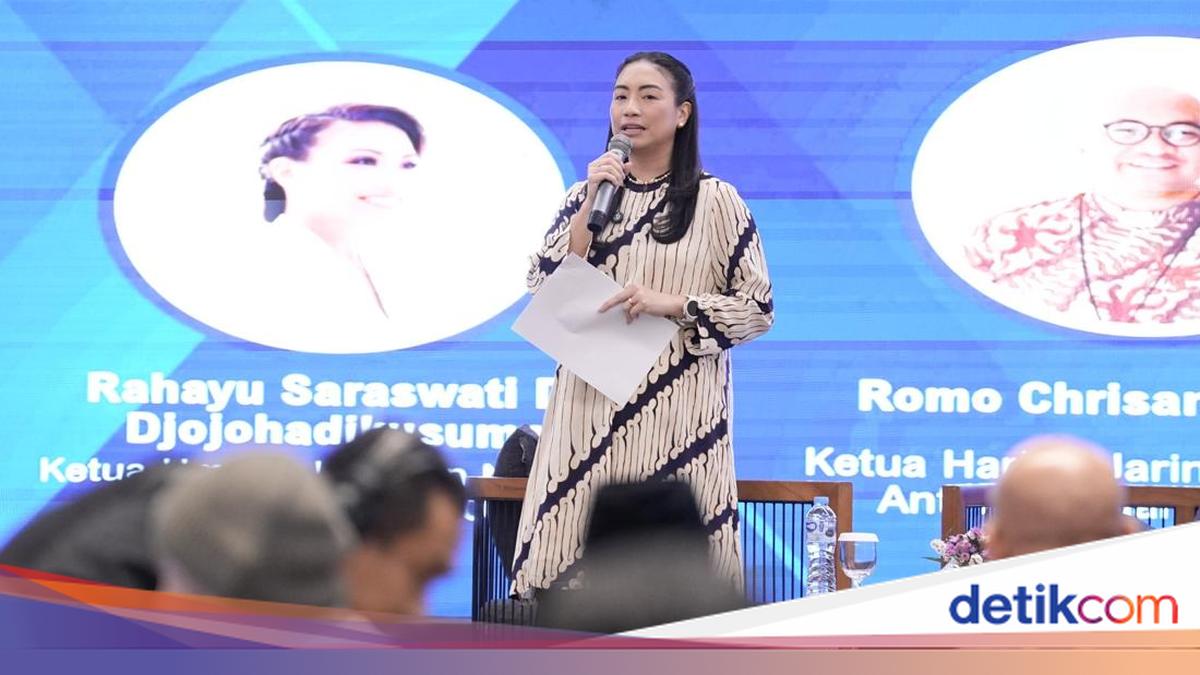
Rahayu Saraswati Djojohadikusumo, a member of the Indonesian House of Representatives (DPR RI) and Gerindra Party politician, has assessed that the methods used in human trafficking crimes (TPPO) continue to evolve alongside social and economic changes and technological advances. She is pushing for the national system to be strengthened so it can provide more effective protection, particularly for vulnerable groups.
She made the remarks while chairing the 2026 National Meeting (PerNas) of the Anti-Trafficking National Network (JarNas APO) on Tuesday (27/7/2026). The meeting was held at the Mercure Batavia Hotel, Jakarta, on 27-28 July 2026, under the theme ‘Strengthening the National Anti-Trafficking Ecosystem: Policy Reform and Victim Protection Amid Changing Modes of Exploitation’.
The event brought together a wide range of stakeholders, from civil society organisations, government, and law enforcement to academics, the media, the business community, religious communities, and survivors. Its aim was to strengthen national synergy in preventing and addressing human trafficking, which has grown increasingly complex, including through the exploitation of digital technology.
“Human trafficking continues to evolve in line with social, economic and technological change. That is why our national system must also keep adapting so it can provide ever more effective protection to the public, especially the most vulnerable groups,” said Rahayu Saraswati, who also serves as Chairperson of JarNas APO.
In her view, success in eradicating human trafficking should not be measured solely by the number of perpetrators processed through the legal system. What matters more, she said, is ensuring that victims receive protection and recovery.
“Victim protection must be at the centre of all efforts to prevent and address human trafficking. Success is not only measured by law enforcement, but also by our ability to ensure victims obtain protection, recovery, and the opportunity to live a dignified life once again,” Saraswati explained.
Saraswati also noted that the increasingly complex challenge of human trafficking cannot be handled by a single institution alone. Cross-sector collaboration is therefore needed so that prevention and handling efforts can run more effectively.
“No single institution can tackle human trafficking on its own. This National Meeting is a space to strengthen collaboration between government, law enforcement, civil society, the business world, the media, academics, communities, and survivors, so that Indonesia becomes better able to face the ever-changing challenges of human trafficking,” she said.
Beyond serving as a forum for national consolidation, the 2026 JarNas APO National Meeting also featured a number of strategic agenda items. These included a public talkshow, the signing of memoranda of understanding (MoUs) with four institutions, a reflection on the network’s achievements since its founding, and the drafting of JarNas APO’s strategic direction for the 2026-2027 period.
The talkshow, titled ‘Strengthening the National System for the Protection of Human Trafficking Victims’, featured JarNas APO Daily Chair Father Pascal, Jiva Artha Daily Chair and survivor Endang Supriyati, and the Deputy Director for Crimes Against Women and Children and Human Trafficking (Wadirtipid PPA and PPO) of the National Police Criminal Investigation Department, Enggar Pareanom.
JarNas APO is a network of civil society organisations established in 2018 with a focus on strengthening national collaboration in the prevention and handling of human trafficking. Through policy advocacy, capacity building, services for survivors, research, public campaigns, and cross-sector partnerships, the network continues to push for a stronger national system that is more resilient in protecting the public from the ever-evolving crime of human trafficking.