
Racing Against Time: Identification of KM Virgo Victims Becomes Increasingly Difficult
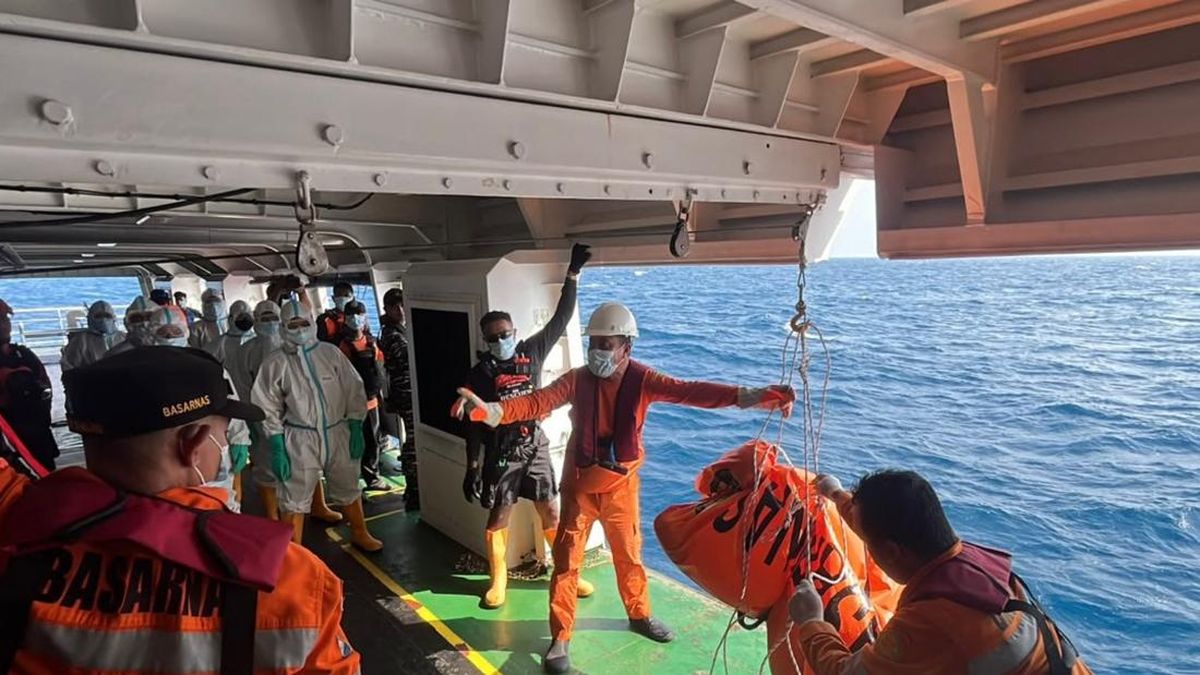
The National Search and Rescue Agency (Basarnas) is racing against time to search for and evacuate the victims of the KM Virgo Transport 8 ship, which remains in the Java Sea. These efforts are being carried out as the identification process by the Indonesian National Police’s Disaster Victim Identification (DVI) team faces increasing obstacles.
Basarnas Head Mohammad Syafii stated that the search for victims, including underwater operations, continues as long as conditions permit. He noted that time is a critical factor, as the condition of the remains may further complicate the identification process. “We are continuing underwater SAR operations when the weather allows. We are racing against time because the longer it takes, the more difficult it becomes for the DVI team to identify the victims,” Syafii said in Yogyakarta on Tuesday (29/9).
Syafii noted that since the incident, the search and identification process has involved various parties, including the National Police DVI and medical personnel. Every development in the search and the condition of the victims serves as material for evaluating subsequent operational steps. Basarnas also conducts operational evaluations every seven days to make decisions based on the latest field information.
On the other hand, Basarnas still faces obstacles in underwater searches. The ship was found overturned, and there is a possibility that victims are still trapped inside. Current conditions at the site also pose a challenge for divers. Syafising noted that current speeds, which are typically around 1.5 knots for ROV operations, have occasionally reached over 6 to 7 knots. Due to these conditions, underwater operations cannot be conducted all day; divers only descend when conditions allow, prioritising personnel safety.
Despite the challenges, Syafii emphasised that the search has not been halted. Basarnas will continue operations as long as there is a possibility of finding and evacuating victims. He also urged for the salvage of the KM Virgo wreck to be carried out immediately to provide access to parts of the ship that may still contain victims.
Previously, the National Police DVI team stated they were experiencing difficulties in identifying the victims of the KM Virgo Transport 8, which capsized in the Masalembo waters of the Java Sea. Head of Medical Services for South Kalimantan Regional Police, Kombes dr Much Sofwan, stated that the primary obstacle is the state of the bodies upon discovery. “Since the bodies from the Virgo ship were found after the fifth day, there are many complications, especially the process of decomposition,” Sofwan said during a press conference on Monday (28/9).
Sofwan explained that as bodies undergo decomposition, identification becomes difficult due to facial changes, loss of fingerprint recognisable, and potential loss of limbs. Meanwhile, the Head of DVI for the National Police Medical Department, Kombes dr Wahyu Hidayati, confirmed that the identification process has slowed compared to the initial days of the incident. While fingerprints were usable on the first day, after three to five days, fingerprints become difficult to retrieve, forcing the team to rely on dental records, physical characteristics, clothing, or jewellery.
Furthermore, Wahyu noted that many victims were found without identification cards, and some clothing had been lost, making matching difficult. Consequently, the team is relying on DNA testing, though this is a time-consuming process. DNA samples are sent to Jakarta periodically, and the examination itself takes at least five days. The team continues to work through weekends to expedite the identification and comparison process.