
Quo Vadis Middle East Post-Khamenei: The Fate of the Axis of Resistance and a Reconfiguration of the World Order
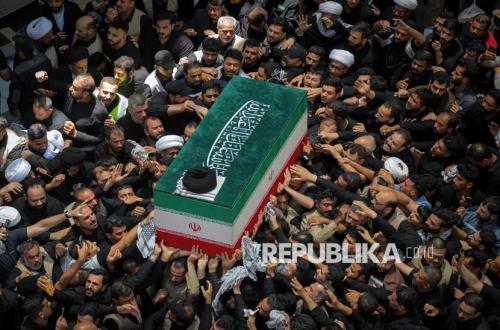
The funeral procession of the late Ali Khamenei, Iran’s Supreme Leader, which concluded in Mashhad on 9 July 2026, is not merely a story of the Iranian people’s grief but marks a new chapter in Middle Eastern geopolitics. The history of the Middle East has always been written in blood and upheaval, but what has occurred since the eruption of Operation Al-Aqsa Flood on 7 October 2023 until mid-2026 is no longer just an ordinary cycle of violence. We are witnessing the systemic collapse of the old geopolitical landscape and the birth of a new reconfiguration of the world order.
The burial of Iran’s Supreme Leader, Ali Khamenei, amidst the crippling of Hamas’s power in Gaza, the destruction of Hezbollah’s command structure in Lebanon, the isolation of the Houthi position in Yemen, and the prior reconsolidation of Syria following the fall of the Assad regime, signals the end of the Axis of Resistance as we have known it for the last two decades. The crucial question now is: ‘Quo vadis’ Middle East, and where does the pendulum of the Islamic world’s politics swing following the breaking of Tehran’s axis?
To understand the fragility of the Axis of Resistance today, we must look back at the dramatic timeline that drained their strategic resilience. Operation Al-Aqsa Flood was initially designed by Hamas as a surprise attack to alter the Balance of Power in the Middle East, derail the normalisation of relations between Saudi Arabia and Israel, and reaffirm the Palestinian issue on the global table. Tactically, the operation succeeded in trapping Tel Aviv in a prolonged war of attrition and damaging Israel’s moral image on the international stage.
However, the price paid was extremely high. Israel’s brutal military response, fully supported by logistical supplies and a political umbrella from the United States, gradually degraded the conventional capabilities of Iran’s proxy network. Throughout 2024 and into 2025, we saw the systematic dismantling of Hamas’s military infrastructure, which culminated in their tactical decision to withdraw completely from the administrative governance of the Gaza Strip to shatter the pretext for Israeli occupation.
In the north, Lebanon’s Hezbollah, having lost scores of elite commanders and hundreds of thousands of rockets due to the lightning war, was forced into a defensive reconstruction phase north of the Litani River. Meanwhile, the Houthis in Yemen, who had briefly upended the maritime economy in the Red Sea, now face increasingly intense military isolation without simultaneous pressure from Gaza and Lebanon.