
Questioning the Urgency of the Authority to Calculate State Losses under the Corruption Eradication Law (UU Tipikor)
JAKARTA — The dispute over who has the authority to assess and determine the amount of state losses in corruption cases resurfaced after the Constitutional Court (MK) issued Decision Number 28/PUU-XXIV/2026. The ruling states that the Audit Board (BPK) is the state body authorised to assess and fix the amount of state losses.
However, the MK’s affirmation has sparked new debates. Some argue that the authority to calculate state losses should be centralised at the BPK to ensure legal certainty.
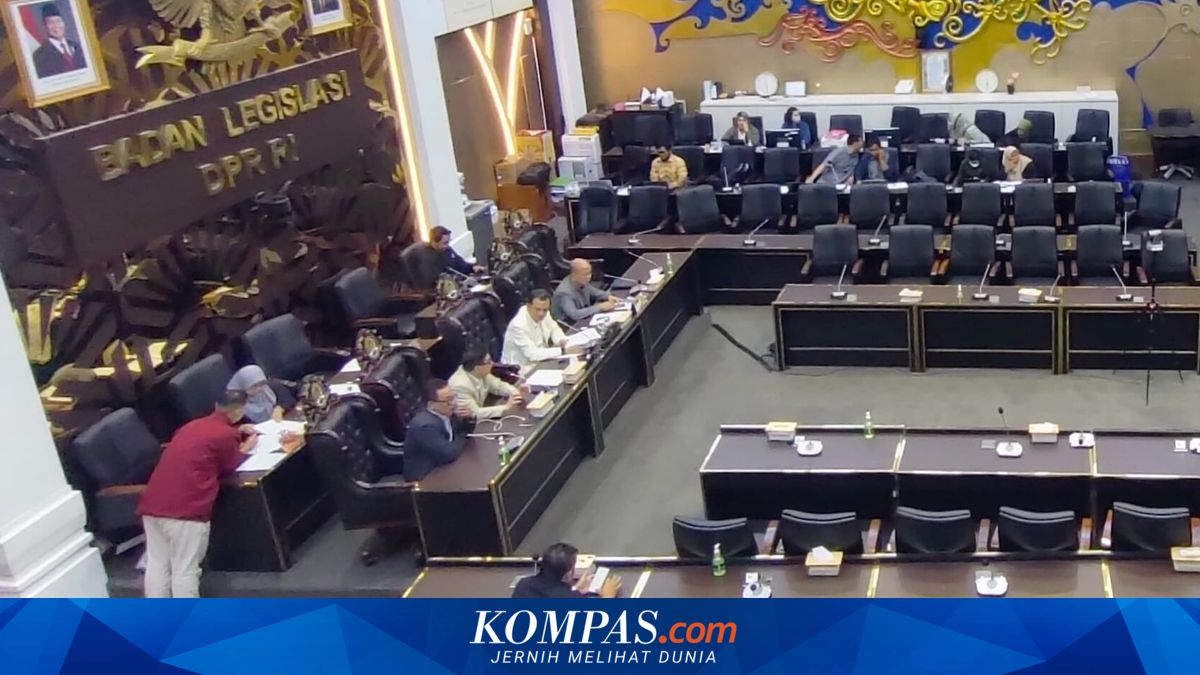
The debate emerged during a public hearing of the Legislative Body (Baleg) of the Indonesian DPR with several legal experts on Monday, 18 May 2026.
DPR Baleg Chairman Bob Hasan said the DPR wants to harmonise the rules relating to the calculation of state losses so as to avoid multiple interpretations after the MK’s Decision Number 28/PUU-XXIV/2026.
“Besides that, indeed the state must uphold the law, and the legal rules themselves must be present in a way that meets justice with legal certainty,” he said. He also highlighted the divergent interpretations that arose after the Attorney General’s Office issued circular letters stating that calculating state losses is not limited to the BPK.
“It should be noted that the MK Decision Number 28 also led to a circular from the Attorney General, signed by the Jampidsus (Deputy Attorney General for Special Crimes), which emphasises that non-government agencies can also determine state losses,” he said.
In his view, Article 603 of Law Number 1 of 2023 on the Criminal Code also states that the calculation of state losses is done by a state agency.
Moreover, the MK Decision Number 28/PUU-XXIV/2026, which reinforces the position of the BPK as the competent body to calculate state losses, is also supported by Article 10(1) of Law Number 15 of 2006.
“The BPK Law, Article 10(1) states that the BPK is the only body authorised to determine losses that arise from acts contrary to law,” Bob explained.
Therefore, harmonising the rules is necessary so that the process of proving corruption cases does not criminalise administrative mistakes or deter bureaucrats from taking decisive actions.
Bob opened the possibility of a limited revision to the Corruption Eradication Law (UU Tipikor) to align rules with MK Decision Number 28/PUU-XXIV/2026 and various regulations related to calculating state losses.
“The combined expertise of these three figures will provide a comprehensive analysis for the DPR’s Legislative Body in drafting recommendations for harmonising regulations or, if necessary, limited revisions to the Tipikor Law,” he said.
Responding to the DPR’s wish to harmonise the rules, Romli Atmasasmita, a Professor of Law at Padjadjaran University, proposed removing the element of state losses from the Tipikor Law.
According to Romli, Indonesia should follow the provisions of the United Nations Convention Against Corruption (UNCAC) that has been ratified.
He argued that this element has become a protracted source of polemics in handling corruption cases.
“Therefore, in my view, if we are strict about UNCAC Article 3, we have ratified it—remove those state losses. Just drop it, and that’s that!” he said.
Source: jawawa.id (https://jawawa.id/newsitem/questioning-the-urgency-of-the-authority-to-calculate-state-losses-under-the-corruption-eradication-law-uu-1779546425)
Originally published by Kompas (https://nasional.kompas.com/read/2026/05/19/06563881/menyoal-urgensi-kewenangan-hitung-kerugian-negara-di-uu-tipikor?utm_source=ABC&utm_medium=rss), translated from Indonesian