
Questioning the Disruption of a Discussion at UGM: Campuses Must Be Democratic Spaces for Dialogue
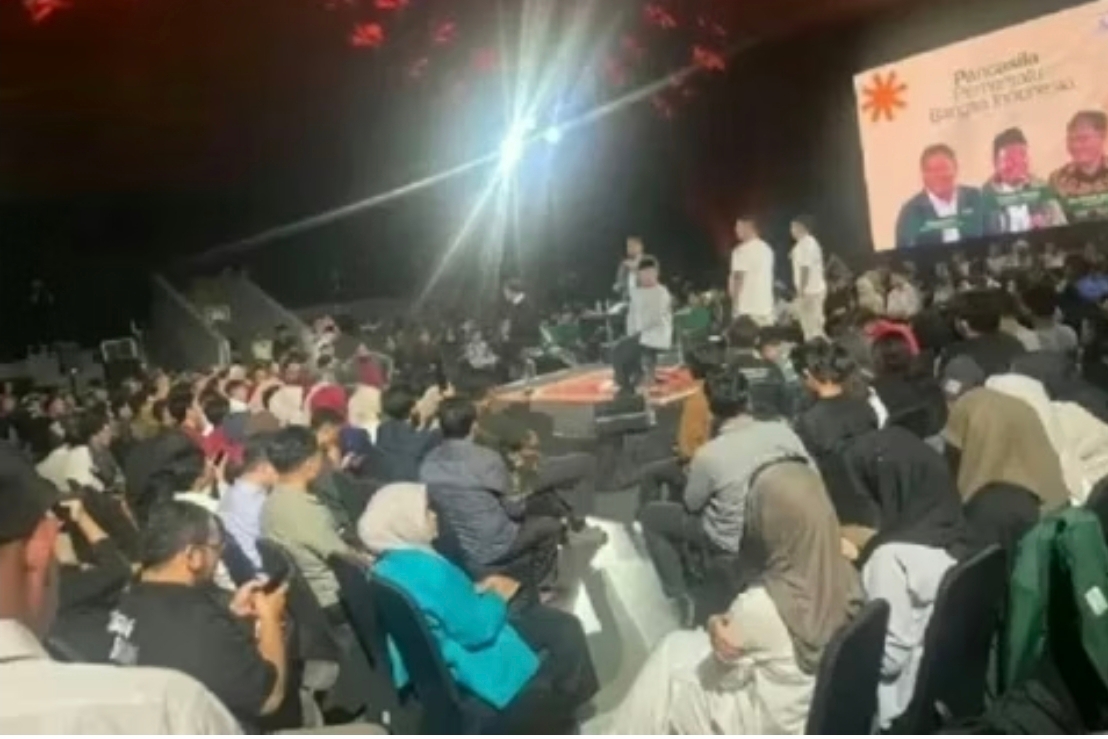
A discussion featuring three state officials at the Joglo Gelanggang Inovasi dan Kreativitas (GIK), Universitas Gadjah Mada (UGM), Yogyakarta, was disrupted and disbanded by students on Monday night (15/6).
The discussion was attended by the Head of the Poverty Alleviation Acceleration Agency, Budiman Sudjatmiko; the Minister of Agraria and Spatial Planning/Head of the National Land Agency (ATR/BPN), Nusron Wahid; and the Deputy Minister of Agriculture, Sudaryono.
The Executive Director of the National Data Index (IDN), Ayip Tayana, expressed regret over the incident. He stated that universities should serve as spaces for dialogue, where ideas are tested and all parties are given the opportunity to speak and explain their perspectives.
In such a setting, students have the right to express anger and pose critical questions to the government, while public officials must respond and explain their positions. This is the fundamental purpose of campus dialogue, yet that failed to occur in this instance.
“This event serves as an important lesson for our democracy. The forum featuring Sudarylarono, Nusron Wahid, and Budiman Sudjatmiko was originally intended as a space for dialogue between public officials and students. However, the atmosphere shifted; shouting, protest posters, and pressure emerged, preventing the forum from functioning as intended,” he said on Wednesday (17/6).
Ayip noted that the actions of the three officials were actually beneficial for democracy. They chose to appear directly on campus, engage in discussion with students, face any questions, and remain open to evaluation by the audience.
Historically, officials have often been criticised for being detached from the public and only speaking in safe environments. However, when the opportunity arose at UGM, the forum instead turned into a space for judgment.
“This is the paradox: officials are often criticised for being far from the people and unwilling to visit campuses, preferring safe forums. Yet, when officials arrive on campus ‘without pretense’, sitting face-to-face with students and opening a space for discussion and criticism, the forum instead transforms into a space for judgment,” he explained.
Moving forward, Ayip requested that forums for public officials to discuss with students be increased. The government must be brave enough to appear in critical spaces, even in the presence of those who oppose them.
On the other hand, students must also be prepared to engage in dialogue. Students have a responsibility to provide space for speakers to explain their policies.
“The more frequently officials visit campuses, the better it is for democracy. Students can test policies directly, and officials can hear issues that might not appear in bureaucratic reports. However, dialogue can only proceed if both parties are equally prepared,” said Ayip.
According to Ayip, the UGM incident should not end in mutual blame. The government must not use this event as a reason to avoid campuses, but students must also ensure that the spirit of criticism does not turn into the closure of speaking spaces.
Sudaryono, Nusron, and Budiman have demonstrated an important point: public officials need to be present in critical spaces. This step deserves appreciation and expansion. What is needed now is not just dialogue, but more honest, open, and civil dialogue. Because a campus should be a place where power is tested through argument, not a place where differences of opinion are defeated by anger,” he concluded.
Source: jawawa.id (https://jawawa.id/newsitem/questioning-the-disruption-of-a-discussion-at-ugm-campuses-must-be-democratic-spaces-for-dialogue-1781673611)
Originally published by Media Indonesia (https://mediaindonesia.com/humaniora/901327/menyoal-pembubaran-diskusi-di-ugm-kampus-harus-jadi-ruang-dialog-yang-demokratis), translated from Indonesian