
Questioning the Certainty of CASN 2026 and Organising the Needs of State Apparatus
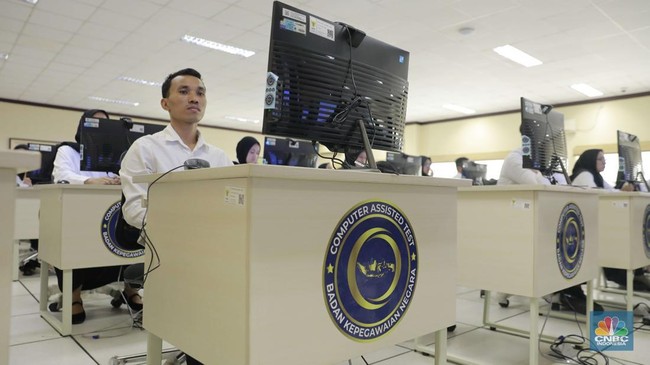
In a previous opinion, I explained that reliance on public sector employment can hinder innovation and growth in the private sector, ultimately negatively impacting multidimensional economic development.
In Indonesia, the public sector is often the primary choice for educated workers because it is perceived as more stable and offers better social guarantees. However, this results in a brain drain from the private sector, where the best talents prefer public sector jobs over developing businesses or innovating in the private sphere. (Harian Kompas, 12/3/2025).
The implication I wish to convey is that working in the public sector is not wrong, and becoming a state apparatus is not a disgrace. We must acknowledge that our bureaucracy today remains “unproductive” and “inefficient.”
I must honestly state that, because we have never addressed the systemic issues in our bureaucratic reform, namely fixing the most fundamental problems that require national strategic planning for civil servants and the validity of civil service needs per agency based on workload, including formulating accountable competency standards for civil servants.
What does this mean? As long as CASN recruitment is conducted without considering the real needs of organisations and the state’s financial capacity, bureaucratic expansion will continue uncontrollably, ultimately reproducing inefficiency and low productivity in the public sector. Ironically, this problem could repeat itself. Borrowing from Parkinson’s Law, bureaucracies often grow fatter but do not automatically become more productive.
Today, on social media, the public is discussing the certainty of CASN recruitment for 2026. Indeed, this discussion has become a hot topic following the cancellation of CASN intake for 2025.
The government’s response can be accepted by the public: they are completing all selection stages that began last year to avoid overlaps in the appointment of Civil Servants (ASN). Moreover, at the beginning of 2025, the bureaucracy also experienced a “culture shock” following the issuance of Presidential Instruction 1/2025 on efficiency in implementing the state and regional budgets for 2025. (KemenPANRB, 2025)
Although CASN 2025 was postponed for budgetary efficiency reasons, to accelerate the implementation of the government’s priority programme, namely Free Nutritious Meals (MBG), the government conducted a large-scale recruitment of approximately 30,018 Indonesian Development Driver Graduates (SPPI) to serve as human resources in every MBG kitchen. (Unhan, 2025)
Today, the postponement of CASN 2026 is being heard again for the same reason—budgetary efficiency—but on the other hand, it is accelerating the recruitment of 30,000 prospective SPPIs to manage the Merah Putih Village Cooperatives (KDMP).
This raises an important question: is this recruitment of 30,000 SPPIs for KDMP already based on technocratic planning? We still seem to be in a dilemma regarding the technocratic concept, regulations, and institutions of the Merah Putih Cooperative itself, so why rush into recruitment? Isn’t that part of inefficiency?
Reflecting on reality, around 9,000 Government Employees with Work Agreements (PPPK) in the Nusa Tenggara Timur Provincial Government are now at a crossroads of fate. They, who were previously brought in as a solution to public service staffing needs, are now faced with the threat of dismissal due to maximum employee expenditure limits. This phenomenon is not merely an administrative issue but a reflection of the fragility of our personnel policy planning. (Harian Kompas, 28/2/2026).
Similar dilemmas are emerging in various regions. PPPKs, who hold the status of Civil Servants, in practice do not fully receive adequate welfare guarantees.
In fact, many of them must accept the bitter reality: being laid off or continuing to work with income far below regional minimum wage standards. In many cases, the salaries received are only in the hundreds of thousands of rupiah, an amount nearly impossible to sustain a decent life.
At this point, the paradox becomes evident. The state, through its policies, recognises them as part of the ASN, yet at the same time fails to ensure the minimum economic protection that should be attached to that status. Far from strengthening public services, the PPPK scheme risks creating a new layer of vulnerable and marginalised state workers.
Ultimately, the essence of government operations is inseparable from the constitutional mandate: to protect the entire nation, advance general welfare, and educate the nation’s life. However, the phrase “advancing general welfare” often stops as normative jargon, without being fully translated into policy practice.
True general welfare does not arise from rhetoric but from the presence of fair and equitable public services. This is evident in concrete and simple matters: the availability of teachers in classrooms, the presence of health workers in basic service facilities, and the functioning of administrative servants in government offices down to the remotest areas. There, the state finds the real embodiment of bureaucratic work through services truly felt by the community.
The government needs to reaffirm to the public the certainty of CASN recruitment for 2026. Not merely as a response or pressure from the public. More than that, state apparatus recruitment must be positioned as a strategic instrument to ensure optimal public services amid various bureaucratic issues today.
Another context is that it is important for the government not to get trapped in quantitative logic.
Source: jawawa.id (https://jawawa.id/newsitem/questioning-the-certainty-of-casn-2026-and-organising-the-needs-of-state-apparatus-1774648239)
Originally published by CNBC Indonesia (https://www.cnbcindonesia.com/opini/20260328041604-14-722065/menyoal-kepastian-casn-2026-dan-menata-kebutuhan-aparatur-negara), translated from Indonesian