
Quarantine Agency tightly monitors sacrificial animal distribution routes from the east
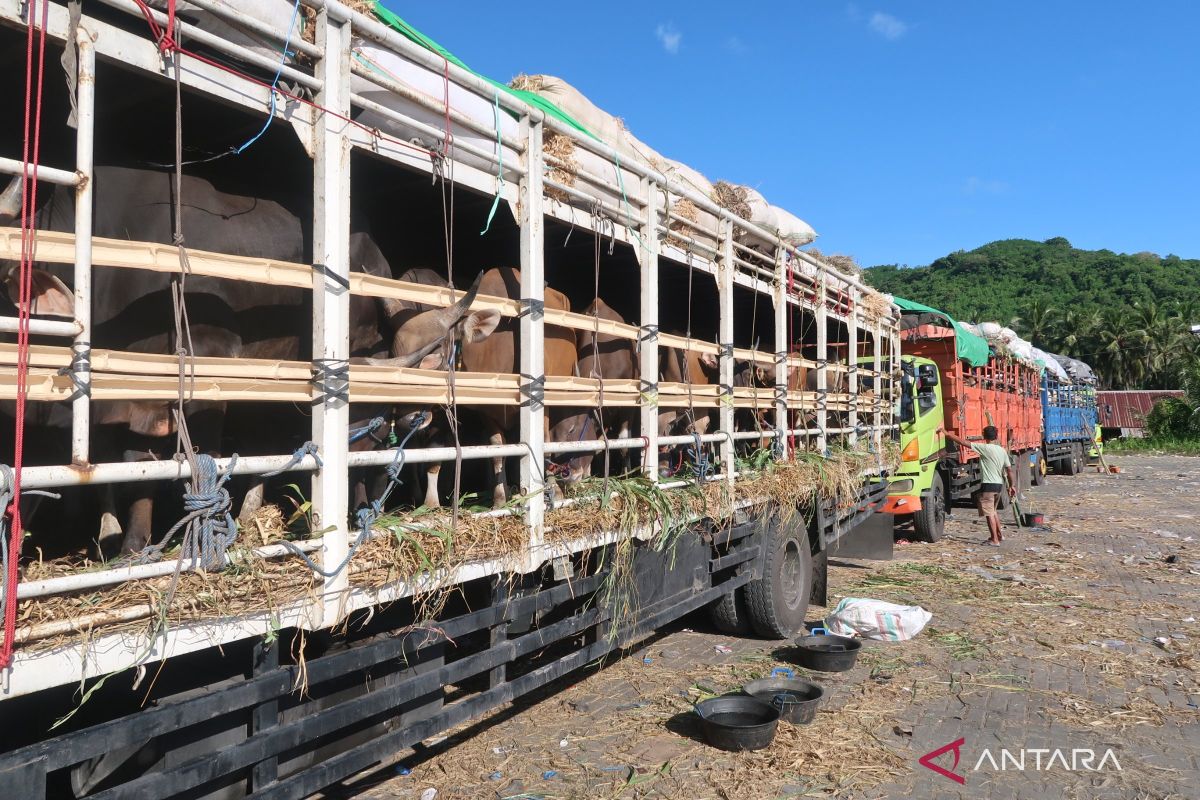
West Lombok (ANTARA) - The Quarantine Agency is tightening surveillance on the distribution routes for sacrificial animals from the eastern regions, namely Nusa Tenggara Barat (NTB) and Nusa Tenggara Timur (NTT), which serve as crucial dispatch points for livestock to various parts of Indonesia.
“Livestock is shipped from east to west. Indonesia’s main cattle production centres are primarily in NTB and NTT,” said Deputy for Animal Quarantine Sriyanto during an inspection of the queue of livestock transport trucks at Gili Mas Port, West Lombok, NTB, on Saturday.
Sriyanto stated that surveillance is focused on several major livestock exit points at ports across NTB and NTT to ensure both the smooth and secure flow of large ruminant livestock, including cattle and goats.
Gili Mas Port in West Lombok and Tenau Port in Kupang are strategic routes for distributing sacrificial cattle from the eastern regions to destinations in western Indonesia.
The Quarantine Agency ensures that all sacrificial animals transported to various regions are in healthy condition, free from foot-and-mouth disease (FMD), anthrax, or lumpy skin disease.
Every livestock animal must undergo sampling and examination before dispatch to prevent disease spread.
“We require sampling and examination to be conducted before animals are transported to ensure they are healthy,” Sriyanto concluded.
The Quarantine Agency encourages business actors and farmers to fulfil document requirements and undergo physical examinations as one of the efforts to protect biological natural resources in the area based on risk analysis.
Head of the NTB Quarantine Office Ina Soelistyani emphasised that animal health certification is the primary instrument for guaranteeing safety in every inter-island sacrificial animal distribution activity.
As of 18 April 2026, NTB Quarantine has recorded 19,700 cattle transported from NTB. Meanwhile, the number of issued Veterinary Certificates (SV) has reached more than 19,000 documents.
For distribution to the Jabodetabek area, the shipment quota is around 22,500 cattle. The realised shipments are said to leave only a few thousand remaining and continue to be processed to date.
“Certification is a guarantee. We state that the transported animals have been examined and the results confirm they are free from diseases that should not be present, such as FMD, anthrax, and others, so that the livestock reaches the public truly guaranteed in terms of safety,” Ina concluded.