
Quality of Jakarta's Residential Settlements Improves
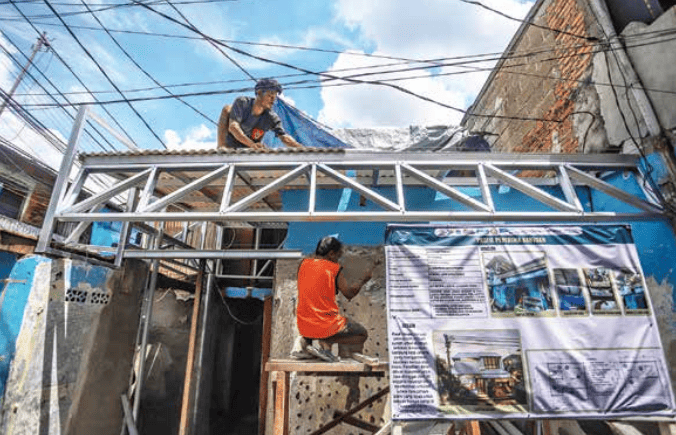
As it approaches its 500th anniversary in 2027, Jakarta continues to beautify and reorganise its urban space. The capital now records a significant change, with no neighbourhood units (RW) falling into the severely slummed category.
Based on data from the Jakarta Provincial Government together with Statistics Indonesia (BPS), the number of slum RWs in Jakarta decreased by 52.58%, from 445 RWs in 2017 to just 211 RWs in 2026.
Jakarta Governor Pramono Anung said the reduction in slum RWs is an important achievement in efforts to improve the quality of residents’ settlements. Nevertheless, he stressed that the Jakarta Provincial Government will continue to deepen its data so that programme interventions can be more precisely targeted.
“The improvements are carried out by repairing water channels, building communal sanitation, building communal bathing, washing and toilet facilities, and most importantly so that residents feel comfortable and safe in their own homes,” said Pramono.
To produce more comprehensive and technology-based data collection, the Jakarta Provincial Government is partnering with BPS. According to Pramono, data accuracy is a measure in determining policy priorities, particularly to improve the quality of life of people in densely populated areas. Pramono stressed that future handling of slum RWs will be prioritised in dense areas, especially in West Jakarta and North Jakarta. Areas such as Tambora are of particular concern because of their complexity, requiring measured intervention.
“With increasingly complex field conditions and a continuously growing population, this reduction of more than 52% is something to be grateful for,” he said.
RENOVATION AND REVITALISATION SCHEME
Head of the Jakarta Public Housing and Settlement Areas Agency (DPRKP) Kelik Indriyanto stated that there are no longer any RWs categorised as severely slummed in the capital.
“There are indeed still slummed areas in West Jakarta and North Jakarta, those are the most numerous. But, thank God, there are no longer any severely slummed areas. That is what we are grateful for,” said Kelik.
He said the remaining slum RW categories in Jakarta are moderately slummed, lightly slummed, and very lightly slummed. Kelik stressed that the Jakarta Provincial Government consistently allocates budgets for area improvement through the settlement quality improvement programme. This programme is confirmed to continue with a target of handling 50 slum RWs by next year.
The determination of slum area status refers to a number of comprehensive criteria, ranging from population density, building quality and density, ventilation systems, to lighting.
In addition, sanitation aspects, waste management, drainage conditions, neighbourhood roads, public street lighting, and building layout are also assessment indicators. The Jakarta DPRKP noted that the reduction in slum RWs was driven by comprehensive physical environmental improvements. This includes road and water channel repairs, construction of wastewater treatment plants, provision of communal bathing, washing and toilet facilities, waste management, fire protection, and provision of other utility facilities.
Area handling is carried out through three intervention patterns tailored to regional characteristics: renovation, rejuvenation, and resettlement (relocation). Most efforts are focused on improving the environmental quality of existing areas.
One example of improvement is in RW 001, Menteng Urban Village, Central Jakarta. The area, which Governor Pramono Anung inspected a year ago under the 2025 Settlement Quality Improvement Programme, is now beginning to be beautified. In addition to sanitation and drainage improvements, 50 residents’ houses are included in a house renovation programme being carried out in stages. The area will also be equipped with a children’s playground and a micro, small and medium enterprise (MSME) area along the roadside.
RESIDENT PARTICIPATION
Urban planning observer Bakti Setiawan said active community participation is the main key to ensuring that improved areas do not become slummed again. Residents must be encouraged to have a strong sense of ownership and initiative in maintaining their living environment. Areas that are merely visually beautified are very different from areas that truly undergo a transformation in quality of life through strengthening the local economy and social bonds.
The importance of strengthening the role of residents was also affirmed by Jakarta Deputy Governor Rano Karno. He stressed that handling slum settlements requires the involvement of all elements of society, including PKK cadres down to the dasawisma level.
“This data must be held by the PKK to help us work. With the network of cadres down to the dasawisma level, I hope that next year the number of slum RWs in Jakarta can be reduced further,” said Rano.
One community-based independent initiative was demonstrated by residents of RW 07, Tanjung Priok Urban Village, North Jakarta. Amid the dense settlement, residents are using the rooftop area of the RW secretariat office for urban farming development to strengthen family food security.
Tanjung Priok Urban Village Head Febrio Eka Putra appreciated the success of RW 07 residents who were able to harvest various types of vegetables and fruit from the limited land.
“Hopefully this can become a role model for other areas in creating a green, independent and sustainable urban ecosystem,” he hoped.
The existence of RPTRA is now not merely a place for children to play and interact, but is also being encouraged to become a centre for resident empowerment.
The Jakarta Provincial Government is targeting zero open dumping by 2029 through a waste sorting movement from the source and optimisation of 3R waste processing sites in the Jabodetabek area.
Firm action against the chain of illegal waste disposal and stockpiling practices is being intensified.
The Jakarta Provincial Government revised the special fare for the 81st Independence Day anniversary from Rp1 to Rp8 to align with Commuter Line and LRT Jabodebek fares.
In this way, the number of private transport users can be reduced because it is hoped that more people will switch to public transport.
Revitalisation of various public facilities will be carried out, such as communal sanitation, bathing, washing and toilet facilities, and irrigation channels in 55 RWs in Jakarta.