
Quality Education Must Make a Tangible Difference to the Challenges Young People Face
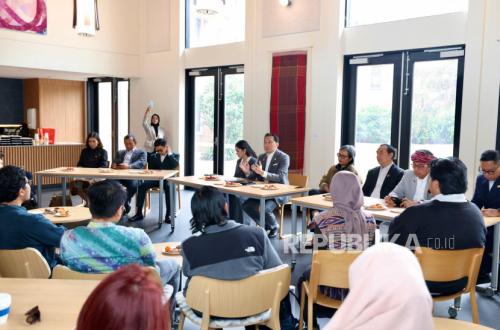
REPUBLIKA.CO.ID, CANBERRA — Deputy Speaker of Indonesia’s People’s Consultative Assembly (MPR), Edhie Baskoro Yudhoyono, has urged Indonesian students in Australia to prepare for the challenges of the times, from competition in the labour market and rising living costs to the need to build economic independence.
He stressed that education and international experience should equip young people to improve their competitiveness and make a tangible contribution to Indonesia’s progress.
Ibas Yudhoyono delivered the message during a meeting with the Indonesian Students’ Association in Australia (PPIA) at the Australian National University (ANU) in Canberra on Friday, 16 October 2026.
The meeting provided an opportunity for dialogue between a people’s representative and Indonesian students studying in Australia, while also strengthening people-to-people ties between the two countries.
In his remarks, Edhie Baskoro emphasised that relations between Indonesia and Australia could not be built solely through formal government-to-government diplomacy.
Parliamentary ties, educational exchanges, cultural cooperation and interaction between the two peoples also played an important role in strengthening the countries’ partnership.
“Indonesia and Australia are destined to be neighbours. We must therefore maintain friendly, positive and warm relations so that more opportunities for cooperation can be developed,” Ibas said in a statement on Tuesday, 20 October 2026.
He said national diplomacy through a parliament-to-parliament approach could serve as a bridge to improve communication, expand cooperation and advance the Indonesia–Australia Comprehensive Strategic Partnership. Cooperation should continue to be developed in trade, investment, education, research and culture.
Ibas also described Indonesian students in Australia as an important part of strengthening ties between the two nations.
The academic experience, cross-cultural understanding and international networks they build while studying could become valuable assets for Indonesia in the future.
Amid economic change and shifts in the world of work, Ibas emphasised the importance of preparing young people with relevant skills, adaptability and readiness to meet changing industry needs.
However, the challenges facing young people go beyond finding a job. High living costs, housing needs, education expenses, transport and day-to-day necessities are also significant concerns, particularly for students and recent graduates seeking economic independence.
The fundamental question is not simply whether someone can find work, but whether that work provides sufficient income to meet living costs decently, develop personally and plan for the future.
For Indonesian students in Australia, these challenges have a particular dimension, as they must manage living costs and education expenses in an economic environment different from Indonesia’s.