
QRIS Goes Global, Bringing Greater Convenience for Merchants
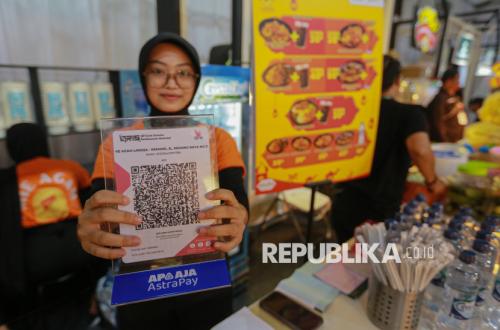
Seven years ago, the Quick Response Code Indonesian Standard (QRIS) was created to unify the various QR payment codes in Indonesia. Today, QRIS is no longer merely a domestic transaction tool. The payment system developed by Bank Indonesia (BI) has expanded to a number of countries and has become one of the backbones of the nation’s digital payment transformation.
QRIS’s journey has continued despite a change in leadership at the central bank. Previous BI Governor Perry Warjiyo made strengthening the digital payment system one of the main agendas during his tenure. Under that policy direction, QRIS evolved from a national payment standard into a cross-border payment system.
Acting BI Governor Destry Damayanti affirmed that QRIS development will continue. According to her, payment system policy remains directed at strengthening economic activity through the expansion of digital payment acceptance, including cross-border QRIS cooperation.
“Payment system policy remains directed at supporting and strengthening people’s purchasing power through the expansion of cross-border QRIS cooperation with priority partner countries and the QRIS Jelajah Kuliner Indonesia 2026 programme, with a target of 47 million QRIS merchants by 2026 to promote an inclusive digital financial economy, including for MSMEs,” Destry said during a press briefing on the results of the Financial System Stability Committee (KSSK) periodic meeting in Jakarta on Monday (3/8/2026).
QRIS was launched by BI on 17 August 2019 as the national standard for QR code-based payments. Before that, each bank and payment service provider had its own QR standard, so merchants had to provide several QR codes to accept payments. Through QRIS, all payment applications can use a single standard. BI developed QRIS with the CEMUMUAH principles (fast, easy, cheap, safe, and reliable), while building an interconnected and interoperable payment system.
Before ending his term, Perry affirmed that cross-border QRIS development will continue. According to him, QRIS is now connected with Japan and South Korea, complementing the cooperation previously established with Thailand, Malaysia, Singapore, and China.