
Qodari Reveals Mission Behind Prabowo's Visit to Russia: Opening Economic Opportunities for Indonesia
Indonesia’s foreign policy does not merely position the country amid global dynamics, but also serves as an instrument for advancing the national interest. The principle of being ‘free and active’ adopted by Indonesia is directed so that every diplomatic step delivers tangible benefits to the people.
Muhammad Qodari, head of the Government Communication Agency (Bakom) of the Republic of Indonesia, said this principle has been the foundation of Indonesia’s conduct of foreign relations, as stipulated in Law Number 37 of 1999 on Foreign Relations.
‘Based on Article 3 of Law Number 37 of 1999 on Foreign Relations, in conducting foreign policy, Indonesia adheres to the free and active principle devoted to the national interest,’ Qodari said in a statement on Monday (7/9).
According to him, the free and active principle means Indonesia cannot merely follow world developments, but must be present and take a role whenever the national interest is at stake.
Therefore, cooperation with other countries is built on mutual trust and directed at protecting Indonesia’s interests. ‘Indonesia must not be a mere spectator. Indonesia must be present, speak up, and actively fight for the national interest,’ he said.
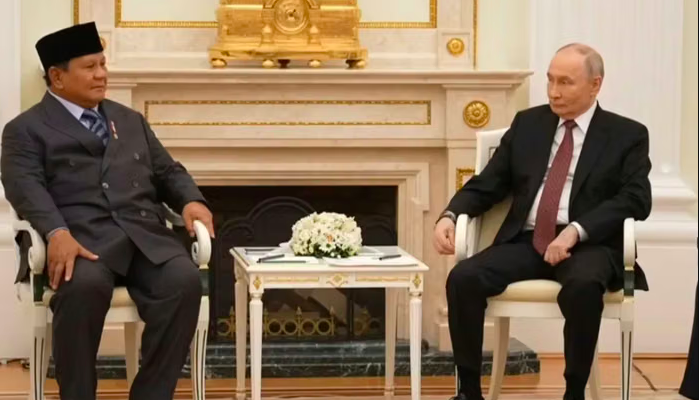
Qodari said this spirit was also evident in President Prabowo Subianto’s visit to Vladivostok, Russia, where the President attended as an honoured guest and delivered a speech at the 11th Eastern Economic Forum (EEF), which was also attended by Russian President Vladimir Putin.
Qodari stressed that Russia today is a country of great strategic importance, both geopolitically and in terms of natural resources. For the government, a presidential visit abroad is never merely a diplomatic engagement. Every meeting with foreign leaders or at international forums is made an entry point for cooperation that can strengthen the national economic interest.
‘For President Prabowo, every foreign visit agenda is always directed as part of efforts to find solutions, open economic opportunities, and bring tangible benefits back to Indonesia,’ Qodari said.
Economic diplomacy is an important part of this approach. Widening cooperation opportunities are expected to lead to investment, job creation, the strengthening of domestic industry, and improved national economic resilience.
‘The greater the economic opportunities opened through diplomacy, the greater the potential for investment, jobs, a stronger national industry, and Indonesia’s economic resilience,’ he said.
At the EEF forum in Russia, for instance, President Prabowo invited global business players to invest capital and create added value in Indonesia. This step demonstrates how the government uses international forums to showcase Indonesia’s economic potential and attract investment. Prabowo also urged Russia to increase bilateral trade once a free trade agreement between Indonesia and the Eurasian Economic Union comes into force.
The government views this trade cooperation as an opportunity to expand markets while strengthening domestic economic activity. ‘This step is part of Indonesia’s diplomacy to open up jobs, improve public welfare, and drive economic growth and equitable development at home,’ Qodari said.
Beyond trade and investment, food and energy cooperation is also a focus. In his meeting with Russia, President Prabowo invited the country to strengthen collaboration in both sectors.
Food and energy cooperation is considered vital because it directly relates to Indonesia’s ability to maintain national self-sufficiency amid global uncertainty. Resilience in both sectors ultimately forms part of efforts to safeguard economic stability and protect the people’s interests.
Qodari emphasised that foreign diplomacy and resolving domestic problems are not two separate agendas. In fact, they can reinforce each other when foreign policy is directed at producing concrete benefits for the people.
‘Therefore, for Indonesia, addressing challenges at home and pursuing the national interest through diplomacy are not contradictory,’ he said. ‘Both are tasks carried out simultaneously, complementing one another, and aimed at improving the welfare of the Indonesian people.’
With this approach, the free and active foreign policy does not stop at Indonesia’s position in the global geopolitical arena. Diplomacy is also positioned as a means to open market access, attract investment, strengthen industry, create jobs, and safeguard food and energy security. ‘For the government, the Indonesian people must be the primary beneficiaries of every diplomatic effort,’ Qodari concluded.
Source: jawawa.id (https://jawawa.id/newsitem/qodari-reveals-mission-behind-prabowos-visit-to-russia-opening-economic-opportunities-for-indonesia-1788792633)
Originally published by Media Indonesia (https://mediaindonesia.com/internasional/930747/qodari-ungkap-misi-di-balik-kunjungan-prabowo-ke-rusia-buka-peluang-ekonomi-indonesia), translated from Indonesian