
Qodari Reveals Evidence of President Prabowo's Support for Farmers
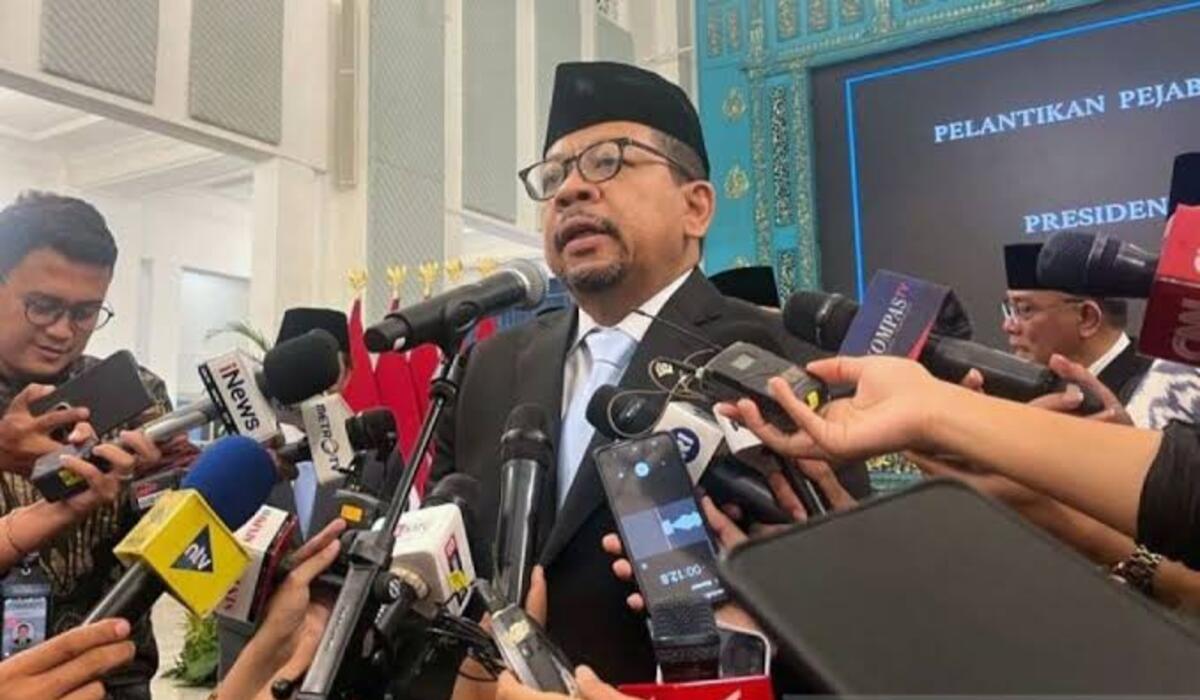
Head of the Government Communication Body (Bakom) of the Republic of Indonesia, Muhammad Qodari, has detailed a number of strategic policies by President Prabowo Subianto that serve as tangible evidence of the government’s support for farmers’ welfare. These policies include lowering the price of subsidised fertiliser, simplifying distribution bureaucracy, providing agricultural machinery assistance, and increasing the purchase price of unhusked rice.
Qodari stressed that President Prabowo’s commitment to the agricultural sector was further reinforced by his presence at the 17th National Farmers and Fishermen’s Week (PENAS) in Gorontalo Regency on 24 June 2026. ‘The President’s presence at the event reaffirms the government’s commitment and support for farmers, who have been the backbone of the country in achieving national food sovereignty,’ Qodari said in a statement in Jakarta on Monday (29/6).
One of the fundamental steps taken by the government is ensuring the availability of subsidised fertiliser by doubling the quota to 9.5 million tonnes. In addition to quantity, the government has also cut bureaucratic red tape through Presidential Regulation Number 6 of 2025 on Subsidised Fertiliser Governance. Under this regulation, distribution is now carried out directly from PT Pupuk to Farmers’ Group Associations (Gapoktan) or cooperatives. Farmers can now redeem fertiliser simply by presenting their identity card, supported by a transparent digital system. Furthermore, the government has reactivated fertiliser subsidies for the fisheries sector, providing 295,000 tonnes after a four-year hiatus.
To accelerate modernisation, the Ministry of Agriculture has prepared a budget of Rp4.19 trillion for 2026 to distribute 38,969 units of agricultural machinery, ranging from tractors to agricultural drones. The government is also providing a machinery credit scheme with low interest rates through national and regional banks.
On the downstream side, the government has increased the Government Purchase Price for unhusked rice absorbed by Bulog from Rp6,000 to Rp6,500 per kilogram without quality deductions. This measure aims to ensure that prices at the farm level remain profitable.
Qodari explained that this series of policies has yielded significant results. National rice production throughout 2025 reached 34.69 million tonnes according to Statistics Indonesia data, aligning with figures from the FAO (35.6 million tonnes) and the USDA (34.6 million tonnes). This production increase has been accompanied by a surge in farmer welfare. BPS data recorded the Farmer Exchange Rate in May 2026 at 127.73. ‘This is the highest figure in the last 34 years, meaning that the economy and purchasing power of farmers are now improving in line with the strengthening of national food security,’ Qodari concluded.