
Qodari: Prabowo's visit to Russia opens economic opportunities
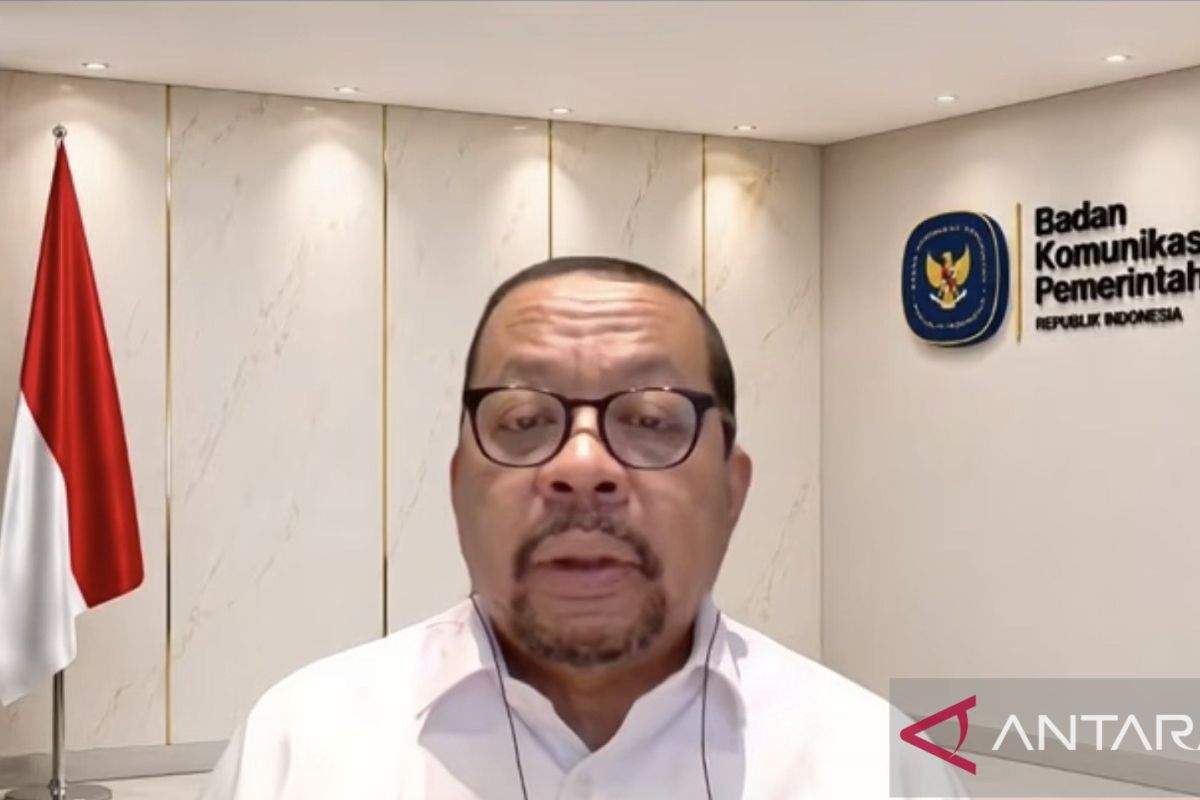
For President Prabowo, every foreign visit agenda is always directed as part of efforts to find solutions, open economic opportunities, and bring tangible benefits back to Indonesia.
Jakarta (ANTARA) - The head of the Republic of Indonesia’s Government Communication Agency (Bakom), Muhammad Qodari, said President Prabowo Subianto’s visit to Vladivostok, Russia, was directed at opening economic opportunities for Indonesia.
“For President Prabowo, every foreign visit agenda is always directed as part of efforts to find solutions, open economic opportunities, and bring tangible benefits back to Indonesia,” Qodari said in a statement in Jakarta on Monday.
According to him, Indonesia’s foreign policy is not merely about positioning the country amid global dynamics, but also serves as an instrument for advancing the national interest.
Qodari said the free-active principle adopted by Indonesia is directed so that every diplomatic step delivers real benefits to the people.
He said this principle forms the foundation of Indonesia’s conduct of foreign relations, as stipulated in Law Number 37 of 1999 on Foreign Relations.
“Based on Article 3 of Law Number 37 of 1999 on Foreign Relations, in conducting its foreign policy, Indonesia adheres to the free-active principle devoted to the national interest,” Qodari said.
Therefore, cooperation with other countries is built on mutual trust and directed at protecting Indonesia’s interests.
“Indonesia must not merely be a spectator. Indonesia must be present, speak out, and actively fight for its national interests,” he said.
That spirit, Qodari said, was also evident in President Prabowo Subianto’s agenda for his visit to Vladivostok, Russia. During the visit, Prabowo attended as guest of honour and delivered a speech at the 11th Eastern Economic Forum (EEF), which was also attended by Russian President Vladimir Putin.
Qodari affirmed that Russia is currently a geopolitically strategic country with vast natural resources.
According to him, the President’s meetings with leaders of other countries and his presence at international forums are intended to serve as entry points for cooperation that can strengthen national economic interests.
Economic diplomacy is an important part of this approach. Increasingly open cooperation opportunities are expected to lead to investment, job creation, strengthening of domestic industries, and improved national economic resilience.
“The greater the economic opportunities opened through diplomacy, the greater the potential for investment, jobs, stronger national industries, and Indonesia’s economic resilience,” he said.
This step demonstrates the use of international forums as a means to introduce Indonesia’s economic potential while attracting investment opportunities.
Prabowo also urged Russia to increase the value of bilateral trade once the free trade cooperation between Indonesia and the Eurasian Economic Union formally takes effect.
The government views this trade cooperation as an opportunity to expand markets while strengthening domestic economic activity.
“This step is part of Indonesia’s diplomacy to open up employment, improve public welfare, and drive economic growth and equity at home,” Qodari said.
Beyond trade and investment, cooperation on food and energy is also receiving attention. In his meeting with Russia, President Prabowo invited the country to strengthen collaboration in both sectors.
Resilience in these two sectors ultimately also forms part of efforts to maintain economic stability and protect the people’s interests.
Qodari stressed that foreign diplomacy and resolving domestic problems are not two agendas running separately. Both can reinforce each other when foreign policy is directed to produce concrete benefits for the people.
“Therefore, for Indonesia, addressing domestic challenges and fighting for the national interest through diplomacy are not contradictory things,” Qodari said.
“Both are tasks carried out simultaneously, complementing each other, and aimed at improving the welfare of the Indonesian people,” he added.
With this approach, a free-active foreign policy does not stop at Indonesia’s position in the global geopolitical arena.
Diplomacy is also positioned as a means to open market access, attract investment, strengthen industry, create jobs, and safeguard food and energy security.
“For the government, the Indonesian people must be the primary beneficiaries of every diplomatic effort,” Qodari concluded.