
Qodari Calls Disruption of Government Dialogue at UGM an 'Anomaly', Here's Why
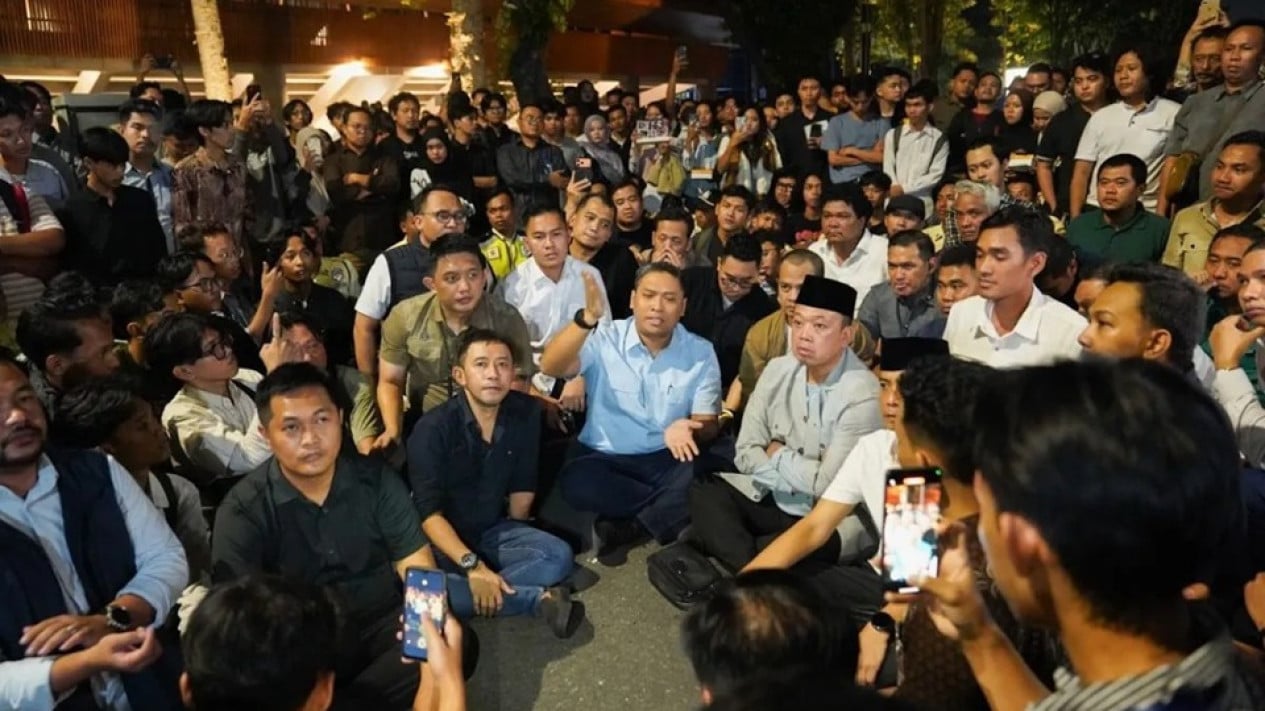
The Head of the Government Communication Body (Bakom) of the Republic of Indonesia, Muhammad Qodari, has detailed the chronology of the disruption of a dialogue event between the government and students at Gadjah Mada University (UGM) by a group of students. According to him, the incident represents an anomaly in campus democratic life. The discussion had been running smoothly for approximately 45 minutes before it was eventually shut down. Other students who did not reject the event were also present in the forum and participated in the discussion. “Actually, before the disruption, I received information that the activity had been going well and smoothly for about 45 minutes. But then a group of people, students, suddenly appeared and shut down the event, including using words that were perhaps inappropriate. Now, this is actually an anomaly,” Qodari stated in his remarks. He explained that the activity, attended by Deputy Minister of Agriculture Sudaryono, Minister of Agrarian Affairs and Spatial Planning/National Land Agency Nusron Wahid, and Head of the Poverty Alleviation Acceleration Agency Budiman Sudjatmiko, was not a new agenda. Previously, similar activities had been held at several universities and proceeded without significant obstacles. “The event at UGM itself had also been prepared well in advance, had obtained permission, and therefore could be held,” he said. Qodari emphasised that society, including the campus environment, consists of various groups with different aspirations and views. Therefore, differences of opinion should be managed through democratic mechanisms that provide space for all parties to express their views. “We must acknowledge that in society there are various kinds of aspiration groups and schools of thought. So that governance can function and society can function, there must be a mechanism to bring together various differences of opinion,” he said. According to Qodari, in a democratic system, differences of opinion should be addressed through dialogue and discussion forums, not by shutting down other parties’ activities. “If, for example, you disagree with one forum, the ideal approach is to create another forum. So, a forum is countered with a forum, not by being shut down,” he concluded.