
Qodari affirms President's commitment to return economic system to 1945 Constitution
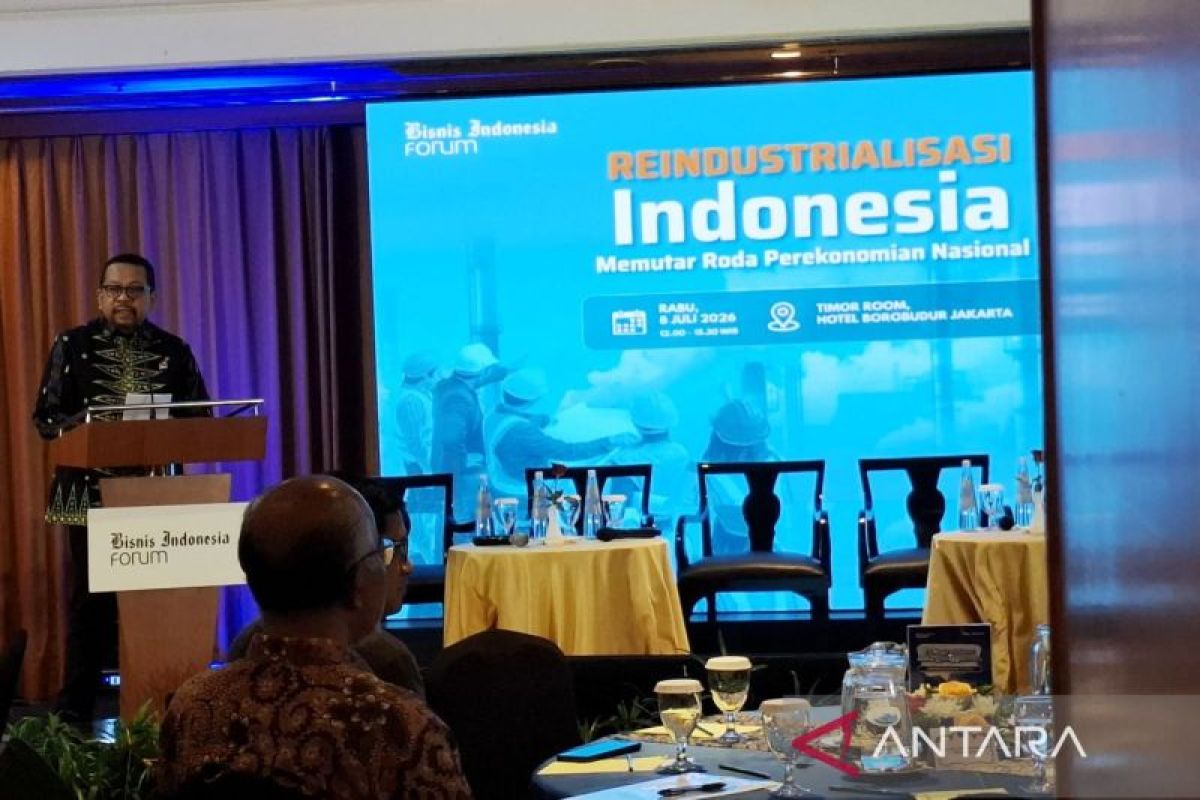
Jakarta (ANTARA) - The Head of the Indonesian Communication Agency (Bakom), Muhammad Qodari, has emphasised that President Prabowo Subianto is committed to restructuring Indonesia’s economic system by returning it to the mandate of Article 33 of the 1945 Constitution.
“The President truly intends to overhaul it. Everything is being returned to Article 33 of the 1945 Constitution. As for how it will be implemented? That is a technocratic problem,” Qodari said during the Bisnis Indonesia Forum in Jakarta on Wednesday.
Qodari stated that the transformation towards a resource-based industrial nation is one of the government’s key agendas to realise the Indonesia Emas 2045 vision. According to him, the government is striving to process natural resources domestically to increase added value, create jobs, and strengthen technological mastery.
Qodari noted that the government is currently proposing the formation of a National Industrial Zone Council, which would be led directly by the President and Vice President to strengthen cross-sector coordination in industrial zone development. “But the message is clear: the issue of industrial zones, which has been hindered by fragmented cross-sector coordination, is intended to be addressed at the highest level of government,” he said.
Furthermore, Qodised that the government continues to push for the strengthening of the downstreaming ecosystem from upstream to downstream, including plans to develop the electric vehicle industry and a national car brand by leveraging the domestic market potential, which reaches approximately one million units per year. Qodari conveyed Prabowo’s view that Indonesia must be capable of producing a national car, given the significant size of the four-wheel vehicle market.
“He said, ‘Indonesia sells almost 1 million cars a year. Why can’t we have a national car? Why can’t we secure a captive market of 300,000 to 400,000 units?’ That is what he conveyed,” Qodari said.
He added that the government is also working to strengthen human resource capacity in the field of technology through a partnership between Tara Indonesia and ARM from the UK to train 15,000 semiconductor chip design engineers. According to him, the first wave of training, involving 1,000 engineers, commenced in Jakarta in May 2026.
Qodari stated that these various programmes are part of the government’s efforts to strengthen industrial downstreaming, technological independence, and economic sovereignty in accordance with the constitutional mandate.