
Q2 2026 Downstreaming Investment Reaches Rp152.7 Trillion, Boosted by Bauxite
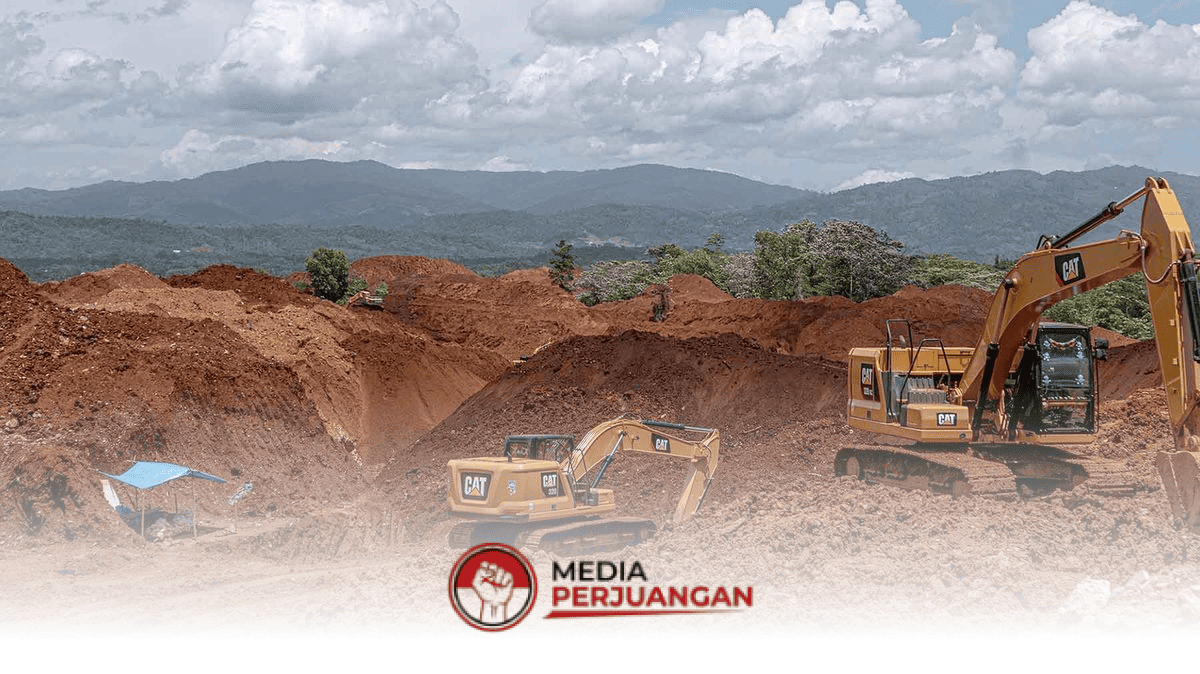
The Ministry of Investment and Downstreaming/Investment Coordinating Board (BKPM) recorded that investment realisation in Indonesia’s downstreaming sector reached Rp152.7 trillion in the second quarter of 2026. This achievement represents a 5.7 per cent increase compared to the previous period and accounts for 29.8 per cent of total national investment realisation. A shift in the dominant commodity occurred during this period, with bauxite emerging as the primary contributor, displacing nickel which typically dominates downstreaming investment.
This data was presented directly by Minister of Investment and Downstreaming/Head of BKPM Rosan Perkasa Roeslani at the Presidential Palace Complex in Jakarta on Thursday, 16 July 2026, after submitting the achievement report to President Prabowo Subianto. “Investment in the downstreaming sector for the second quarter reached Rp152.7 trillion, an increase of 5.7 per cent, and this total investment realisation accounts for nearly 30 per cent, or 29.8 per cent, of the total investment realisation in the second quarter of 2026,” said Rosan Perkasa Roeslani.
According to Rosan, the new dominance of bauxite was driven by the proliferation of bauxite processing facility construction projects undertaken by both domestic and foreign investors. “Bauxite is number one; usually we know it is always nickel. There has been a shift to bauxite because there are several bauxite developments, both carried out by domestic and foreign parties,” he explained. The Indonesian government affirmed its commitment not to concentrate the downstreaming programme on a single commodity, but also to target sectors such as palm oil, rubber, timber, and silica sand.
“We certainly hope to continue encouraging downstreaming or derivatives of palm oil and others, but it does not stop there, because the downstreaming we are doing is perhaps still only the first or second step,” Rosan stated. The Minister compared this progress with the domestic nickel downstreaming ecosystem, which he assessed as already highly comprehensive, spanning from upstream to downstream for electric vehicle batteries. “For nickel, we almost have the whole ecosystem, of course related to EV batteries, from nickel ore, nickel sulphate, nickel matte, cathodes, anodes, to battery cells, battery packs, and then battery recycling. We already have the whole ecosystem,” he revealed. In implementing the long-term programme, the government refers to the national downstreaming blueprint, prioritising commodities that possess a competitive advantage in the form of abundant natural reserves. “We are prioritising those that are in our downstreaming blueprint and where we already have a competitive advantage, for instance from the large reserves we have in Indonesia,” Rosan explained.
Source: jawawa.id (https://jawawa.id/newsitem/q2-2026-downstreaming-investment-reaches-rp152-7-trillion-boosted-by-bauxite-1784245824)
Originally published by pdiperjuanganbali.id (https://www.pdiperjuanganbali.id/hilirisasi-triwulan-ii-2026-ditopang-bauksit), translated from Indonesian