
PWNU DIY Leader: Long Conflict, Then Reconciliation, Now Handshakes
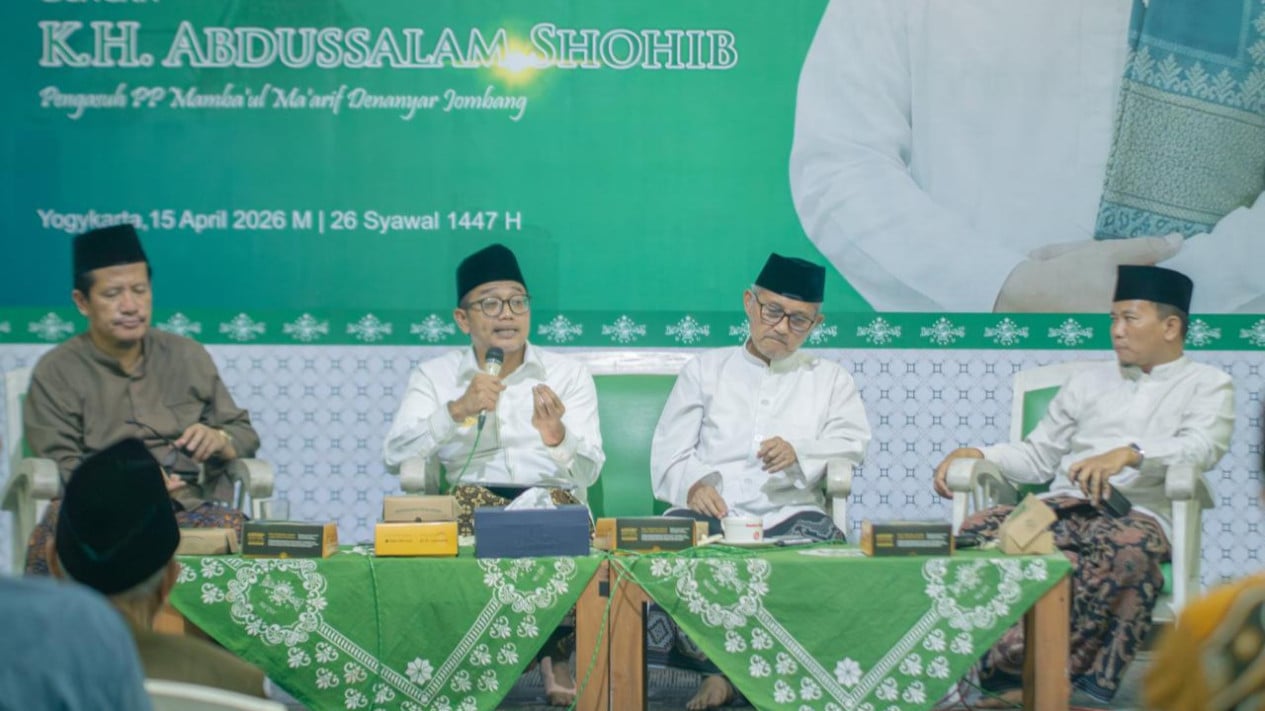
Yogyakarta, VIVA – KH Abdussalam Shohib, or Gus Salam as he is affectionately known, visited the Nahdlatul Ulama Regional Board (PWNU) of the Special Region of Yogyakarta (DIY) for a silaturahmi (fraternal visit). He was not alone; Gus Salam was accompanied by a delegation of Masyayikh from the Al-Falah Ploso and Lirboyo Islamic boarding schools in Kediri, East Java.
Gus Salam had previously informed the NU Yogyakarta regional board of his intention to pay this fraternal visit. He arrived at the PWNU DIY office and was welcomed by the Katib PWNU, KH Mukhtar Salim, followed by other board members.
“I arrived just before Isha prayer and was welcomed by Kiai Mukhtar, followed by the other board members. Alhamdulillah, before the event began, the Masyayikh from Ploso and Lirboyo in Kediri were able to chat casually with the board members,” said Gus Salam in his statement, quoted on Saturday, 18 April 2026.
The silaturahmi took place on Friday, 17 April 2026, at 20:00 WIB.
“I introduced Gus Salam as the grandson of NU founder Mbah Bishri Syansuri. Gus Salam is also part of the family of the Al-Falah Ploso and Lirboyo boarding schools in Kediri. I conveyed Gus Salam’s intention for this silaturahmi, related to his efforts as a candidate for General Chairman of PBNU through the upcoming congress,” said Gus Makmun.
“Gus Salam is striving to run for General Chairman of PBNU at the request and command of his teachers and kyais. Therefore, he seeks fraternal ties and prayers of blessing from the PWNU and PCNU boards throughout Yogyakarta,” he added.
In the presence of around thirty PWNU and PCNU board members from across Yogyakarta, Gus Salam introduced himself through his ideas and thoughts on the Nahdlatul Ulama organisation. He explained the current state of NU and its future projections.
“Alhamdulillah, I had the opportunity to present my thoughts and ideas on the future of NU, starting from the foundation and the importance of comprehensive reconciliation,” said Gus Salam.
“Reconciliation is carried out by restoring relationships among all elements of the Nahdlatul Ulama organisation to maintain unity. And this unity can be rebuilt if everyone, with full awareness, can set aside personal and group egos as well as limiting differences to unite,” he added.
Grounded in theological, philosophical arguments and various exemplars, Gus Salam stated that through togetherness, NU can reweave efforts to restore the essence, authority, and service of the organisation’s struggle in society, based on the founding line and the legacy of NU’s founders and predecessors.