
PVMBG: New landmass in Maluku waters formed by a ‘mud volcano’
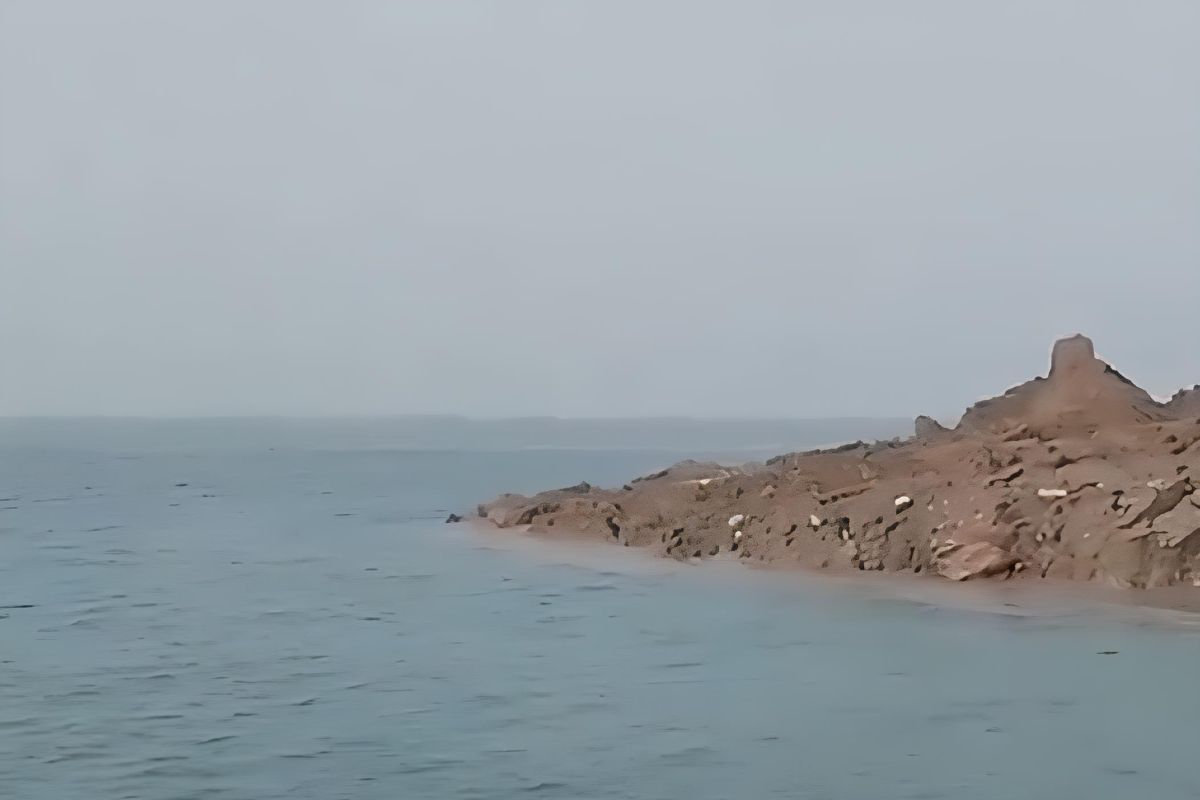
Mataram (ANTARA) – The Centre for Volcanology and Geological Hazard Mitigation (PVMBG) has explained that a new landmass which appeared in the waters off Yamru village, Tual, Maluku, was formed from mud-volcano material pushed to the surface by geological activity.
Imam Catur Priambodo, head of PVMBG’s Earthquake and Tsunami Geology Team, said the local geology contains substantial amounts of mud, gas and water.
“‘Mud volcano’ does not mean a volcano; it refers to mud material that emerges and forms a mound,” he said on Tuesday, on the sidelines of a geological disaster mitigation information outreach event in Mataram, West Nusa Tenggara.
Earlier reports featured a viral video showing a mound of land material emerging from the sea. The formation, resembling a coral island about 60 metres long and 30 metres wide, appeared in the waters off Yamru village, Tual, Maluku, at around 2am local time on Monday (2 November).
Imam said earthquake activity can disrupt hydrostatic conditions beneath the surface, pushing mud containing gas and water upwards.
He said the appearance of volcanic mud is a common phenomenon in areas with geological conditions like those in the waters around Maluku.
PVMBG urged residents not to use the new landmass as a place to live or as new land for cultivation, as the material is not yet stable enough to support the weight of buildings.
“There may be no problem with approaching it, but the coral island is unstable, so it should not be used as a place to live or as new land,” Imam warned.
He added that a similar phenomenon occurred in the waters off Teinaman village, Tanimbar Islands Regency, Maluku, in January 2023. A new island appeared after a magnitude 7 earthquake struck the area.
In Teinaman, the PVMBG team observed that the mound, described as a new island, was about 200 metres from the coast and approximately three metres high. Observations found that the formation, on land close to the shore, consisted of dark mud containing gravel fragments and pieces of wood.
A mud volcano is neither a volcanic island formed by volcanic activity nor a permanent tectonic island created through long-term geological processes involving the uplift of massive rock formations.
The new island is a temporary manifestation of thrust-fault deformation on a shallow seabed. Seabed uplift can occur in areas where earthquakes are caused by thrust faults, particularly when the epicentre is relatively shallow and located beneath the sea.
Source: jawawa.id (https://jawawa.id/newsitem/pvmbg-new-landmass-in-maluku-waters-formed-by-a-mud-volcano-1793710479)
Originally published by Antara (Indonesian) (https://www.antaranews.com/berita/5829511/pvmbg-daratan-baru-di-perairan-maluku-terbentuk-dari-mud-vulcano), translated from Indonesian