
Putin's Visit to the Kuril Islands to Punish Japan over Ukraine
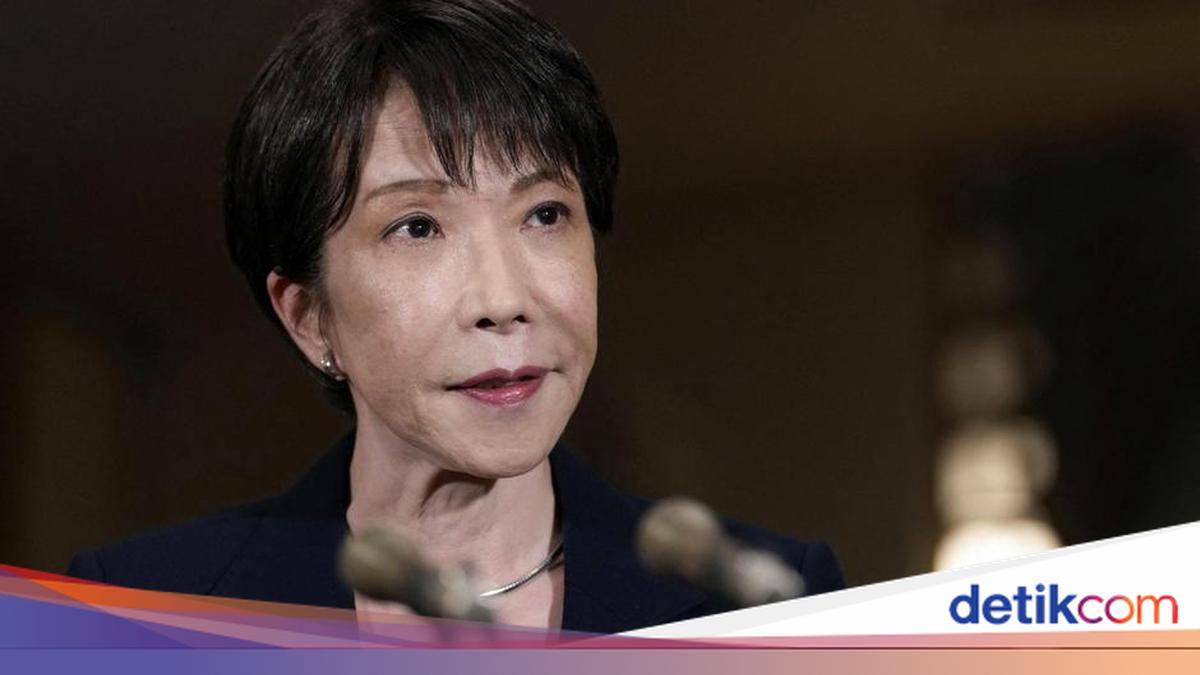
Russian President Vladimir Putin’s first visit to one of the Kuril islands disputed between Russia and Japan off Japan’s northern tip last week immediately drew a sharp protest from Tokyo. Japanese Prime Minister Sanae Takaichi called the visit ‘completely unacceptable’. In a social media post, she reiterated that the islands, known in Japan as the ‘Northern Territories’, are ‘Japanese territory that legally and historically form part of Japan’.
Russia responded to the statement. The Russian Foreign Ministry stressed that the Kuril Islands are an ‘inseparable part’ of Russia.
The dispute over the archipelago has been ongoing since the end of the Second World War. Soviet forces seized the Kuril Islands two weeks after Japan formally surrendered on 15 August 1945. Within the following year, around 17,300 Japanese residents of the area were forced to leave the islands.
During his visit, Putin toured a school, a hospital and several industrial facilities on Iturup Island, which Japan calls Etorofu. The visit took place just two days before the 81st anniversary of Japan’s surrender in the Second World War.
‘This is clearly a message to Japan,’ said James Brown, a professor of international relations specialising in Russian affairs at Temple University’s Tokyo campus. ‘Russia feels anger over Japan’s support for Ukraine and Tokyo’s increasingly close relations with NATO member states in Europe,’ he told DW.
‘So there is a clear desire to punish Japan,’ he said. ‘But there is also a domestic element behind this … because visits like this can generate patriotic support among Russians from various political backgrounds,’ he added.
The Japanese government has consistently maintained that the Kuril Islands were illegally annexed. The territorial dispute has long overshadowed relations between Tokyo and Moscow, and has even meant the two countries have never signed a formal peace treaty to this day.
The collapse of the Soviet Union in 1991 and the economic problems that followed briefly raised hopes in Japan that Moscow could be persuaded to return the islands in exchange for economic assistance, or even cooperation to develop the region. Former Japanese Prime Minister Shinzo Abe was one of the most active leaders in pushing for a resolution of the issue. He met Vladimir Putin directly on several occasions to seek common ground over the status of the islands claimed by both countries.
However, all diplomatic efforts produced no results. In 2020, Russia amended its constitution to include a provision banning the transfer of Russian territory to another country. Relations between the two countries deteriorated further after Russia launched its full-scale invasion of Ukraine in February 2022.
Waseda University political science professor Toshimitsu Shigemura told DW that the latest development further reduces Japan’s chances of regaining the islands. ‘Tokyo has summoned the Russian ambassador and lodged a formal diplomatic protest, but sanctions related to the war in Ukraine have already been imposed, and I think it will be difficult for Japan to add further sanctions,’ Shigemura said.
‘Japan still imports energy from Russia, and because of the situation involving Iran, those imports are becoming increasingly important. This places Tokyo in a relatively weak position,’ he added.
Shigemura believes that Putin, likely working with China and North Korea, is seeking to weaken Japanese Prime Minister Takaichi because of her firm stance on regional security issues. He added that Putin is aware that Takaichi’s domestic support is beginning to decline and probably judges that the Japanese leader will not respond more forcefully than with protests.
Shigemura added that Russia’s constitutional change and the strengthening nationalism driven by government propaganda have effectively made the return of the islands to Japan ‘impossible’. ‘Putin may be in a weak position at the moment, but he is working with China and North Korea to challenge Takaichi, who has few options,’ he said. ‘And even after Putin leaves power, a new Russian government will not be interested in returning the islands.’
Brown agreed, saying that although some ‘over-enthusiastic critics’ in Japan will see Putin’s eventual departure from the Kremlin as an opportunity, whoever ultimately leads Russia afterwards is unlikely to support Japanese interests regarding the territory. ‘That did not happen when the Soviet Union collapsed, nor during the various economic difficulties Russia experienced afterwards. So I do not see a new Russian leader being willing to return the islands,’ he said.
Source: jawawa.id (https://jawawa.id/newsitem/putins-visit-to-the-kuril-islands-to-punish-japan-over-ukraine-1787036133)
Originally published by detikcom (https://news.detik.com/dw/d-8623698/kunjungan-putin-ke-kepulauan-kuril-untuk-hukum-jepang-soal-ukraina), translated from Indonesian