
Putin's Struggle: The Tale of Orcas Preying on Polar Bears - Ruble Strengthening
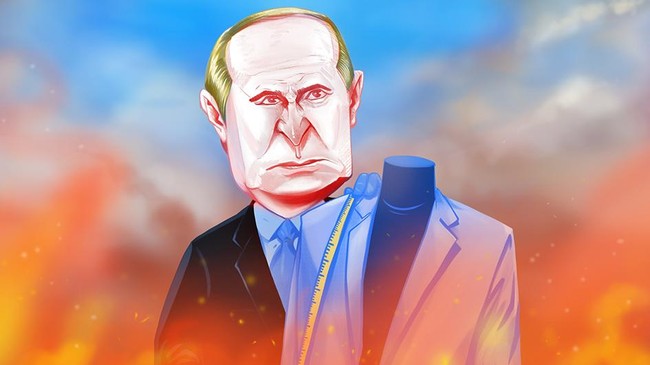
Russian President Vladimir Putin is reportedly considering steps to escalate the war in Ukraine, a move that has heightened concerns among NATO nations. During a meeting with university staff and students in Moscow on 29 August 2026, Putin used a metaphor of orcas preying on polar bears to describe the ‘food chain,’ suggesting that children should be taught this to understand the world and the reasons behind Russia’s ‘special military operation’.
However, this claim lacks a factual basis, as there are no known instances of orcas preying on polar bears. The statement is instead viewed as a reflection of Putin’s worldview, which perceives the world through a lens of predator and prey. Western concerns are rising as the Russia-Ukraine war continues without a significant breakthrough, with Russian forces facing a stalemate and casualties continuing to rise. The conflict has evolved into a war of drones and missiles, causing significant damage to Ukrainian infrastructure and impacting Russian economic activities.
Public support in Russia is also beginning to erode. A Levada Centre poll shows that 57% of Russians describe the country’s situation as ‘tense’, citing the war, casualties, mobilisation, and future uncertainty. Among the Russian elite, the war, now entering its fifth year, is increasingly viewed as wasted time. For Putin, withdrawing without achieving minimum objectives is not a simple option, as it could be perceived as weakness within the Russian political system.
NATO nations are increasing vigilance. US CIA Director John Ratcliffe travelled to Moscow on 25 August 20lar, while Finland has requested assistance from Swedish aircraft and warships to monitor its border with Russia. Germany is preparing to accuse Russia of drone attacks at Leipzig airport, and Romania has reported destroying Russian maritime drones targeting drilling rigs in its waters.
Simultaneously, Russia is facing new budgetary pressures. From January to June 2026, the government deficit reached RUB 5.7 trillion, significantly higher than the annual target of RUB 3.8 trillion. This deficit represents approximately 2.5% of GDP. This fiscal pressure is occurring even as primary revenue sources weaken; despite oil prices being higher than budget assumptions, oil and gas revenues plummeted by 23% to RUB 3.7 trillion in the first half of 2026.
In response, the Russian Ministry of Finance has increased daily foreign currency and gold purchases from approximately RUB 5.4 billion to RUB 6.5 billion. This policy has put pressure on the ruble, with the exchange rate moving from around RUB 80 per US dollar in early August to over RUB 85 by mid-month. Because energy revenues are earned in US dollars, a weaker ruble actually increases the amount of local currency the government receives when converting export earnings.
However, this policy carries consequences. A weaker ruble makes imports more expensive, which could drive up consumer prices and increase inflationary pressure. Russian inflation stood at approximately 6% in June 2026, with price pressures further exacerbated by fuel shortages following Ukrainian attacks on Russian oil infrastructure.
Source: jawawa.id (https://jawawa.id/newsitem/putins-struggle-the-tale-of-orcas-preying-on-polar-bears-ruble-strengthening-1788274583)
Originally published by CNBC Indonesia (https://www.cnbcindonesia.com/research/20260901191352-128-764158/pertarungan-putin-kisah-orca-memangsa-beruang-kutub--penguatan-rubel), translated from Indonesian