
Putin's Party Wins Russian Legislative Elections
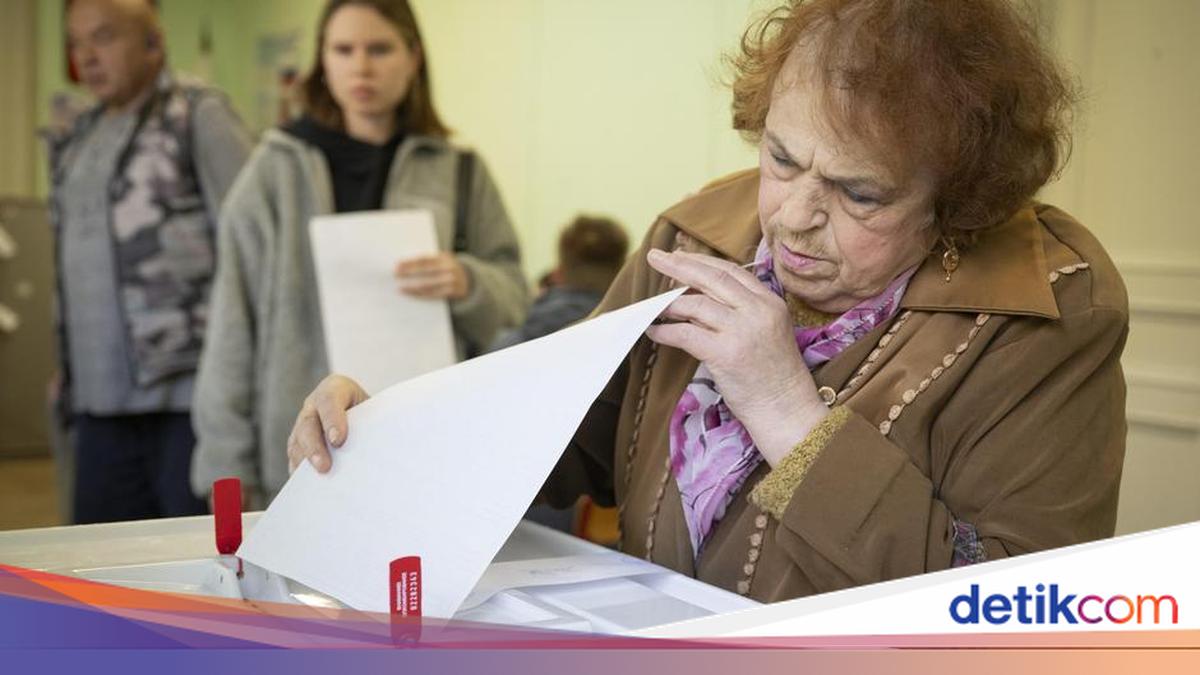
Russia’s ruling party, United Russia, has been confirmed as the winner of the parliamentary elections held over three days, as previously anticipated. The party, which has been in power for over 20 years, secured 57.83 per cent of the vote, according to data provided by the Chair of the Central Election Commission, Ella Pamfilova.
According to data from the Central Election Commission, United Russia will obtain 355 of the total 450 seats in the legislative body, the State Duma, marking a new record for the party. United Russia’s vote share exceeded pre-election predictions, which suggested the party would receive less than 50 per cent of the vote. In the 202im Duma elections, the Russian Central Election Commission recorded the party at 49.8 per cent.
The Communist Party, based on preliminary data, garnered 13.84 per cent of the vote, while the ultra-nationalist LDPR achieved 8.9 per cent. ‘Novye Lyudi’ (or the liberal ‘New People’ party) received 7.94 per cent. The left-wing ‘A Just Russia’ party stood at 4.95 per cent, slightly below the five per cent threshold. Based on these percentages, only four parties will enter the Duma parliament, rather than five as in the previous term.
This was the first legislative election since the start of the Russian invasion in February 2022. The ten parties listed on the ballot are considered close to the Kremlin and support the war. Candidates opposing the war were excluded from the election; the anti-war liberal party Yabloko was not permitted to participate. The party also expressed concerns regarding the safety of its supporters, after two of its key figures received long prison sentences following statements regarding the war against Ukraine.
President Vladimir Putin described the vote as a test of support for Russia’s chosen policies. Conversely, the Ukrainian government referred to the vote as a ‘sham election’.
Kremlin opponents, independent experts, and the opposition in exile have accused the election committee of manipulating the results. Even pro-government communists, under the leadership of Gennadi Zyuganov, have levelled similar accusations. Yabloko and the team of opposition politician Alexei Navalny—a Kremlin critic who died in February 2024—stated that many votes from Russian citizens supporting peace negotiations with Ukraine were disenfranchised. The Navalny team stated, ‘Regardless of how much this election was manipulated, we know: There are many Russian citizens who oppose the war and oppose Putin and his party.’
Voter turnout reached over 56 per cent, the highest figure in 15 years. More than 110 million people were called to vote in the process which took place from last Friday to Sunday.
The Chairman of United Russia, former President Dmitry Medvedev, described the election results as a great success. He claimed that political opponents had attempted to sabotage the election but failed, referring to cyberattacks on the online voting system reported by the election committee.
During the elections last weekend, Ukrainian drone attacks targeted Russia, causing fatalities and injuries. Medvedev claimed that these attacks further motivated the public to vote. ‘This is the most important result,’ he said. United Russia can now ‘implement the most complex and urgent decisions’, though Medvedev did not provide specific details. For months, there has been speculation regarding new mobilisation, which has been denied by both Putin and Medvedev.
Political scientist Alexander Morozov, a critic of the Kremlin, described the Duma parliament as a ‘war state’ parliament and a ‘bloodthirsty’ parliament. He predicted that there would be increased repression and that the proportion of hardliners would be much higher. Morozov also argued that Putin could use these results as legitimacy for his re-election in the 2030 presidential election, though he noted that the Kremlin must first prove victory in the war against Ukraine.