
Putin Threatens Major Retaliation, Targets Ukraine's Economic Lifelines
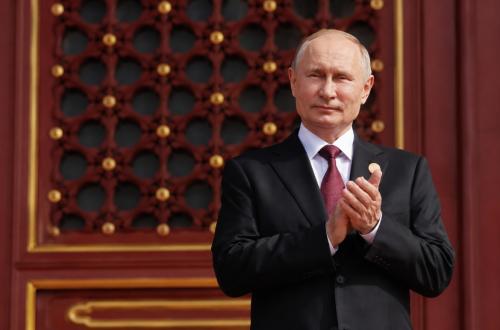
Russian President Vladimir Putin has issued a stern warning to Ukraine after Kyiv escalated attacks on Russian economic infrastructure. Putin said Ukraine had opened a ‘Pandora’s box’ and warned that Moscow would retaliate by striking Ukraine’s most sensitive economic sectors.
The statement reflects a significant shift in the Russia-Ukraine war, which has been ongoing for nearly four and a half years. The fighting is no longer confined to the front lines. Both countries are increasingly aggressive in attacking each other’s economic lifelines, from oil refineries, ports and logistics warehouses to food export infrastructure.
‘The Kyiv regime has set the goal of damaging our economy. What have they done? They themselves opened this Pandora’s box. If so, be prepared to face a response targeting your most sensitive economic sectors,’ Putin said in comments to a Russian state television journalist published on Saturday (22/8/2026).
Putin’s threat came after Ukraine throughout the summer intensified drone attacks on economic targets in Russia. Oil refineries and warehouses belonging to online trading companies were among the facilities targeted. Kyiv stated that this infrastructure was linked to Russia’s ability to sustain its war operations.
Russia then increased pressure on Ukraine’s economic infrastructure. One of the most affected sectors is agricultural exports via the Black Sea.
Putin said disruption to Ukrainian agricultural exports would not cause a global food shortage because Russia, according to him, has the capacity to replace the lost supply from Ukraine.
‘We do face challenges related to the delivery of our goods, but we will resolve this problem. Therefore, there will be no shortage in the global market,’ Putin said.
Ukraine’s attacks on Russian facilities are beginning to have a measurable economic impact.
Oil shipments from three major Russian ports in the western region, namely Primorsk, Ust-Luga and Novorossiysk, fell to around 2.3 million barrels per day in the first half of August 2026. This figure is about 15 per cent below the initial plan.
Exports from the three ports were previously expected to reach around 2.7 million barrels per day throughout August. The largest disruption occurred at Novorossiysk on the Black Sea, when Ukrainian attacks on energy infrastructure increased pressure on Russia’s ability to maintain its oil export flows.
Novorossiysk is strategically important as one of Russia’s key gateways for oil to international markets. Oil exports from the port, including Russian Urals crude and Kazakhstan’s KEBCO, fell to around 400,000 barrels per day from a range of 800,000 to one million barrels per day in June and July. Loading schedules also experienced delays of more than two weeks.
The impact of pressure on Russia’s energy sector is even being felt by domestic consumers.
Motorists in Moscow faced long queues at several petrol stations after petrol shortages recurred. A number of petrol stations imposed purchase restrictions, while others only provided diesel.
The shortage was triggered by a combination of high summer demand and Ukrainian attacks on Russian oil refineries. The Russian government responded by banning petrol and diesel exports, relaxing fuel quality standards and beginning to import oil products to maintain domestic supply.
For Russia, the energy sector is not merely an industry. Oil and gas revenues are one of the key pillars of the state budget. Therefore, Ukraine’s attacks on refineries and export routes have a strategic objective: to raise the cost of Moscow’s war while disrupting its sources of income.
But such a strategy carries consequences. As Kyiv expands its targets to Russian economic centres, Moscow has the ability to retaliate against sectors that are no less vital to Ukraine. And one of the most vulnerable points lies in the Black Sea.