
Putin Strengthens Russia-ASEAN Ties Amid Western Embargo
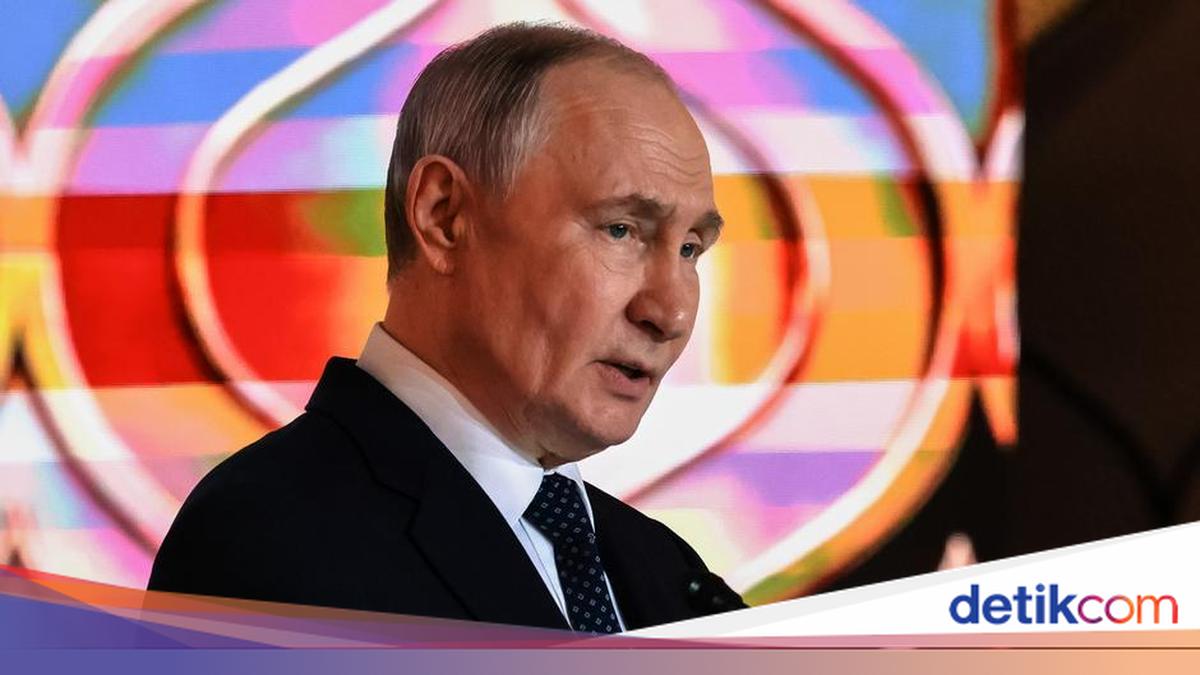
Russian President Vladimir Putin hosted leaders from Southeast Asian nations on Wednesday in a meeting of the Association of Southeast Asian Nations (ASEAN), as Moscow seeks to strengthen business ties and other cooperation with member states of the regional bloc. The two-day meeting in Kazan, the capital of the Republic of Tatarstan located about 700 kilometres east of Moscow, discussed ways to expand Russia’s ‘strategic partnership’ with ASEAN countries, according to Kremlin foreign policy adviser Yuri Ushakov. Putin has sought in recent years to deepen political and economic relations with Asian nations amid the Ukraine war, which has entered its fifth year. Ushakov said the ASEAN countries involved in the meeting included Brunei Darussalam, Cambodia, Indonesia, Laos, Malaysia, Myanmar, the Philippines, Singapore, Thailand, Timor Leste, and Vietnam. The regional bloc maintains relations with Moscow as a ‘dialogue partner’ and regularly holds annual high-level meetings with Russian officials. The Kazan meeting also marked 35 years of Russia-ASEAN relations. Thailand, Vietnam, Cambodia, Laos, Malaysia, and Singapore sent their prime ministers to Kazan. The Philippines was represented by President Ferdinand Marcos Jr., while Myanmar also sent a delegation. In a message delivered to participants of a business forum held on the sidelines, Putin said he was confident the forum would ‘create new opportunities for expanding mutually beneficial trade, investment, and industrial cooperation, as well as strengthening direct dialogue between business communities.’
Ushakov said the meeting agenda included an exchange of views on various global and regional issues and an assessment of efforts to develop Russia-ASEAN relations. He added that participants would also reaffirm their commitment to establishing a ‘just and democratic multipolar world order based on the principles of international law and the United Nations Charter.’ Ushakov praised what he described as a ‘productive, equal, and constructive dialogue’ between Russia and ASEAN. Putin was also scheduled to hold a number of bilateral meetings with ASEAN leaders at the forum, which he co-chaired with Philippine President Ferdinand Marcos Jr., who currently holds the rotating ASEAN chairmanship. Opening the bilateral meeting with Marcos, Putin highlighted the ‘mutually beneficial cooperation’ between the two countries built on good traditions, mutual respect, and consideration of each other’s legitimate interests. Marcos thanked Putin for hosting the Russia-ASEAN meeting in Kazan and invited him to attend the ASEAN Summit in Manila in November. Besides Marcos, Putin also met with Brunei’s Sultan Hassanal Bolkiah and Malaysian Prime Minister Anwar Ibrahim. According to Malaysia’s national news agency, Anwar planned to discuss efforts to ‘ensure the continued supply of oil’ to his country. Energy issues have become a concern for several Asian nations following global energy price shocks triggered by conflict in the Middle East and disruptions to shipping traffic in the Strait of Hormuz. Several ASEAN countries, including the Philippines, Indonesia, Thailand, and Vietnam, have imported Russian crude oil or expressed interest in purchasing it after world energy prices soared due to the Iran conflict.
Facing massive sanctions from Western countries over the war in Ukraine, Russia has in recent years shifted its economic focus towards Asia, particularly for energy exports. Moscow is seeking to expand markets for its oil and other commodities in the region as economic relations with Western countries continue to deteriorate. At the same time, the Russian economy is also facing various challenges. AFP reported that high inflation, labour shortages, and high borrowing costs continue to burden the country’s economy. On the battlefield in Ukraine, the pace of Russian troop advances has reportedly slowed this year. Ukraine has also stepped up attacks on Russian territory, including Tatarstan, the location of the Russia-ASEAN meeting. The Kazan meeting coincided with the G7 summit in France, which made the Ukraine war and Middle East conflict its main agenda items. During a meeting with Ukrainian President Volodymyr Zelensky on the sidelines of the G7 summit, US President Donald Trump renewed calls for Moscow to reach a deal to end the Ukraine war. Trump also said Washington could reimpose sanctions on Russian oil.
At an official reception for heads of delegations on Wednesday evening, Putin said Russia and ASEAN countries share views on establishing a fairer world order. ‘Russia and ASEAN countries jointly support a just world order and defend the principle of sovereign equality of states and non-interference in internal affairs,’ Putin said. ‘All our countries pursue their own development models and do not impose their views on anyone. And this is our strength,’ he continued. ‘Russia is ready to continue active cooperation with ASEAN member states to strengthen our strategic partnership in order to ensure the security, well-being, and prosperity of our countries and peoples, as well as the Eurasian region as a whole.’ On the sidelines of the meeting, Putin also met with Turkish Foreign Minister Hakan Fidan, who had held talks with Russian Foreign Minister Sergey Lavrov in Moscow the previous day. Putin praised Russia-Turkey relations, which he said ‘continue to develop steadily’, while Fidan said both sides were working to deepen cooperation.