
Putin Signs Controversial Law Allowing Russian Military to Free Citizens Abroad
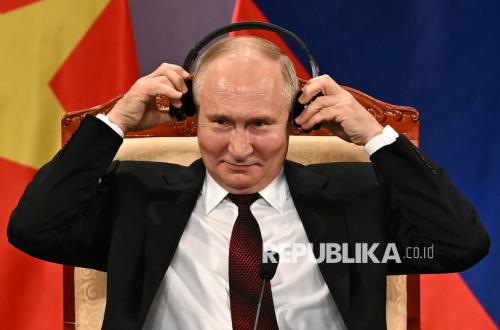
Vladimir Putin has signed a law permitting the Russian Armed Forces to protect Russian citizens detained or prosecuted by foreign courts. Under the new rules, the Russian military can carry out protection duties for citizens arrested, detained, or tried under foreign judicial decisions without Russian involvement. The provision also applies to decisions by international bodies whose authority does not stem from international agreements with Moscow or UN Security Council resolutions adopted under Chapter VII of the UN Charter. The Russian government and relevant agencies are required to take necessary protective measures within their respective powers. The law is expected to take effect 10 days after official publication, according to RIA Novosti on Monday, 25 May 2026.
Previously, State Duma Chairman Vyacheslav Volodin claimed Western judicial systems have become repressive tools against those deemed non-aligned with European officials. He argued Russia must take all necessary steps to protect its citizens abroad.
The new Moscow policy is expected to spark fresh debates with Western nations, particularly over state sovereignty and international legal jurisdiction. Western countries generally view law enforcement within their territories as an exclusive national right, meaning foreign military intervention without consent could breach the UN Charter.
Tensions also relate to Russia’s stance on the International Criminal Court (ICC). Many European nations are ICC members and obligated to enforce arrest warrants issued by the court, while Moscow rejects the ICC’s jurisdiction, viewing its legal processes as politically motivated.
Furthermore, several Western nations apply universal jurisdiction, allowing their courts to prosecute war crimes or serious human rights violations occurring outside their borders. Russia often sees this as a political pressure tool against its officials and citizens.
Disputes also involve extradition mechanisms and international sanctions. The United States and its allies have legal cooperation networks enabling the arrest of foreign nationals based on requests from other countries’ courts. Russia has long refused to extradite its citizens and now appears to be expanding state protection for those facing foreign legal proceedings.