
Putin Remains Unbowed, Europe Faces Difficult Choices
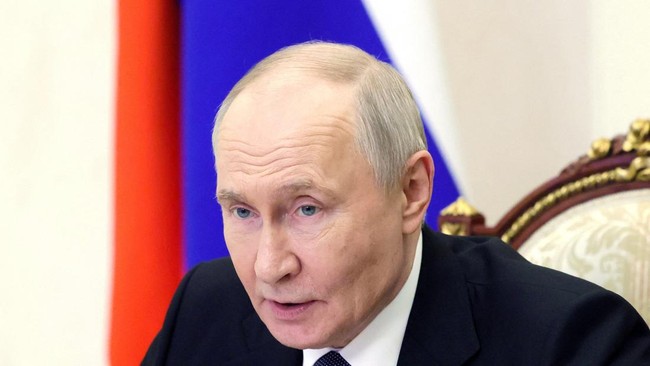
More than four years after Russia launched its large-scale invasion of Ukraine, Europe faces a dilemma. The war is becoming increasingly expensive for Moscow, yet economic pressure has not yet compelled Russian President Vladimir Putin to halt his aggression.
In an article titled ‘Vladimir Putin and the pareriah problem’, The Economist highlights the limitations of the strategy to isolate Putin. Europe has strong reasons to condemn Russia, but ending the war may still require negotiations with the very leader they condemn.
The fundamental issue is how to stop the fighting without allowing Russia to achieve a victory that endangers Ukraine and European security.
Economic Pressure and the Cost of War
Throughout the war, the strategy of Ukraine’s allies has rested on the principle that ‘Russia must not win and Ukraine must not lose’.
Weaponry and financial aid have been provided to ensure Ukraine’s survival. Meanwhile, Ukraine’s allies have implemented sanctions against Russia, including asset freezes, restrictions on international banking access, technology export controls, and oil trade limitations. These measures aim to squeeze Russia’s revenue and access to war-funding resources, hoping that economic pressure will alter Putin’s calculations or increase domestic discontent.
Sanctions have indeed created hurdles for the Russian military industry. In the ‘Trends in World Military Expenditure, 2025’ report, the Stockholm International Peace Research Institute (SIPRI) explains that changes in supply chains to obtain technological components have increased procurement costs, partly because new suppliers charge higher prices.
To illustrate the scale of expenditure, Russian military spending reached approximately US$190.4 billion in 2025, compared to US$65.9 billion in 2021. Its share of Gross Domestic Product (GDP) also increased from around 3.6% to 7.5%.
This figure represents Russia’s total military expenditure, not just the cost of the war in Ukraine. The value has not been adjusted for inflation and is influenced by exchange rate fluctuations, meaning the increase cannot be directly viewed as a measure of the success of sanctions.
Increased spending is also occurring in other nations. SIPRI noted that European military expenditure rose by 14% to US$864 billion in 2025, alongside the continuation of the war and the strengthening of regional defences.
Putin is Not Yet Isolated
The immense cost has not caused Russia to cease the war. The Economist questions whether economic pressure and domestic discontent will be sufficient to change Putin’s decision.
Threats to Europe also remain a concern. In a Bundestag meeting on 5 October 2026, German intelligence leaders identified Russia as the greatest security challenge. Foreign intelligence chief Martin Jäger warned that Moscow is testing Germany’s response and may increase pressure when sensing hesitation.
This situation reinforces the reasons for Europe to maintain support for Ukraine. At the same time, the protracted war increases the risk of voter fatigue, which could be exploited by political groups opposing aid.
Furthermore, the isolation of Putin is not absolute. The Economist highlights Russia’s relationship with China and India as examples that Moscow still possesses important partners.
In September 2026, the administration of US President Donald Trump also announced an invitation to Putin to attend the G20 Summit in Florida in December. This invitation demonstrates that diplomatic channels remain open, although it does not guarantee Putin’s attendance or the achievement of a peace agreement.
An Imperfect Peace
The next dilemma is the possibility that the end of fighting may not simultaneously result in justice.
A former US official, quoted by The Economist, estimates that Russia may retain control over parts of Ukrainian territory and that Putin may not face trial for war crimes. This view is an estimate rather than the result of agreed negotiations.
For Ukraine, the decision regarding peace concerns the survival of its people. If Kyiv eventually accepts an agreement with non-ideal terms, The Economist suggests that Europe should not demand Ukraine continue fighting for the sake of other nations’ security.
The risks remain high. A ceasefire could provide Russia with an opportunity to replenish its strength and prepare for subsequent aggression. Therefore, the cessation of hostilities must be accompanied by support that maintains Ukraine’s ability to defend itself.
Europe’s challenge is to link pressure on Russia with realistic diplomatic objectives. Strengthening Ukraine and limiting Moscow’s gains remains necessary, while simultaneously seeking a way to end the war that respects Ukraine’s decisions.
Source: jawawa.id (https://jawawa.id/newsitem/putin-remains-unbowed-europe-faces-difficult-choices-1791370519)
Originally published by CNBC Indonesia (https://www.cnbcindonesia.com/research/20261007121828-128-774082/putin-tak-kunjung-tumbang-eropa-mulai-dihadapkan-pada-pilihan-sulit), translated from Indonesian