
Putin Meets Modi at Shanghai Summit, Testing Russia-India Relations
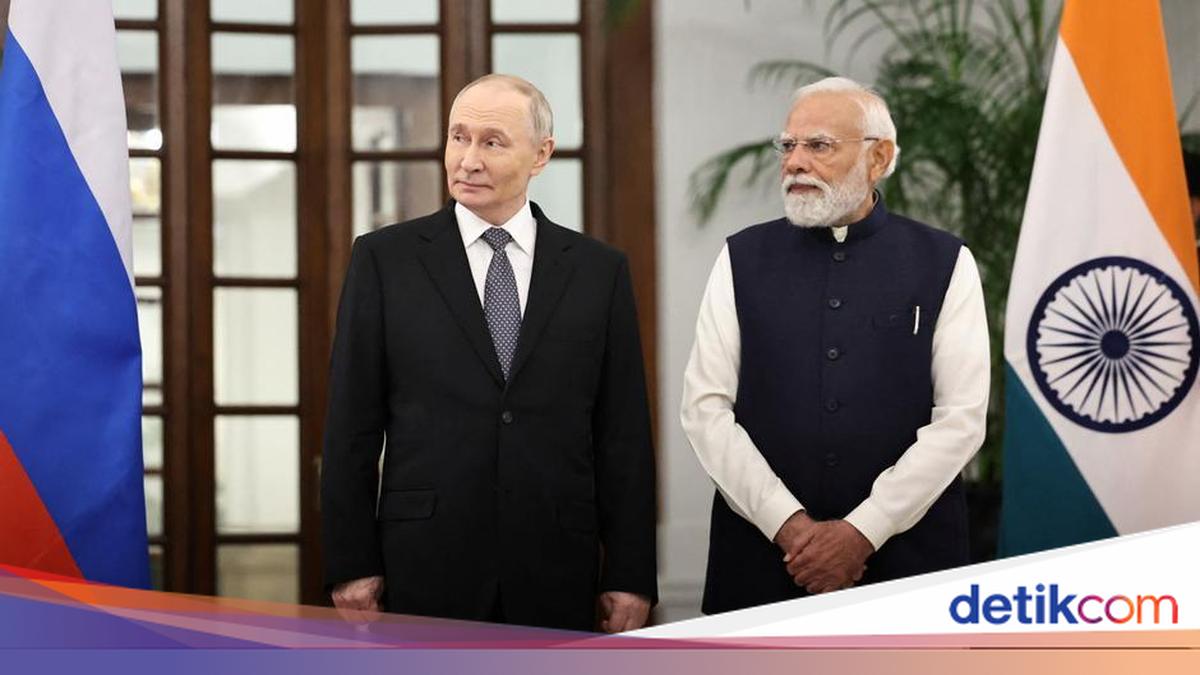
Indian Prime Minister Narendra Modi and Russian President Vladimir Putin are scheduled to meet in Bishkek, the capital of Kyrgyzstan, on the sidelines of the Shanghai Cooperation Organisation (SCO) summit, a group of nations often viewed as a counterweight to United States (US) dominance.
The meeting takes place amidst the impact of the US-Israel conflict with Iran, which has disrupted global energy markets, and the Russian war in Ukraine, which is now entering its fifth year.
India remains active within the SCO but is striving to prevent the organisation from evolving into a bloc that is openly opposed to Western nations. This stance aligns with India’s long-standing policy of attempting to maintain relations with various major powers, including competing nations.
However, this balancing strategy is becoming increasingly difficult. Russia remains under Western sanctions due to the war in Ukraine. Meanwhile, India faces pressure from the US regarding its purchase of Russian oil, at a time when trade relations between New Delhi and Washington are also facing various frictions.
Former Indian Ambassador to the US, Meera Shankar, told DW that India’s relationship with Russia is not intended to oppose Washington.
“India has long-term strategic relations with Russia. This relationship is not aimed at opposing any country, but rather at helping India achieve its national interests,” said Shankar.
India-Russia energy ties grow closer
Energy has been the area experiencing the most significant change in India-Russia relations.
Prior to 2022, when Russia launched its full-scale invasion of Ukraine, Russia supplied only a small fraction of India’s crude oil imports. However, after Moscow offered discounted oil, the situation changed rapidly. Russian oil subsequently took a large share of India’s imports, making Russia one of the country’s primary oil suppliers.
The purchase of Russian oil has also become one of the greatest sources of tension in India-US relations. Washington has urged New Delhi to reduce its oil purchases from Russia. India has asserted that securing affordable and stable energy supplies is part of its national interest.
Global energy supply volatility has made India’s choices even more complex. The US-Israel-Iran conflict this year and disruptions to shipping through the Strait of Hormuz have affected India’s energy purchases from Gulf nations and driven up prices.
Shankar noted that India is responding to this situation by seeking more supply sources, including from Russia and the US.
“In the long term, the transition towards an economy that does not depend on fossil fuels will strengthen India’s energy independence. However, this will not happen in the short term,” she added.
Until that time arrives, Shankar said, India will take steps deemed necessary to maintain supply stability and protect its people.
The future of India-Russia defence cooperation
Defence remains another key pillar in the relationship between the two nations. However, a trend in this sector is becoming quite clear: India is gradually reducing its dependence on Russian weaponry and military equipment.
The war in Ukraine has raised questions regarding Russia’s production capacity, delivery schedules, and its ability to provide spare parts, even though Moscow has been one of India’s primary military suppliers for decades.
“India remains one of Russia’s oldest and largest arms buyers, perhaps even its last large buyer,” said Aravind Yelery, an associate professor at Jawaharlal Nehru University in India’s capital, New Delhi, to DW.
“New Delhi is increasingly reluctant to commit to Russian fifth-generation fighter jet programmes and is less interested in buying new Russian military equipment unless it can be integrated into India’s domestic production plans,” he added.
While India has begun purchasing weaponry from more countries, this does not mean its defence cooperation with Russia will end.
However, the nature of the relationship is changing. India wants cooperation with Russia to strengthen its domestic defence industry, rather than merely serving as a buyer of ready-to-use weapon systems.
The China factor
Russia’s increasing dependence on China is also a factor that cannot be ignored in India-Russia relations.
Since Russia launched its full-scale invasion of Ukraine in early 2022, China has become vital to Russia as a market, supplier, and economic partner. This closeness makes it increasingly difficult for Russia to play a role as a power that can help India counterbalance China.
Yelery sees a fundamental difference between Russia’s relationship with China and its relationship with India.
“Strategically, Russia’s relationship with China remains essentially transactional—a dependency that Russia cannot afford to sacrifice. Meanwhile, Russia’s relationship with India is based on partnership,” he said.
India still has several reasons to maintain its closeness with Russia, ranging from energy, defence, and access to Russian markets, to long-standing political ties in the Eurasia region. However, how India perceives Russia’s strategic importance has now changed.
India’s “America plus” strategy
Strategist C. Raja Mohan says Russia’s growing dependence on China has reduced its strategic role for New Delhi.
“Russia is no longer in a position to help India counterbalance China,” said Mohan, a professor of American studies at Jindal Global University, to DW.
Consequently, India is also beginning to change what it expects from its relationship with Russia.
Relations with Moscow are now more directed towards concrete interests, such as energy security, defence supplies, trade, and access to technology. Meanwhile, in its broader geopolitical strategy, India is increasingly relying on its relationship with the US and its allies.