
Pusong Reservoir Normalisation Underway as Lhokseumawe Optimises Additional Regional Transfer Funds
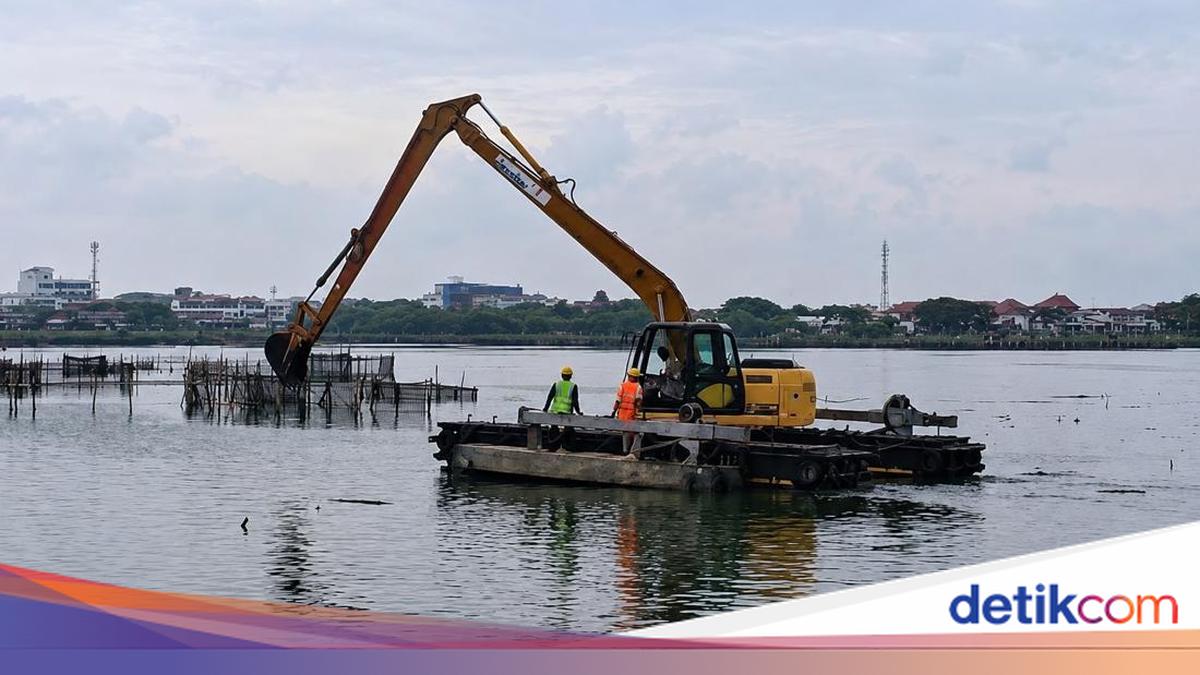
The Additional Regional Transfer (TKD) for post-disaster recovery in Lhokseumawe, Aceh, is beginning to be implemented through physical works. One such project is the second phase of the Pusong Reservoir normalisation, valued at Rp3 billion, which aims to restore the reservoir’s function as flood control infrastructure.
Based on the TKD usage data for the 2026 Fiscal Year, Lhokseumawe City has been allocated Rp124.16 billion. The largest portion, amounting to Rp92.84 billion or approximately 74.77 per cent, is directed towards the infrastructure sector. This allocation serves as a vital foundation for repairing public facilities and strengthening the city’s resilience against disaster risks.
In addition to infrastructure, Lhokseumawe’s additional TKD has been allocated Rp29.33 billion for other affairs, Rp1.78 billion for agriculture, Rp180 million for education, and Rp30 million for health. The usage has been formalised through the Lhokseumawe Mayor Regulation Number 13 of 2026 and is detailed across 42 activities within 18 regional organisational units.
The normalisation of Pusong Reservoir is a key example of optimising the TKD portion for infrastructure. The Lhokseumawe City Public Works and Spatial Planning Department (PUPR) has commenced dredging as a continuation of the first phase of normalisation.
“We have begun dredging the reservoir. The second phase of the Pusong Reservoir reservoir works uses a budget of Rp3 billion sourced from TKD funds,” said Junaiment, Head of the Human Settlements Division of the Lhokseumawe City PUPR Department, in a written statement on Saturday (1/8/2026).
The project has a contract period of 150 days. In the near future, the PUPR Department also targets the disbursement of an advance payment of approximately Rp200 million to support the mobilisation of equipment and accelerate field operations.
The normalisation includes excavating land resembling an island in the middle of the reservoir using heavy machinery. The dredged material will then be transported to designated disposal sites to ensure it does not obstruct water flow and circulation.
Dredging will also be conducted around the reservoir to form embankments that can later be used as jogging tracks. Meanwhile, the inner part of the reservoir will be dredged to a depth of approximately one metre with a width of 20 to 25 metres to increase water storage capacity.
Normalisation is an urgent necessity as the Pusong Reservoir is reported to have not been dredged for almost 20 years. The presence of floating nets and wooden poles has hindered water movement, causing sedimentation and unpleasant odours that disturb the comfort of the surrounding community.
“Previously, the condition of the reservoir was very smelly and slum-like. There were many floating nets and wooden poles obstructing the water flow. As a result, water circulation was not functioning well. Furthermore, this reservoir has not undergone normalisation for almost 20 years,” Junaedi explained.
To accelerate the work, the PUPR Department has deployed one amphibious heavy machine, one excavator, five to ten transport trucks, and other supporting equipment as required by field conditions.
“Through this second phase of normalisation, it is hoped that the function of the Pusong Reservoir can return to being optimal as flood control infrastructure,” concluded Junaedi.