
Pushing the Acceleration of Natural Gas as the Backbone of the Energy Transition
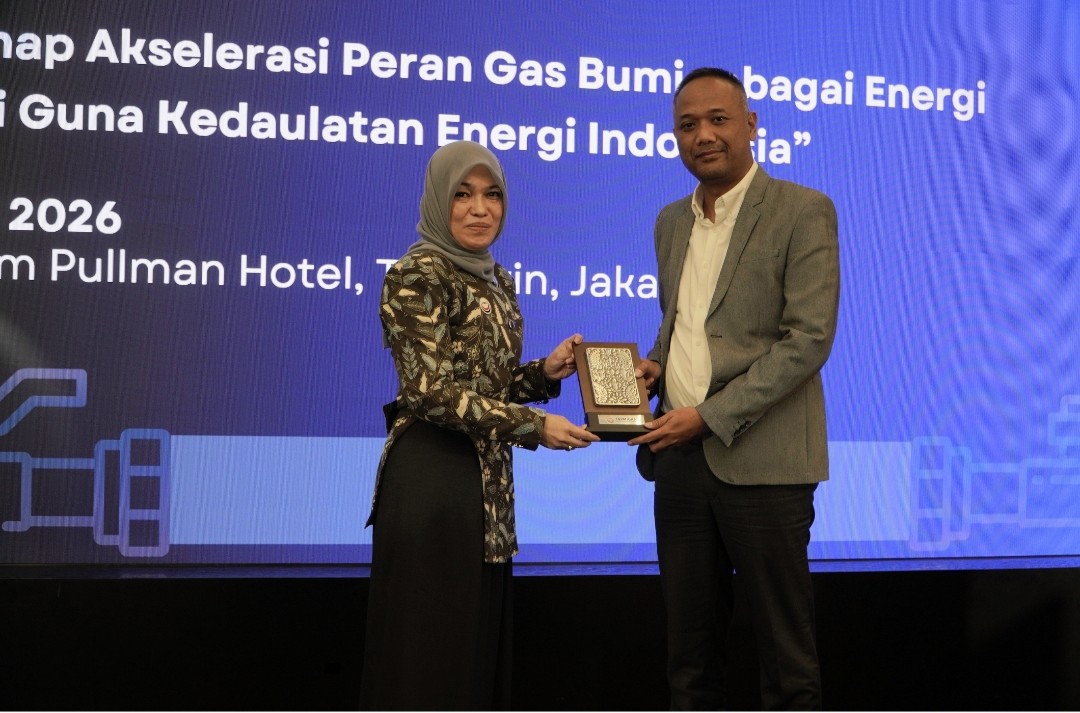
The Indonesian Oil and Gas Pipeline Association (IAPMIGAS) has reaffirmed its commitment to supporting national energy sovereignty. This step was realised through the launch of a Policy Brief and a Luncheon Talk discussion entitled ‘Roadmap for Accelerating the Role of Natural Gas as Transition Energy for Indonesian Energy Sovereignty’ in Jakarta on Wednesday (24/6). This activity serves as a strategic momentum to strengthen the role of natural gas as the backbone of a sustainable, competitive, and highly efficient national energy transition. Amidst rising national energy needs and commitments to the energy transition, natural gas holds a strategic position as a transition energy capable of bridging energy security requirements while supporting emission reductions. However, the development of the natural gas sector still faces various challenges, including limited infrastructure, an imbalance between supply and demand locations, and the need for policy harmonisation and investment certainty. In response to these challenges, IAPMIGAS, together with stakeholders from government, industry, academia, and associations, has conducted a series of discussions and in-depth studies resulting in a Policy Brief containing strategic recommendations to accelerate the development of the national natural gas sector. IAPMIGAS Chairperson Rosa Permata Sari stated that the drafting of this policy brief is part of the organisation’s tangible contribution to supporting the national energy development agenda. ‘Natural gas has an important role in maintaining national energy security while supporting Indonesia’s energy transition process. Through this policy brief, IAPMIGAS seeks to present constructive and implementable recommendations to accelerate infrastructure development, strengthen governance, and enhance the competitiveness of the national natural gas sector,’ said Rosa Permata Sari. The Luncheon Talk & Policy Brief Launching event became a strategic forum bringing together regulators, business players, professional associations, academics, and policymakers to discuss the future direction of Indonesia’s natural gas development. The event was attended by approximately 100 participants from the Ministry of Energy and Mineral Resources (ESDM), the Directorate General of Oil and Gas, BPH Migas, SKK Migas, members of the Indonesian House of Representatives (DPR RI), energy state-owned enterprises (BUMN), national oil and gas companies, industrial service providers, professional associations, and energy research institutions. In the launched policy brief, IAPMIGAS highlighted several strategic issues considered key to accelerating national natural gas development. The first issue is the need to accelerate the integration of national natural gas infrastructure through the completion of transmission and distribution pipeline projects to connect supply with demand centres. Furthermore, the organisation emphasised the importance of optimising the value chain through the development of LNG infrastructure and regasification facilities. The next step being pushed is the acceleration of the LPG substitution programme through household gas networks (jargas) and Compressed Natural Gas (CNG) to reduce imports and state subsidies. On the technical side, IAPMIGAS underlined the strengthening of standardisation aspects, improvement of human resource competencies, and work safety. This foundation must then be reinforced by regulatory harmonisation, licensing simplification, and tariff certainty to create a conducive long-term investment climate. Director General of Oil and Gas at the Ministry of ESDM, Laode Sulaeman, explained that the acceleration of natural gas utilisation is being carried out through the construction of a transmission pipeline network connecting Java Island from east to west following the completion of the Cisem 1 and Cisem 2 projects, as well as the development of a Sumatra pipeline network from Aceh to the southern part. He explained that this transmission pipeline network will be connected to distribution pipelines heading to several areas such as Semarang, Solo, Yogyakarta, Bandung, and Cirebon, and strengthened by the construction of household gas networks to expand natural gas utilisation while reducing dependence on LPG. Laode also noted that oil and gas infrastructure development does require around three to four years as it covers engineering, procurement, construction, and production facility development stages, but the government has accelerated various strategic projects, including the development of gas fields targeted to begin operations by 2029, thereby adding a large volume of gas supply for national needs.