
Push for BPKH Transparency and Independence Continues to Strengthen
The Draft Law on the Amendment to Law Number 34 of 2014 concerning Hajj Financial Management opens up broader opportunities, particularly in strengthening the transparency, independence, and governance of the Hajj Financial Management Agency (BPKH). Regulatory changes are needed so that the management of Hajj funds can be more adaptive in facing economic developments, the service needs of pilgrims, and the increasingly complex challenges of organising the Hajj.
Sharia Economics Observer from the Islamic University of Indonesia, Nur Kholis, said that since the establishment of BPKH in 2017 and its commencement of operations in 2018, the Hajj financial information system is no longer closed. The public can now directly monitor the development of the managed funds they have deposited. “Previously, there were many concerns. There was even a perception that the management could resemble a Ponzi scheme, where those who registered later would receive fewer benefits. With the transparency provided through individual virtual accounts, I see this as a very good step in managing finances from the perspective of transparency and accountability,” said Nur Kholis.
One of the pivotal breakthroughs in this openness was the launch of the BPKH Apps. Sharia-compliant, transparent, and accountable Hajj financial management can ease the path for pilgrims to the Holy Land. According to Nur Kholis, the development of Hajj funds indeed needs to be conveyed more transparently and must generate value benefits that reduce the costs for prospective pilgrims. This also indicates that transparency is part of adapting to public demands. “Many academics have been voicing this for a long time. When virtual accounts arrived and technology made it possible, the results became much better,” he said.
As of June 2026, the Hajj funds managed by BPKH reached Rp184.45 trillion, an increase from Rp180.72 trillion in 2025, according to the agency’s official website. BPKH also recorded an increase in the value of benefits from Hajj funds, reaching Rp12.09 trillion by the end of 2025, marking significant growth since 2022. This growth and transparent, accountable, and sharia-compliant financial management have earned BPKH an Unqualified Opinion (WTP) from the Supreme Audit Agency. This achievement serves as an indicator that the management of Hajj funds is conducted with good governance and can be accounted for to the public.
Given the substantial size of the managed funds, the principle of transparency must be the main foundation in every process of managing Hajj funds, from investment and performance reporting to strategic decision-making. Furthermore, BPKH’s independence must be maintained to ensure that investment and asset management policies are based on prudential principles, professionalism, and are free from interests outside the institution’s mandate. “Although it is already quite good, I believe the management practices and portfolio must be more transparent. Why? Because we have learned a lot from cases of insurance funds being corrupted. That must be a crucial lesson for BPKH. Here, sharia principles are non-negotiable,” he said.
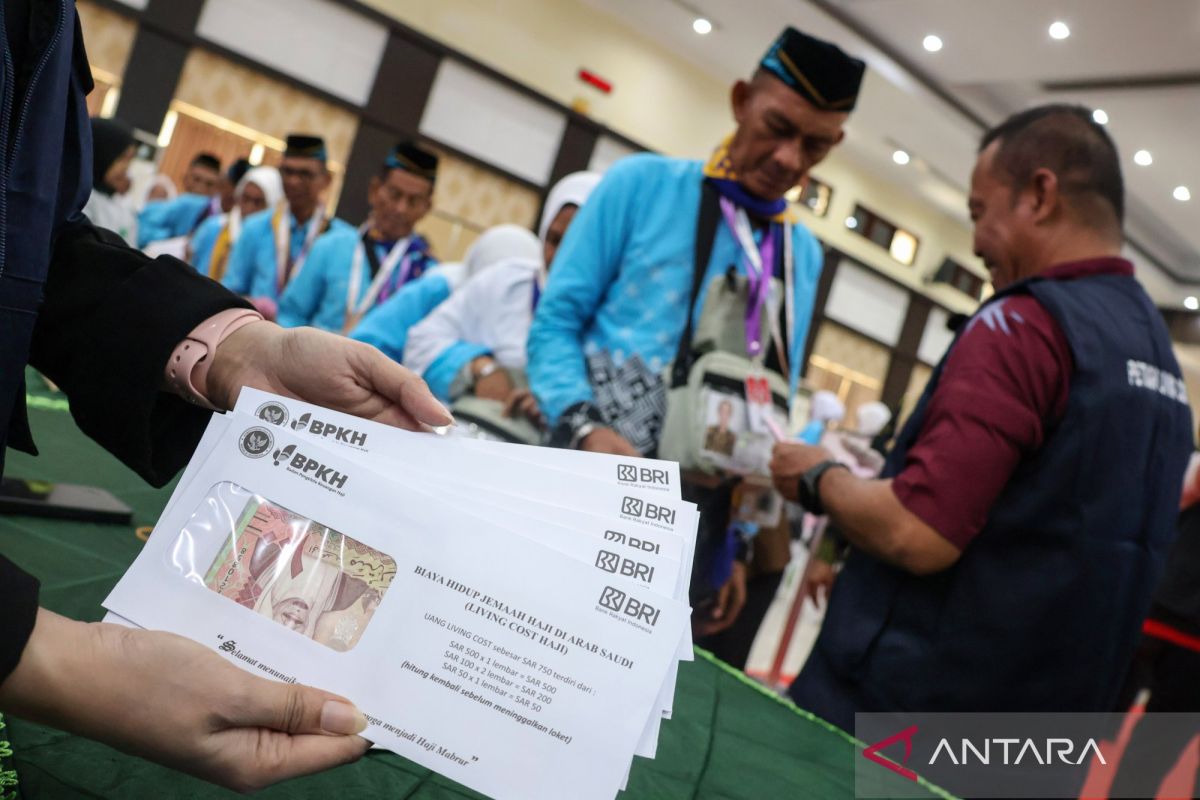
This transparency has been felt by Muhammad Saefullah (54), a Hajj pilgrim from the Solo embarkation who departed in 2026. Having registered in 2012 through a Sharia Receiving Bank, he was on the waiting list for about 14 years. When BPKH took over the management of Hajj funds, he received notification that his funds could be monitored periodically, and he eventually received an additional Rp2.7 million from his initial deposit of Rp25 million. “I received three benefits: the virtual account, the value of benefits, and the living cost during the Hajj,” he said.
Similarly, Hilmi Setiawan (38), a pilgrim who only registered in mid-2025, assessed that financial transparency makes it easier for him to monitor the amount of ‘interest’ earned. After just one year, he has already received around Rp500,000 in his virtual account. “Financial reports are published. But many ordinary people still do not really understand how to read financial reports. Perhaps they could be made more engaging and easier to understand,” said Hilmi.
Member of Commission VIII of the House of Representatives, Maman Imanul Haq, recently urged the strengthening of BPKH to make it more independent and autonomous in order to optimise the investment of Hajj funds. According to Maman, BPKH has a significant mandate because it manages the entrusted funds of prospective pilgrims while also being responsible for developing these funds through safe and productive investment instruments. Therefore, BPKH must be given the space to work independently without intervention from any party. The legislator from the PKB faction explained that as an institution trusted to manage pilgrims’ funds, BPKH must be able to account for the entire process of Hajj financial management, from fund placement and investment development to the distribution of value benefits back to the pilgrims. “That is why we want BPKH to become stronger, more professional, and provide greater benefits for Indonesian Hajj pilgrims,” he said.