
Pusaka Programme Drives Nagasepaha Glass Painting Products to Greater Competitiveness
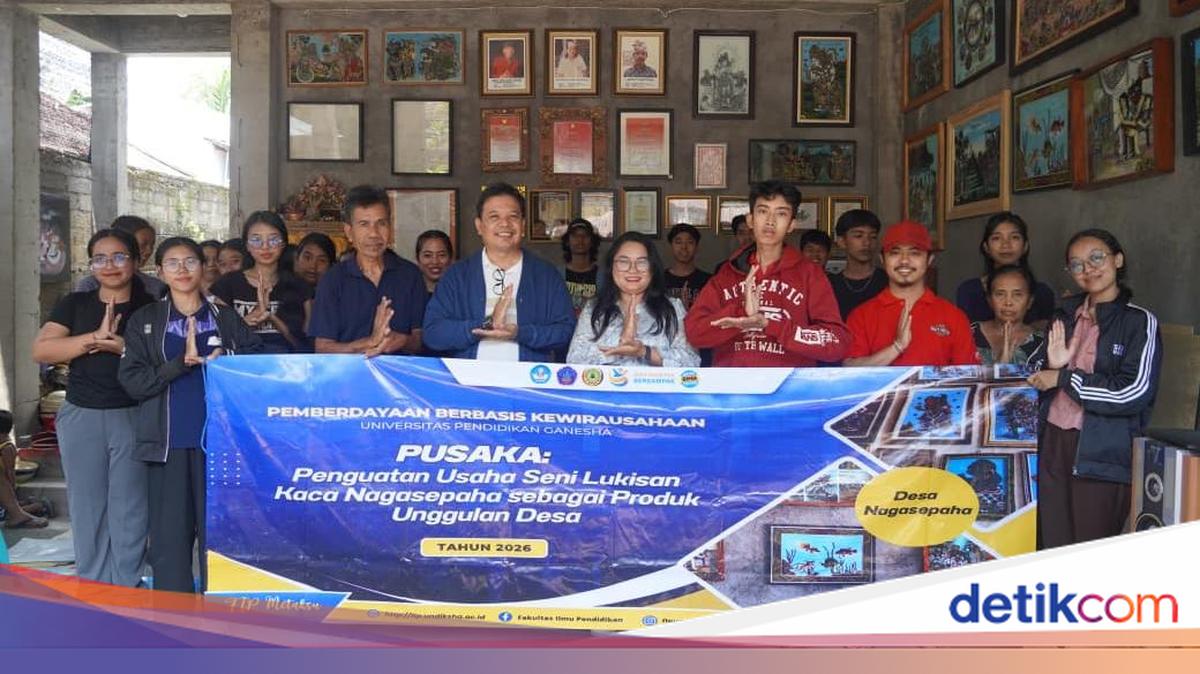
The art of Nagasepaha glass painting continues to be promoted as a competitive flagship product. One such effort is the second year of the ‘Pusaka: Strengthening the Nagasepaha Glass Painting Art Business as a Village Flagship Product’ programme.
The programme is carried out in Nagasepaha Village, Buleleng District, Buleleng Regency, Bali. It focuses not only on business development but also on preserving cultural heritage and encouraging the regeneration of Nagasepaha’s distinctive glass painting artisans.
Nagasepaha Village Head I Wayan Sumeken expressed appreciation for the programme’s continuity. The second year follows the 2025 Pusaka Programme implemented by Universitas Pendidikan Ganesha (Undiksha) together with Universitas PGRI Mahadewa Indonesia.
“Nagasepaha glass wayang art has become an important part of the village’s identity, so it must continue to be preserved and passed on to the next generation,” Sumeken said in a written statement received by detikBali on Wednesday (19/8/2026).
“Artisan regeneration is one of the important aspects so that glass wayang art does not stop as a legacy of the past, but remains alive and developing,” he added.
This year, the programme is directed towards product diversification, the implementation of standard operating procedures (SOPs) for production and quality control, the use of appropriate technology, and the strengthening of distribution and marketing. The series of activities began with the opening and socialisation of the programme on Thursday (16/7/2026).
The event was attended by the implementing team, the Nagasepaha Village Head, and two target partners: I Ketut Santosa Glass Painting Gallery and the Nagasepaha Glass Wayang UMKM. The event also included the handover of works from the 2025 Pusaka Programme to the partners as a form of continuity from the previous year.
The Head of the Pusaka Programme, Prof I Gde Wawan Sudatha, also outlined the direction and stages of the second-year programme, including new product development, the implementation of SOPs and quality control, technology utilisation, and the strengthening of distribution and marketing.
One part of the 2026 Pusaka Programme is a workshop on design and product diversification development for glass painting. The workshop provided space for both partners to explore designs, motifs, forms, and new media that could be developed into derivative glass painting products.
Products developed include tekep saab, decorative glass jars, lamak, and key chains. The development process was carried out in stages, from design planning and exploration, prototype creation, to product refinement.
Nevertheless, the diversification retains the character and cultural value of Nagasepaha glass painting art. The development is also directed towards making products more aesthetic, functional, and aligned with market needs.
The workshop was conducted by Dr I Ketut Supir and Dr I Nyoman Rediasa from the Faculty of Languages and Arts, involving students from the Fine Arts Education Study Programme. The students’ involvement also provided direct experience in the process of developing works together with artisans.
Product diversification is expected to increase added value and competitiveness while opening wider market opportunities. The organisers emphasised that innovation is not intended to erase the identity of Nagasepaha glass painting art, but rather as a strategy to allow the cultural heritage to continue developing in line with community and market needs.
Business strengthening was also carried out through training and the preparation of SOP implementation and quality control for both partners. This activity was directed towards improving the regularity of the production process, quality consistency, and professionalism in producing glass painting art products.
During the mentoring, the partners prepared SOPs tailored to the characteristics of Nagasepaha glass painting production. The material covered production stages, the use of tools and materials, quality control, storage arrangement, and occupational safety procedures. With SOPs in place, the production process is expected to become more systematic and consistent.
The activity was also accompanied by the handover of supporting tools and goods to both partners. The support is used to assist the production process and the development of diversified products, which is one of the focuses of the second-year Pusaka Programme.
The programme strengthening continued through training on product distribution and marketing, including assistance with intellectual property rights (IPR) applications for the partners’ distinctive derivative products.
The activity, guided by Ni Wayan Widi Astuti from Universitas PGRI Mahadewa Indonesia, equipped the partners with marketing strategies, product catalogue preparation, and distribution network development. The distribution networks targeted include souvenir centres, gift shops, resellers, and shipping agents.
In addition to marketing, the partners also received assistance in applying for IPR for the distinctive derivative products developed. This step is expected to increase understanding of the importance of protecting works and designs, while strengthening the identity and added value of Nagasepaha glass painting products.
The series of activities demonstrates that the strengthening of Nagasepaha glass painting art is carried out comprehensively, from design and product development, production standard improvement, quality control, facility support, to marketing and intellectual property protection.
Through the second-year Pusaka Programme, both partners are expected to become more independent in developing products, maintaining quality, expanding markets, and protecting their innovations. Ultimately, the strengthening of business aspects is expected to go hand in hand with the preservation of glass painting art as a cultural heritage and a flagship product of Nagasepaha Village.