
Purwomartani Toll Gate Extended to Night Operations Until 29 March
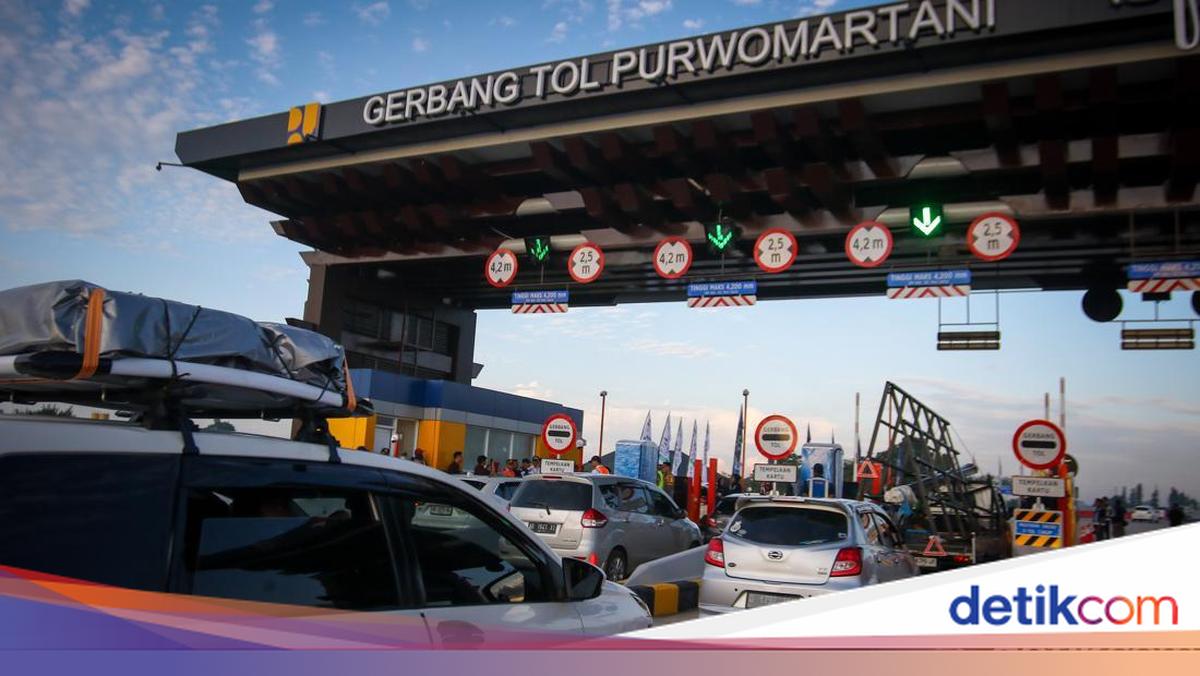
The Yogyakarta Regional Police Traffic Directorate has extended the operational hours of the functional Purwomartani Toll Gate during the Lebaran return flow period in 2026. This policy was implemented following the increase in vehicle volume exiting the Yogyakarta area.
“GT Purwomartani will be open from 06:00 to 20:00 WIB from 22-29 March,” stated the Head of Traffic of the Yogyakarta Regional Police, Senior Commissioner Arie Prasetya Syafa’at, in his statement on Tuesday (24/3/2026).
Arie mentioned that this extension is intended to alleviate traffic density, particularly towards Klaten and Central Java regions.
He explained that the flow of vehicles entering and exiting Yogyakarta has experienced a significant increase at the start of the return flow week. In fact, the number of vehicles passing through the functional access of the Yogyakarta-Solo Toll at GT Purwomartani has nearly reached 1,500 units per hour.
“The increase is quite significant. It can be seen from the figures, which are almost 1,500 per hour,” said Arie.
Given these conditions, the police deem it necessary to adjust the operational hours to ensure a more even distribution of vehicle flow and prevent accumulation during certain hours.
Previously, since its opening on 16 March 2026, GT Purwomartani had only operated for 12 hours, from 06:00 to 18:00 WIB.
It is known that the Purwomartani Toll Gate is one of the functional accesses to the Yogyakarta-Solo toll road section, which is opened on a limited basis during the Lebaran period. This functional scheme is typically applied to help manage surges in vehicles, especially during the homecoming and return flows.
During the functional operational period, the toll is not yet fully operational like a regular toll road. Road users are generally not charged toll fees (free), but they must still comply with applicable rules, such as vehicle type restrictions, speed limits, and specific operational hours.
This access is typically intended only for Group I vehicles (non-large buses and non-heavy trucks), with the aim of ensuring user safety due to the road conditions that are not yet fully completed.