
Purwakarta Mangosteen Production Plummets Due to Unpredictable Weather
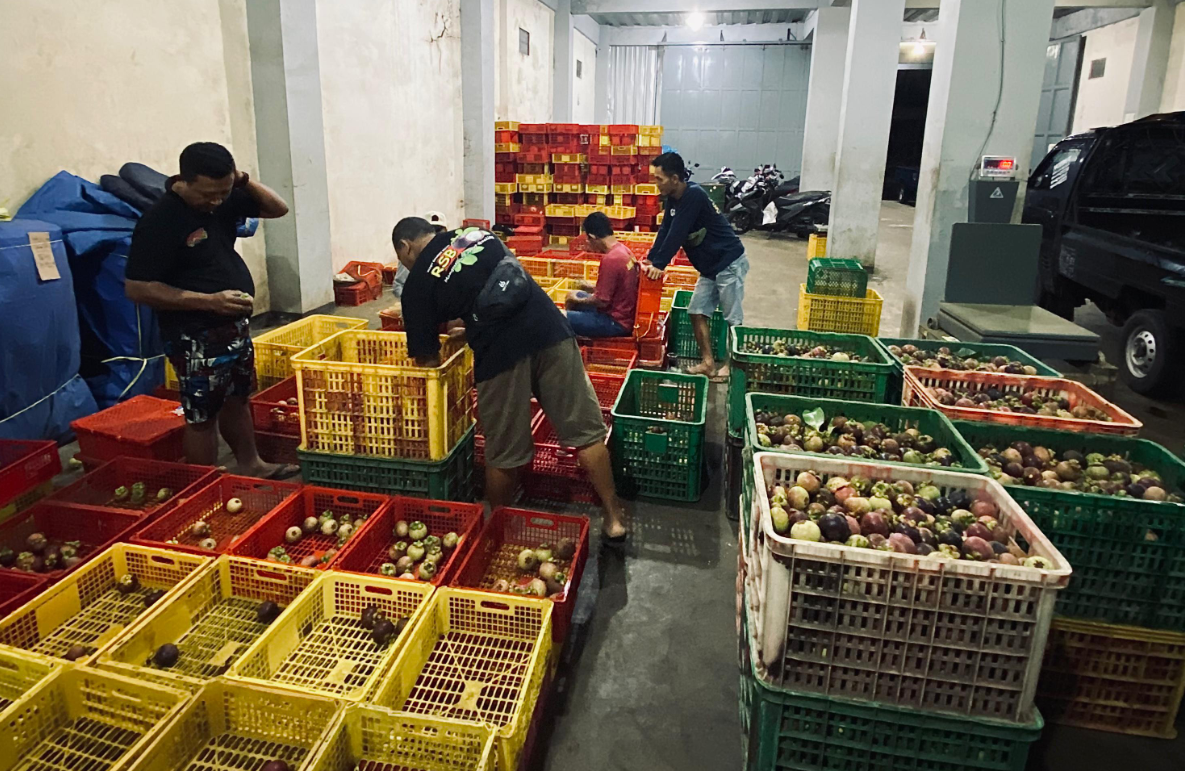
The production of mangosteen, a leading commodity in Purwakarta Regency, West Java, has experienced a significant decline over the past two years. Unpredictable weather conditions are cited as the primary factor preventing optimal fruit growth.
The drop in production of the distinctive Wanayasa mangosteen has directly impacted the welfare of local farmers. The plummeting harvest has caused farmers’ incomes to fall sharply, even triggering a collapse in the sale value of mangosteen orchards in the region.
According to data from the Purwakarta Regency Food and Agriculture Office (Dispangtan), mangosteen production in 2024 was recorded at 18,005 tonnes. However, in 2025, this figure fell drastically to just 2,737 tonnes. Meanwhile, for the period from January to May 2026, production has only been recorded at 2,553 tonnes.
Kurnia Prawira Saputra, Head of the Plantation and Horticulture Division at Dispangtan Purwakarta, explained that weather anomalies greatly affect the life cycle of the mangosteen plant. He noted that the plant requires sufficient hot weather to trigger the flowering process. “If it is continuously rained on, what emerges is not fruit but new leaves. Whereas the mangosteen harvest season typically runs from October to March,” Kurnia said on Friday (3/7).
Despite the downturn, Kurnia expressed optimism that production of the Wanayasa variety mangosteen will improve in the coming harvest season. He sees the recent intensely hot weather as a positive signal for the plant’s flowering process. “The weather is now very hot, even scorching. Hopefully, this is a good sign so that this year’s harvest can be more abundant,” he added.
This difficult situation is also felt by Zaeng, a mangosteen farmer in Kiarapedes District. He admitted that the production decline has severely hit the community’s economy, given that the majority of residents rely on income from mangosteen plantations, alongside clove and coffee. Zaeng revealed that over the last two seasons, the mangosteen trees have produced almost no fruit. As a result, the sale value of orchards, which could reach IDR 8 million to IDR 15 million during harvest season, has now plummeted to around IDR 300,000. He suspects that changing weather patterns, particularly the high rainfall intensity that persisted until early June, are the main cause of the disruption to the flower formation process on his mangosteen trees.