
Pursuing TB Elimination by 2030, Government Strengthens Collaboration and Early Detection from Upstream to Downstream
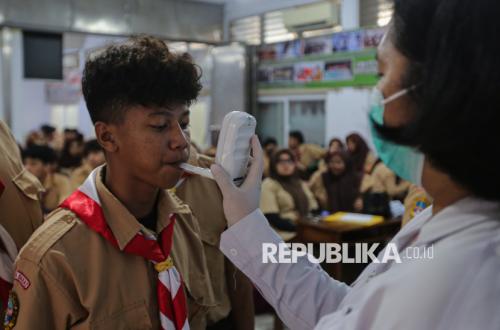
Efforts to eradicate tuberculosis (TB) in Indonesia are entering a more structured phase. The government is no longer relying solely on medical approaches but is promoting cross-sectoral collaboration, from improving housing, early detection, to community involvement, to comprehensively break the chain of transmission.
The Ministry of Health emphasises that environmental factors are one of the root causes of TB. Deputy Minister of Health Benjamin Paulus Octavianus states that unfit housing, particularly those with minimal ventilation, can potentially become breeding grounds for TB germs to survive longer.
“TB germs can die in 15–30 minutes when exposed to sunlight. But in houses without good ventilation, the germs can survive for months,” he said in Jakarta.
Therefore, by 2026, the government is partnering with the Ministry of Housing and Settlement Areas to renovate 2,000 houses, especially for the most vulnerable decile 1–2 communities. This programme not only targets health aspects but also improves social conditions that have long been an ecosystem for TB development.
The Ministry of Health has also prepared data on thousands of houses ready for renovation, hoping that the programme can be expanded to 10,000 units in the next phase. The collaboration also involves the Ministry of Social Affairs and the Ministry of Home Affairs to ensure interventions reach local health services.
A similar approach is seen in various regions that are strengthening early detection strategies. In Baubau, the city government is intensifying TB prevention socialisation for children by involving various community elements, from health workers, religious figures, to community organisations.
Acting Head of the Baubau Health Office, dr. Frederik Tangke Allo, emphasises that synergy is key in addressing the disease that remains a serious threat. The active screening programme is also expanded to schools, pesantren, workplaces, and correctional institutions.
“The public must understand that TB can be cured and treatment is available for free,” he said.
Meanwhile, in Madiun, the local government views the increase in detected cases as a positive indicator. The local Health Office assesses that the more cases detected, the greater the opportunity to promptly treat and prevent wider transmission.
The “Gerebek TBC” programme at the sub-district level is being intensified, supported by self-screening through digital applications. In the last three years, thousands of cases have been successfully identified, reflecting increasingly aggressive tracking.
A data-based approach is also strengthened in West Sulawesi. The provincial government records an increase in case findings as a signal that the early detection system is working more effectively. Up to February 2026, hundreds of cases have been identified, approaching the national monthly target achievement.
Source: jawawa.id (https://jawawa.id/newsitem/pursuing-tb-elimination-by-2030-government-strengthens-collaboration-and-early-detection-from-upstream-to-1775638357)
Originally published by Republika (https://news.republika.co.id/berita/td27k2451/kejar-eliminasi-tbc-2030-pemerintah-perkuat-kolaborasi-dan-deteksi-dini-dari-hulu-ke-hilir), translated from Indonesian